
The World Cup Turned Prediction Markets Into a Billion Dollar Machine

Every so often a niche corner of crypto goes mainstream overnight. This summer it was prediction markets, and the catalyst was the biggest sporting event on earth.
A record month, by a wide margin
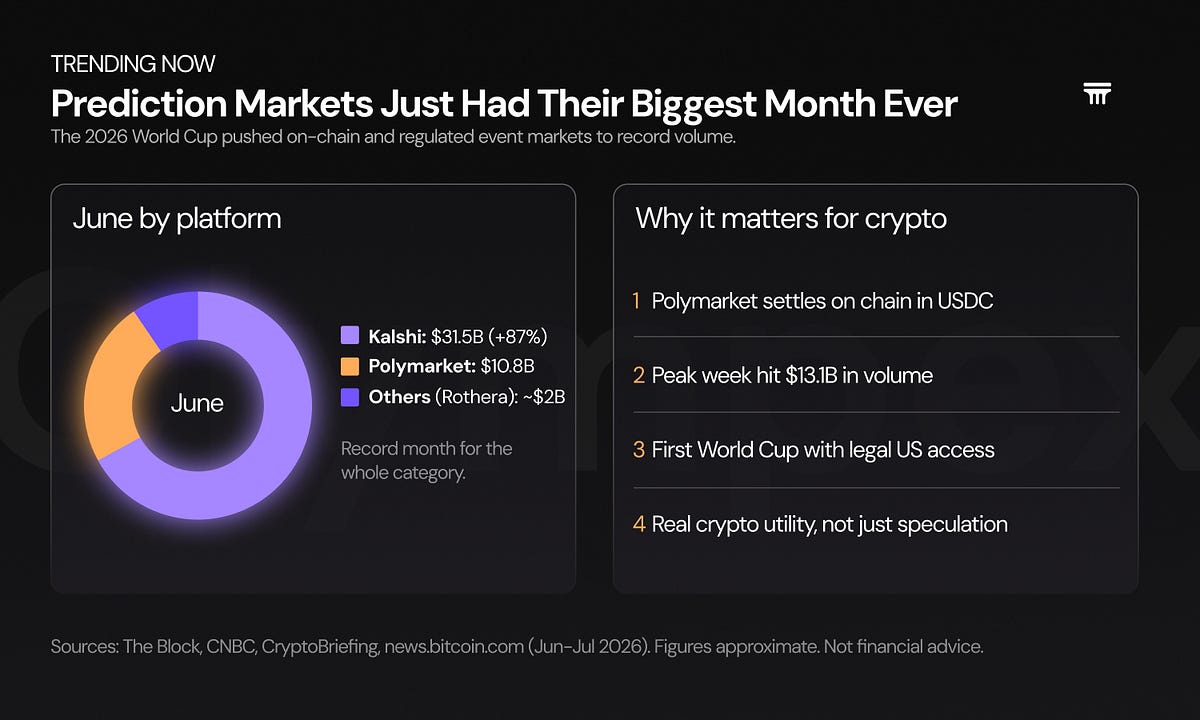
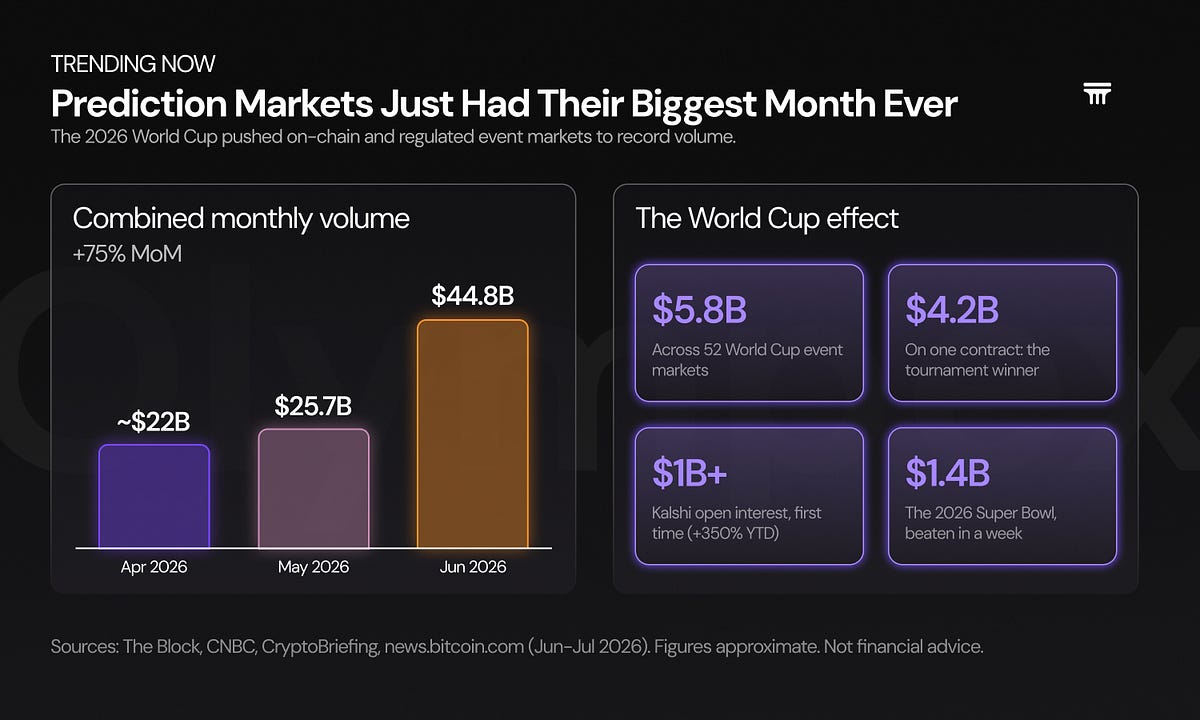
According to data compiled by The Block, Kalshi and Polymarket recorded about 44.8 billion dollars in combined trading volume in June 2026, a 75 percent jump from May and a record for the category. Kalshi did roughly 31.5 billion of that, up around 87 percent, while Polymarket posted a record of about 10.8 billion.
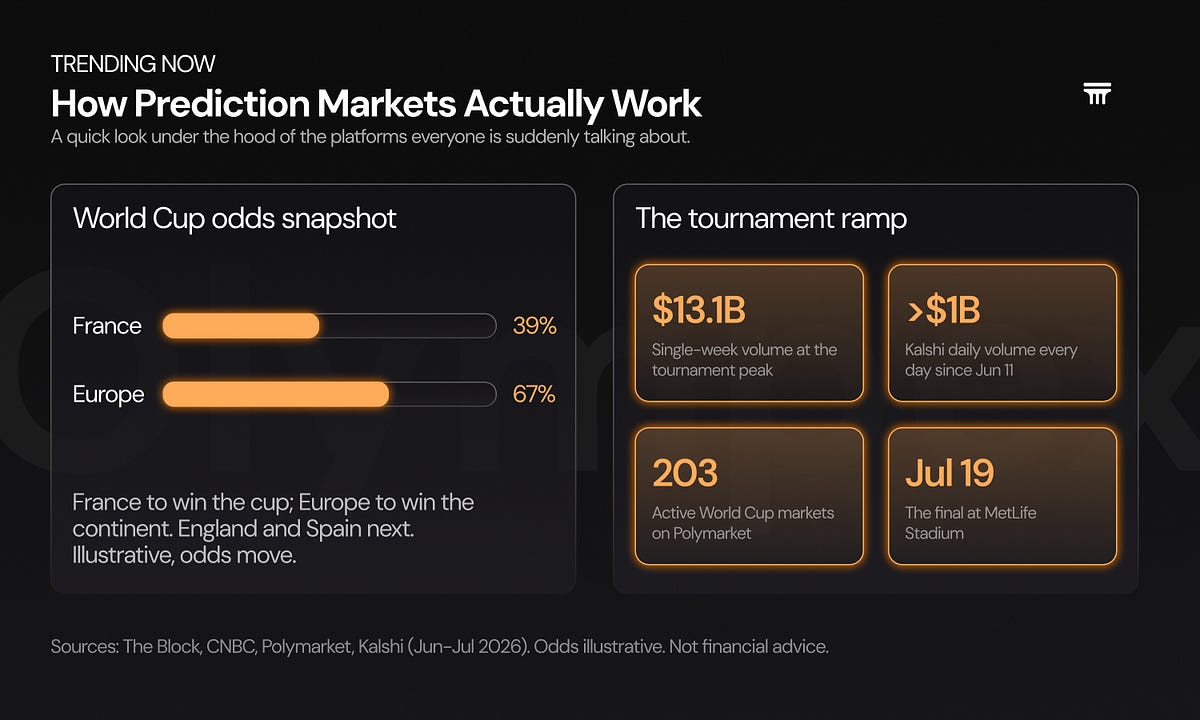
The engine was the 2026 FIFA World Cup. Across both platforms, World Cup markets gathered around 5.8 billion dollars in volume spread over more than fifty event contracts, and a single market, on which nation lifts the trophy, drew over 4 billion on Polymarket alone. To put that in scale, the 2026 Super Bowl generated about 1.4 billion, a figure the World Cup topped in roughly a week. Kalshi’s open interest crossed a billion dollars for the first time, up around 350 percent on the year.
Why this matters beyond sports
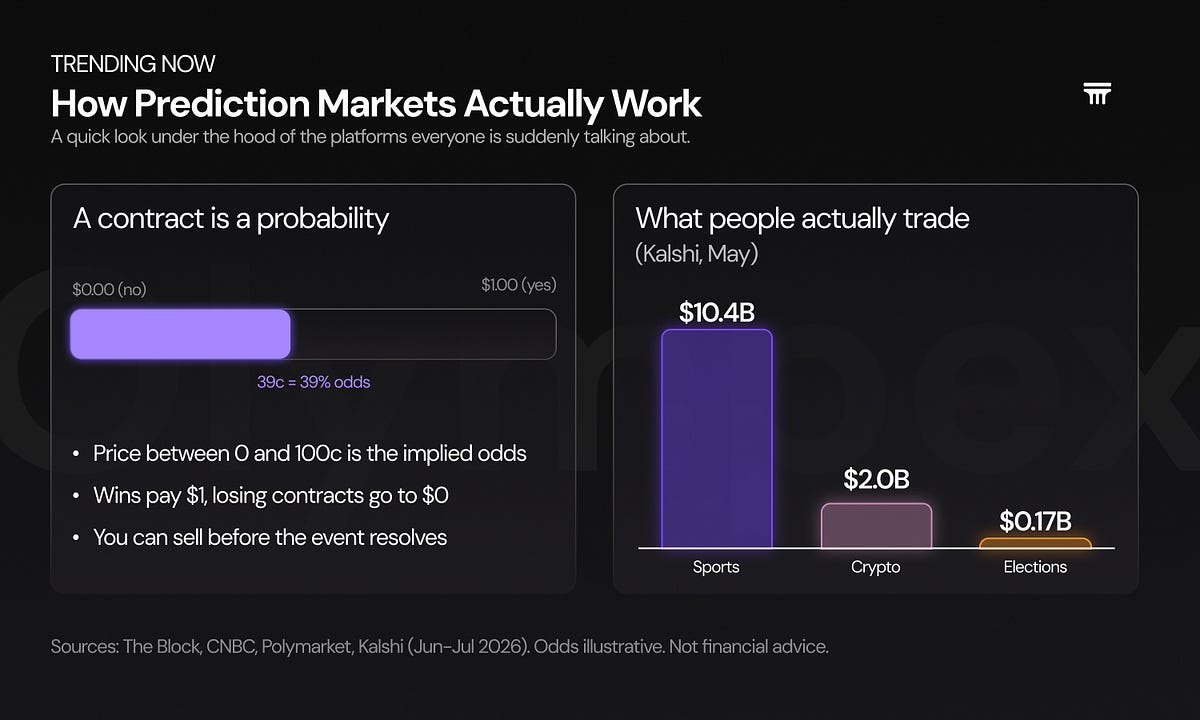
Prediction markets are not just betting. They turn crowd opinion into a live, tradable probability, which is why journalists and analysts increasingly cite Polymarket odds as a real time gauge of everything from elections to penalty shootouts. Two things made 2026 a breakout. It was the first major soccer tournament where regulated US access was widely available, and much of the settlement happens on chain: Polymarket resolves in USDC, so every position is transparent and verifiable. This is one of the clearest examples of crypto delivering real utility rather than pure speculation.
The caveats
There are real ones. Kalshi operates under CFTC oversight in the US, while Polymarket is structured for non US users, and rules differ by jurisdiction. Individual contracts can resolve to zero the moment an outcome is decided, so this is genuine risk taking, not investing. Access and legality depend on where you live.
Where this connects to Olympex
The on chain side of prediction markets runs on stablecoins, and to participate you often need USDC sitting on the right network. That is a small friction that trips up newcomers. A multichain execution layer like Olympex helps you swap into the stablecoin you need and bridge it to the chain where you want to act, then track everything in one dashboard. Olympex is not a prediction market. It is the rails that get your funds to where the action is, cleanly.
Takeaway
A soccer tournament just did what years of think pieces could not: it put on chain markets in front of millions of ordinary people. Whether or not you ever place a bet, the signal is bigger than sports. Real products, with real users, settling on chain, is exactly what this industry has been promising.
Educational content, not financial advice. Prediction markets involve risk of loss and are restricted in some regions. Figures are approximate and change quickly. Always do your own research. Sources: The Block, CNBC, CryptoBriefing, news.bitcoin.com (June to July 2026).






