When the Soviet union invaded the relatively tiny country of Finland in late 1939 they claimed that they were dropping food aid on the country instead of bombs. In response, the Finns named a new, improvised weapon first seen in the Spanish Civil war after the Russian diplomat, calling it a Molotov Cocktail.
The Molotov has since remained in the public mind due to a weird niche of being terrifyingly effective at being anti-everything and relatively easy to make. Unfortunately, just because it is simple to build, does not mean it is immediately obvious how to do so. Years of movies portraying simple alcoholic beverages as being amazingly flammable upon inserting a rag as a wick have impressed upon many that their Budweiser doubles as an improvised weapon.
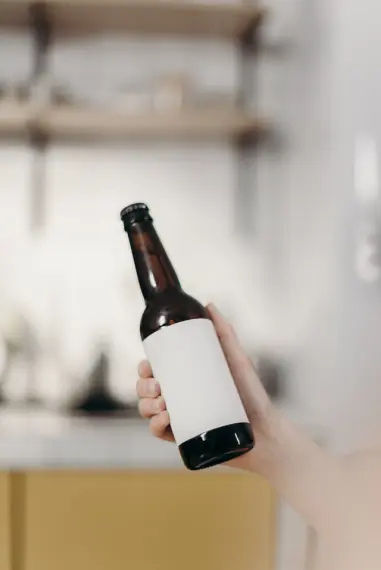
This is not so. So Step 1 of molotov cocktail prep is to actually drink your beer first. Just make sure it has a glass bottle, as plastic tends to not shatter, which is an important part of How molotovs work.
Step 2 is to prepare your fuel mixture. While you can simply use Gasoline as the Spanish did, there are significant improvements to be made. While Gasoline is very flammable and quite capable of setting whatever it douses on fire, it doesn’t tend to burn very long before it runs out of fuel. By making it a mix of one third or one half motor oil(which was in fact, the fuel of choice for German flamethrowers) you create a liquid that burns longer and spreads faster. Use of this liquid is excellent, but it still leaves some room to be desired, as it doesn’t stick to surface and instead prefers to run and drip.
Which is where we start to get into the fun of using trash to fight the fash. Polystyrene foam is commonly used in packing sensitive equipment like computers or televisions. It also dissolves into gasoline and is itself fairly flammable. When gasoline dissolves it, it acts like a sort of starch, turning your gasoline into a highly flammable, long burning gel. Ideally, you want to aim for a honey-like consistency, that drips easily, but is still fairly sticky, so that it sprays when the bottle shatters, but still sticks to whatever it hits.
This mixture is actually napalm, known for it’s pleasant aroma in the morning? Napalm is great as an anti-everything liquid. It’s a miracle substance: Get it onto an engine intake and the vehicle will quickly decide it doesn’t want to run for a while. Get it on a person and their new goal in life is to not be on fire. Get it on a building, and it will convert it into ruins. Napalm is even longer burning than normal gasoline. It’s also sticky as hell, meaning that whatever it adheres to to is going to be on fire for a while and it’s difficult to extinguish without setting something else on fire in the process.
So finally, our bottle filled with viscous flammable napalm is ready. We stick a rag in, and all we need is a light. However, there are some problems with rags. They are vulnerable to being doused with water, rendering them unusable, which both limits the conditions the Molotov can be used, alongside allowing the relatively common tool of oppression that is a water cannon to prevent their use. Rag fuses have a tendency to become soaked in the liquid they are acting as a stopper for, which is also not particularly safe to the operator as soda glass tends to be vulnerable to thermal shock(aka, it breaks if it gets hot or cold far too quickly.)
There is another solution from those ingenious Scandanavian bastards. The Finns used storm matches attached to the bottle instead of a rag. For those who aren’t aware of what a storm match is, it is a match that uses an oxidizer so it cannot be put out by being doused until it burns through it’s oxidizer. Water does naught but annoy a storm match. It doesn’t care if it’s underwater, and will bubble angrily until it runs out of oxidizer. Storm matches are common hiking gear, and available from any sports shop for less than 10 dollars a pack. Attach two to the sides, seal the top again, light before throwing, and then throw at the target of your choice to apply twelve to twenty four ounces of freedom to the target.
Now that you have your molotov, how do you use it against the less squishy targets? It’s fairly well known that molotovs do have anti-armor properties, but like most anti-armor small arms, it is more than just applying liberal doses of napalm to the target vehicle until the crew decides they do not want to be inside a burning metal box anymore, though that is definitely one way to disable a vehicle.
There are two main targets for molotov cocktails: The engine intakes, and optics. The former will disable the vehicle by damaging or destroying the engine. Without cold air, the vehicle will overheat, rendering it immobile. The latter will blind the occupants. IR sensors do not appreciate being exposed to flame for obvious reasons, and fire is rather difficult to see through, as well as stirring deep seated primal fears of not wanting to burn to death. It takes several molotovs to force a crew to abandon a vehicle, but a few well placed ones can render a vehicle ineffective.
Petty Tyrants will not respect us until they understand fear, and we must prepare to deal with their trespasses against us in the only language they respect.






