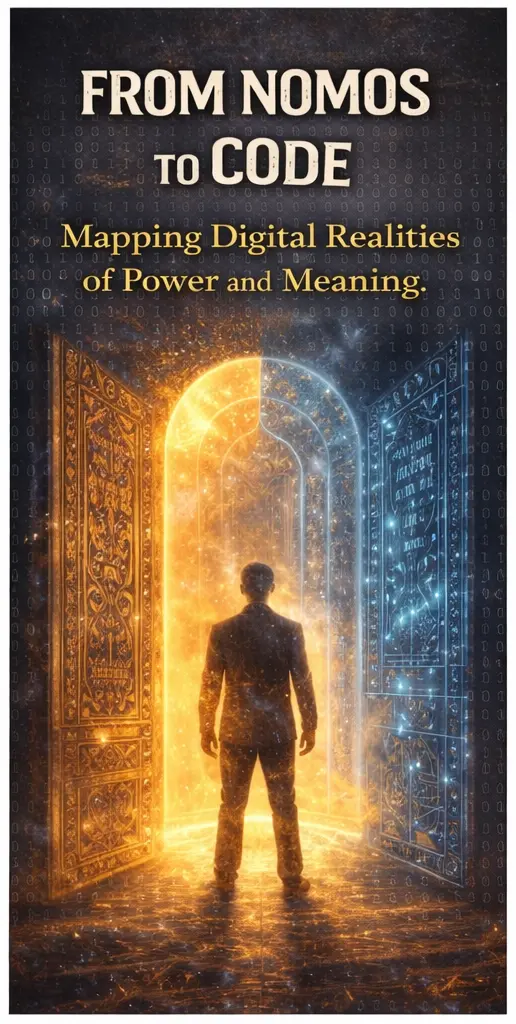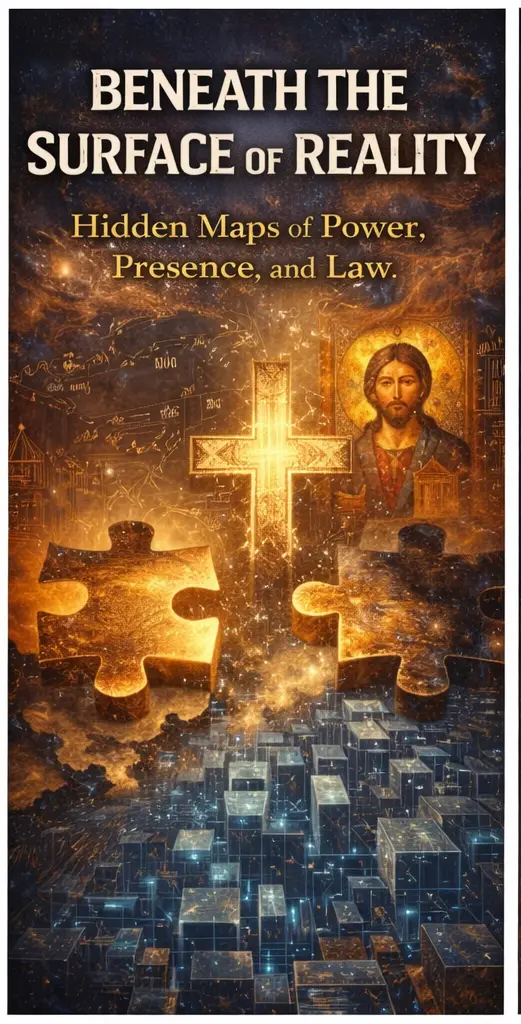
Subliminal Dialogues Between Carl Schmitt and Pavel Florenskij
Some books don’t just explain the world.
They recode it.
Two of those books come from very different minds — yet they speak the same hidden language:
• Pavel Florenskij – The Royal Doors.
• Carl Schmitt – The Nomos of the Earth.
One works with icons and light.
The other with law and space.
But beneath the surface, they are doing the same thing:
> They map the invisible architecture of reality.
Carl Schmitt: The Jurist of Space.
For Schmitt, every civilization begins with a spatial act:
> To take, divide, and order the land.
This is what he calls Nomos — not just law, but the original cut that creates a world.
In The Nomos of the Earth, Schmitt shows that:
• power is rooted in territory
• law is born from conquest
• politics is shaped by geography
• history is driven by spatial revolutions
When Europe shifted from land to sea — from map to globe — the modern world was born.
For Schmitt:
> Change the space → and you change reality.
Pavel Florenskij: The Theologian of Light.
Florenskij works on another axis — not space, but presence.
In The Royal Doors, the icon is not representation.
It is revelation.
• not psychology
• not decoration
• not realism
But:
> A window between worlds.
Florenskij rejects Renaissance perspective because it centers the human ego.
Instead, the icon centers light as metaphysical substance.
For him:
> The image is not seen.
> It sees you.
The Subliminal Parallel.
Schmitt and Florenskij never met in spirit — but they built the same kind of bridge.
| Florenskij | Schmitt |
| ------------------------------ | ------------------------------ |
| Icon = Threshold | Nomos = Threshold |
| Light structures reality | Space structures reality |
| Theology of vision | Jurisprudence of territory |
| The sacred order | The political order |
| The invisible shapes the visible | The invisible shapes the visible |
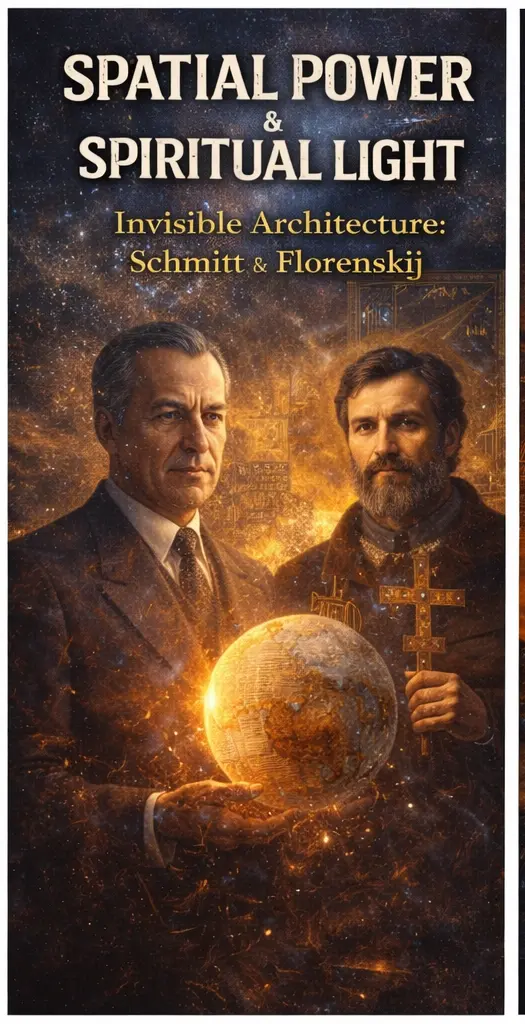
Both say the same thing in different languages:
> Reality is not neutral.
> It is constructed through hidden structures.
Florenskij uses light.
Schmitt uses space.
But both reveal the same law:
> What we see is only the surface of what rules us.
Why This Matters Today.
We are living another spatial revolution.
Not land.
Not sea.
But digital space.
Web3, Metaverse, Blockchain, NFTs — these are not just technologies.
They are a new Nomos.
And digital art is not just image — it is a new kind of icon.
• not material
• not fixed
• not centralized
But:
> A presence in code.
Just like Florenskij’s icon and Schmitt’s Nomos, digital creation today is about:
• redefining space
• redefining authority
• redefining meaning
Marekiaro’s Position in This Dialogue.
As a digital artist and content creator, Marekiaro doesn’t just make images.
He builds thresholds.
Between:
• art and blockchain
• storytelling and sovereignty
• myth and code
Like Florenskij and Schmitt, the work is not about style —
it’s about structure.
Not aesthetics — but architecture of meaning.
Final Thought.
Florenskij tells us:
> Light reveals reality.
Schmitt tells us:
> Space orders reality.
Marekiaro explores:
> Code reshapes reality.
Three languages.
One message:
> The world is built by those who understand the invisible rules behind what we see.
📚 The Nomos of the Earth is not just a political book.
It’s a map of power.
📖 The Royal Doors is not just about art.
It’s a map of presence.
And digital art today is becoming both.