🇯🇵
A New Conservative Era in Japan: Takaichi’s Historic Victory and What It Means for Asia.
Japan just witnessed a dramatic political moment.
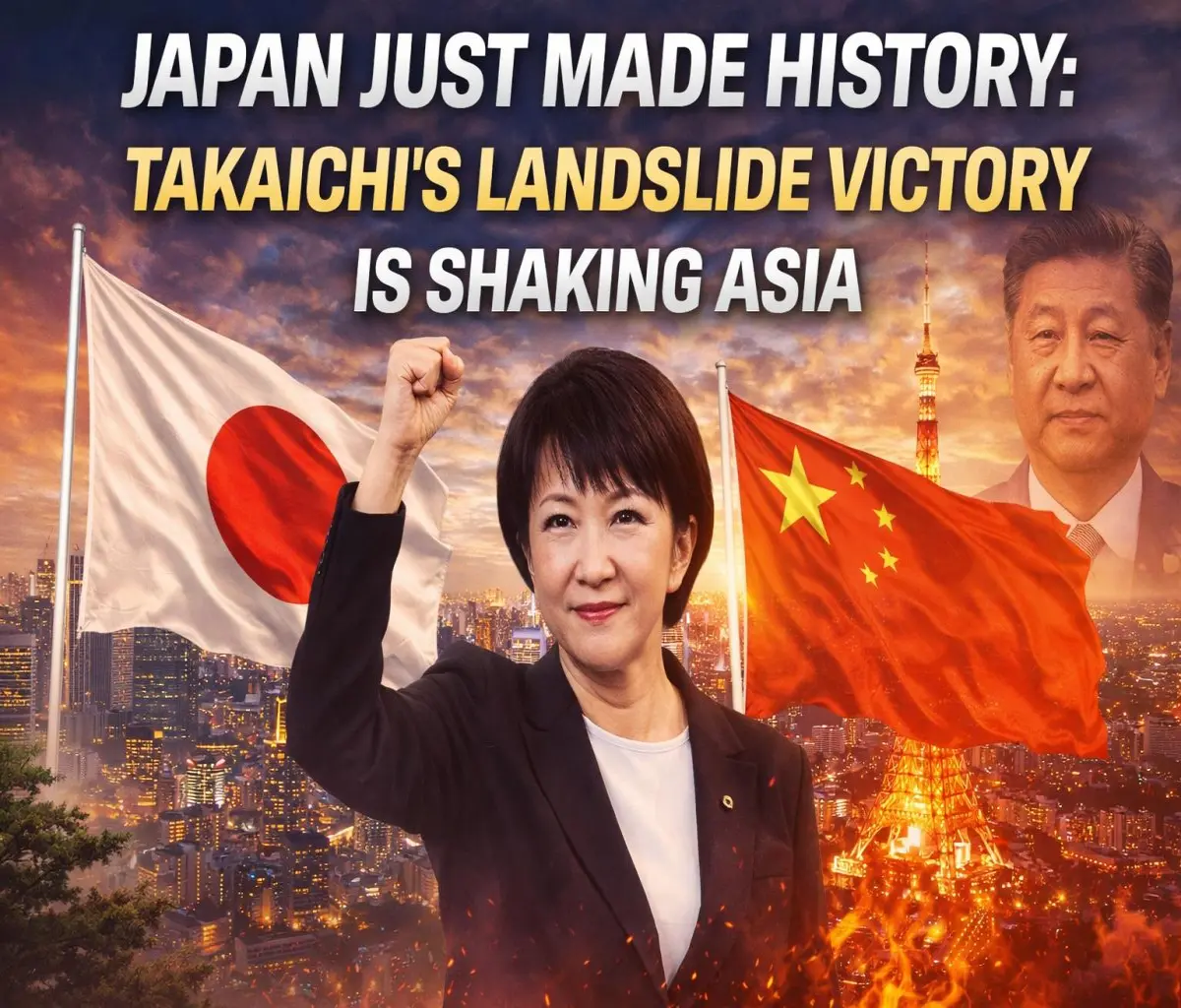
After dissolving the government and calling new elections — held today — Prime Minister Sanae Takaichi’s party has secured an absolute majority, according to early exit polls. The projected range of seats, between 274 and 328, suggests the largest single-party majority in Japan’s modern history since 1945.
This outcome isn’t just significant domestically — it reshapes the strategic balance across East Asia and signals potential tension with neighboring powers like China.
🇯🇵
The Rise of a New Conservative Majority.
Takaichi Sanae is a figure known for conservative, nationalistic positions and a focus on strong security policy. Her party’s surge reflects a swing toward political continuity backed by a clear legislative mandate. Securing the largest parliamentary majority in decades gives her team unmatched legislative power to enact its agenda.
In countries with parliamentary systems, such decisive majorities are rare — and they matter enormously. When a government controls the majority of seats, it can more effectively pass bills, influence foreign policy, and shape its country’s identity.
🧭
Why China Won’t Be Happy?
China is watching this election result with concern. A stronger conservative government in Tokyo — especially one aligned with tighter security cooperation with Western allies — could challenge Beijing’s influence in the region.
Several key areas of friction include:
1. Territorial Disputes.
Japan and China have long competed over ownership of the Senkaku (Diaoyu) Islands. A more assertive Japanese government might take a less conciliatory stance on this front.
2. Defense & Security Alliances.
Closer cooperation between Japan and the United States — particularly in security and defense — may be viewed by China as a strategic counterweight.
3. Regional Influence.
A robust Japanese presence in Asia-Pacific diplomatic and economic initiatives could shift the balance of influence away from China.
These geopolitical dynamics are complex, but the result is clear: a powerful majority government in Tokyo is likely to pursue a more confident foreign policy.
🛤️
What This Victory Represents.
This is not just another election — it symbolizes a potential turning point:
Political Stability — or Shift?
Dissolving the previous government pointed to instability or strategic recalibration. Winning an absolute majority now offers stability, while also empowering bold decisions.
Historical Weight.
Japan hasn’t seen a majority this large since post-World War II reconstruction. The scale of Takaichi’s victory gives her party a mandate few leaders have enjoyed.
Policy Power.
With a supermajority, Takaichi’s government can push through policy changes ranging from defense to economic reform.
🌏
The Broader Regional Picture.
In East Asia, power dynamics have always been sensitive. Japan’s global role — both economically and strategically — has been evolving for decades. A government leaning toward nationalism and conservatism can be interpreted in different ways:
🔹 As a reaffirmation of traditional national identity.
🔹 As a pragmatic response to regional threats.
🔹 Or, for critics, as a challenge to the diplomatic balance.
This election result amplifies the ongoing dialogue about sovereignty, power, alliance systems, and global influence.
🎨
What It Means for Creators, Observers, and the Global Community.
What does politics have to do with digital art, culture, and Web3 expression?
Everything.
In the digital age, political shifts shape narratives, influence networks of influence, and redefine how societies think about identity and voice.
As creators, we respond to these moments not just as observers, but as storytellers — reinterpreting meaning, envisioning new futures, and refusing to let global shifts go unnoticed.
Japan’s 2026 election isn’t a distant news item — it’s a reminder that political power, cultural identity, and technological futures are tightly intertwined.
Because in a world defined by rapid change — from politics to blockchain to art — every movement echoes in unexpected places.
Written by Marekiaro
Digital Artist • Content Creator
Exploring culture, power, and freedom in the age of decentralized expression.






