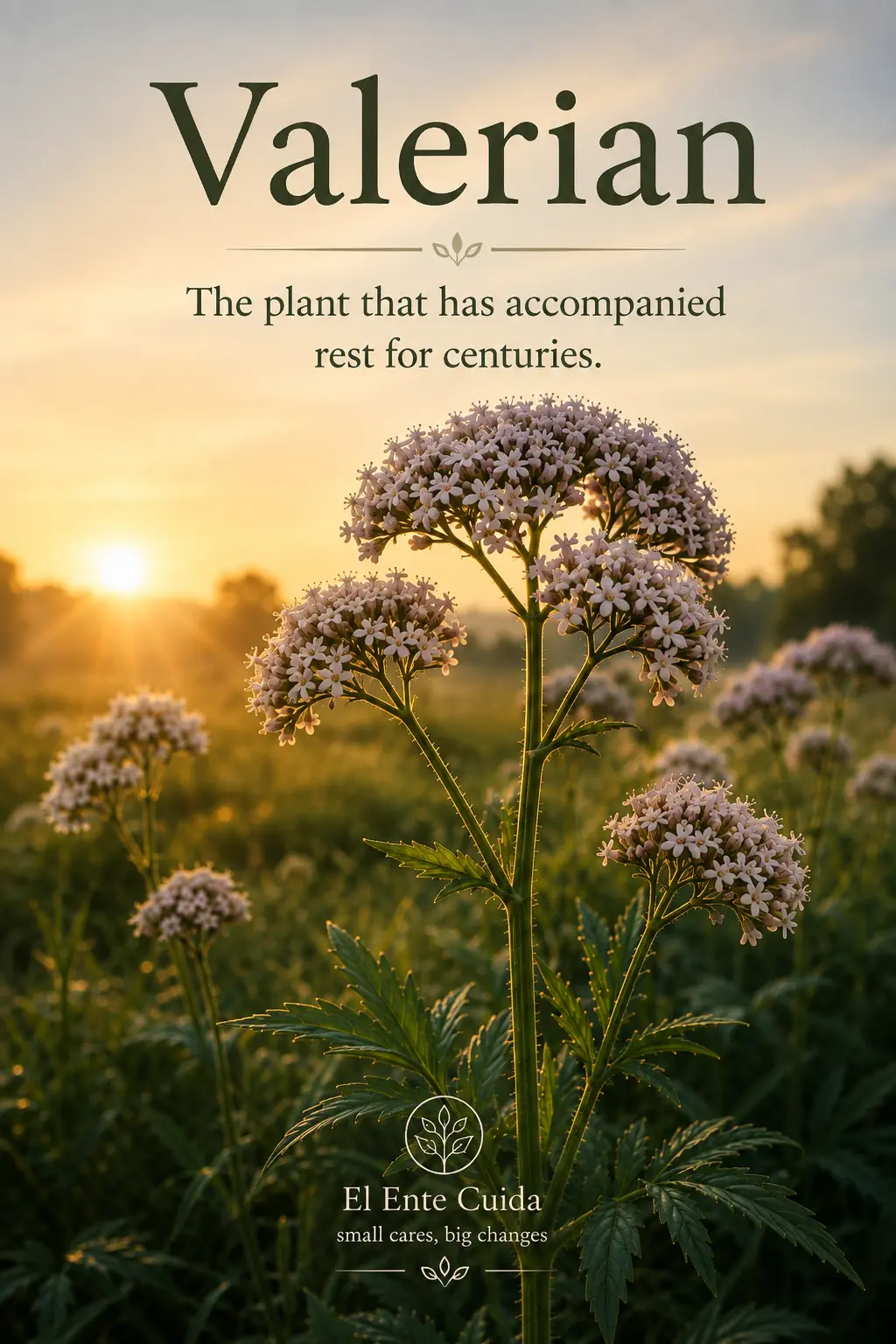
When rest also comes from nature
Some plants attract attention for their flowers, others for their aroma, and some for the flavor they impart in an infusion. Valerian, however, often wins people over for something much more important: the sense of tranquility that many seek when the days seem relentless.
Interestingly, it's not a particularly showy plant. If you saw it growing along a path or at the edge of a forest, you'd probably walk right past it without imagining that it's been a companion to people for hundreds of years. And if you've ever opened a package of valerian root, you'll surely remember its smell. It's not usually very pleasant. In fact, many people are surprised to discover that one of the best-known plants for promoting rest has such an intense aroma.
But nature has its contradictions. Sometimes what is most valuable is not what is most beautiful or what smells best.
We live in an age where everything seems to move too fast. Work, obligations, mobile phones, worries, and the constant feeling that there's always something left undone have made rest almost a luxury. It's no wonder that many people are looking for natural alternatives that can help them regain a more peaceful rhythm.
Valerian then appears as an old acquaintance. A plant that has survived the passage of time, fashions, and changes in medicine, and that continues to occupy an important place within traditional herbal medicine.
In this guide, we'll explore it in detail. We'll discover its origins, how it has survived to the present day, its traditional uses, and what we currently know about it. Because inThe Entity CaresWe believe that knowing a plant means much more than knowing what it's used for. It means understanding its history, respecting its limits, and learning to use it responsibly.
What is valerian?
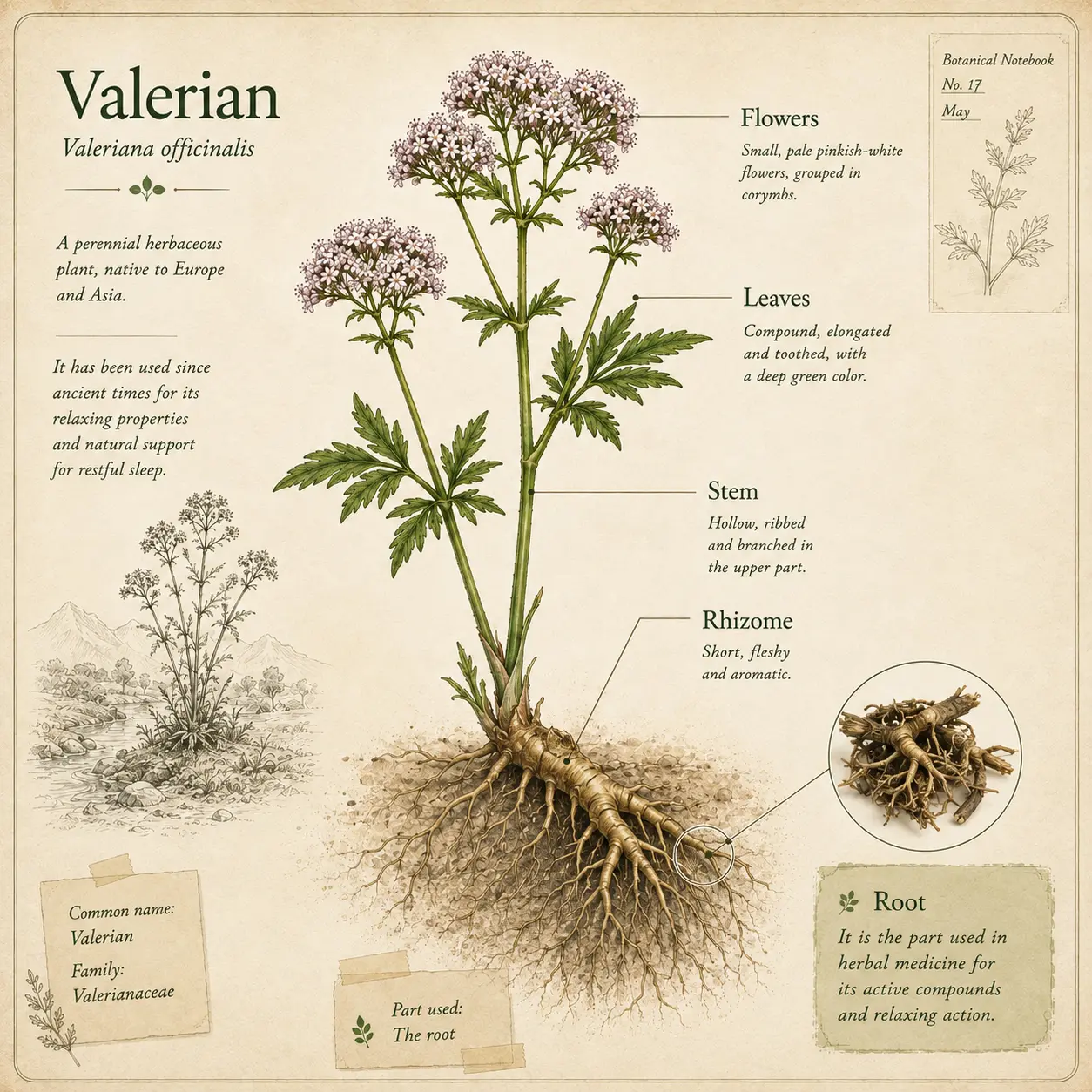
The Valerian officinalisIt is a perennial herbaceous plant native to Europe and some regions of Asia. Today it can also be found cultivated in many other parts of the world due to its popularity as a medicinal plant.
It can easily grow to over a meter tall when in good conditions and develops delicate clusters of small white or pink flowers that appear during the warmer months of the year. These are inconspicuous flowers, but highly valued by bees, butterflies, and other pollinating insects.
However, the most well-known part of the plant is not above ground.
Its roots are the true protagonist.
It is precisely in the root system where many of the compounds that have traditionally been used to prepare infusions, extracts, tinctures and other herbal preparations are concentrated.
When the root dries, it develops that characteristic odor that many people find intense. Interestingly, while some people find it unpleasant, certain animals, especially cats, seem to be very attracted to it. We'll discover later why this curious phenomenon occurs.
Although today we tend to associate valerian almost exclusively with rest, the truth is that historically it has been attributed with many more uses. For centuries it was part of European folk medicine to alleviate various everyday ailments, although not all of these applications currently have the same scientific backing.
And that is precisely where an important part of the interest in this plant lies: separating tradition from what modern research has been able to confirm so far.
A plant with centuries of history
The history of valerian is almost as old as European herbal medicine itself.
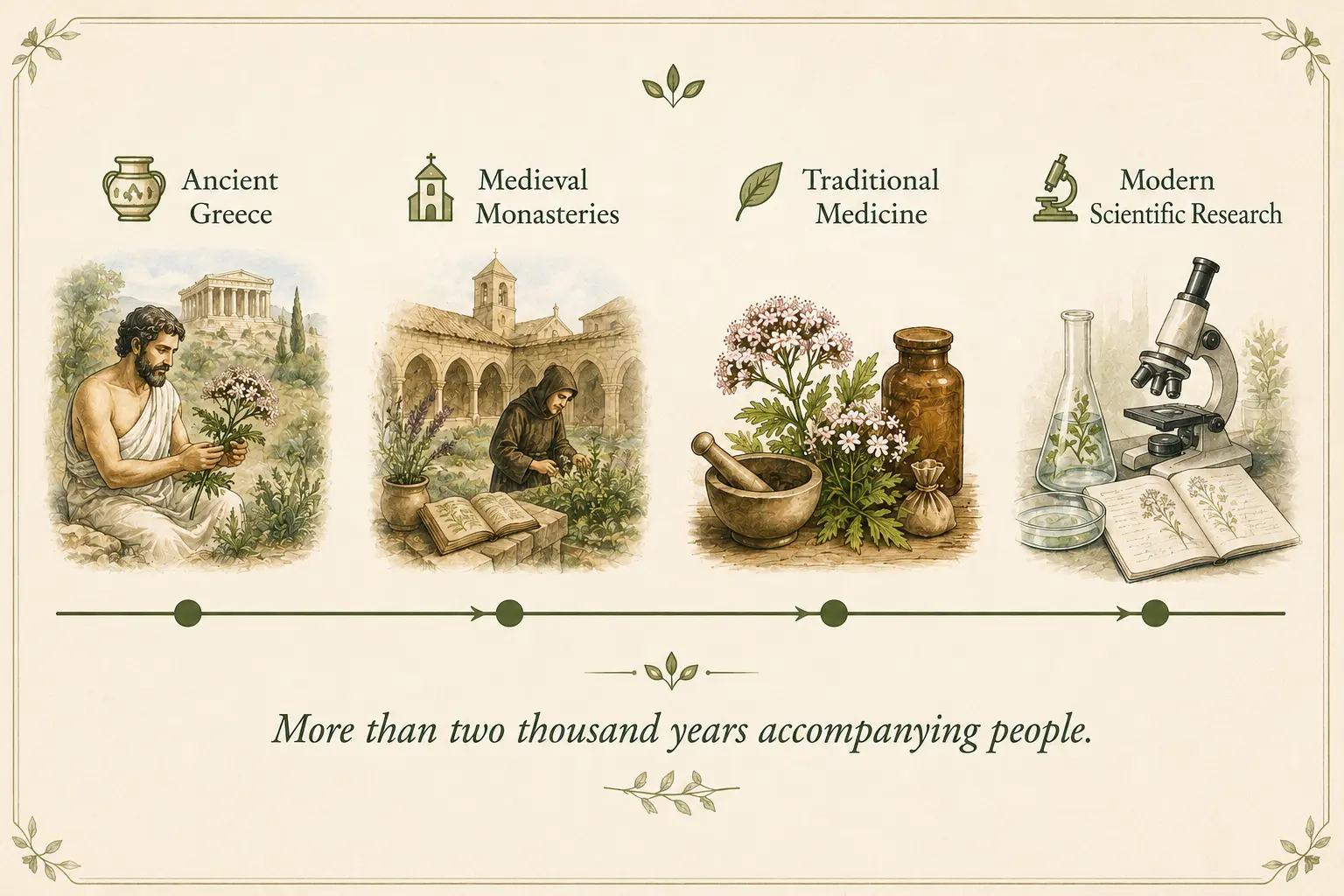
References to this plant exist from Ancient Greece and Ancient Rome. Some physicians and naturalists of the time described its characteristics and included it among plants of medicinal interest.
Over the centuries, their presence became commonplace in monasteries and gardens dedicated to the cultivation of medicinal plants. During the Middle Ages, many of these spaces functioned as veritable centers for the preservation of botanical knowledge. There, monks cultivated different species, observed their properties, and passed this knowledge down from generation to generation.
Valerian was one of the plants that managed to remain present throughout that time.
In many rural areas, it also became part of folk knowledge. It was common to find families who kept dried roots alongside other medicinal plants such as chamomile, thyme, or lemon balm. There were no large laboratories or sophisticated containers. It was typical to have a small corner where the plants that each household used traditionally were stored.
With the development of modern medicine, many of these customs disappeared. However, valerian was never completely forgotten. On the contrary, it continued to spark the interest of researchers who began to study in greater detail the compounds present in its root.
Thanks to that work, we know considerably more about this plant today than we did just a few decades ago. Even so, there are still aspects that continue to be investigated and for which science is still seeking answers.
And that's also part of nature: we still have a lot to discover.
What does valerian actually contain?
When we talk about a medicinal plant, it's easy to fall into the trap of thinking that there's a single ingredient responsible for all its effects. However, the reality is usually much more complex.
Valerian contains a combination of different natural substances that work together. Among the most studied are thevalerenic acids, the valepotriatos, various essential oils and other compounds naturally present in the root.
Over the past few years, numerous research teams have attempted to understand how these substances interact with our bodies. Some hypotheses suggest that certain compounds may influence mechanisms related to the nervous system, although studies are still underway to better understand their function and the true extent of these effects.
This is important to remember.
Sometimes we see headlines that portray medicinal plants as miracle cures or, conversely, as completely useless. The reality is usually much more balanced.
There are plants whose traditional use coincides, at least in part, with the results obtained by scientific research. Valerian is one of the most studied examples in this field. However, this does not mean that it works the same way for everyone, nor that it can replace the advice of a healthcare professional when a health problem exists.
In The Entity CaresWe believe that the best way to approach medicinal plants is precisely to maintain that balance: to value traditional knowledge, to be interested in what science tells us, and to avoid both exaggerated promises and automatic rejection of everything that comes from nature.
Because, in the end, caring also means learning. And the better we know a plant, the easier it is to use it with respect, prudence, and common sense.
Tradition, science, and ways of using it
If you ask ten people what valerian is used for, it's very likely that most will answer the same thing:"To sleep better."
And they wouldn't be wrong.
However, reducing valerian solely to its role in rest would be to leave out an important part of its history. For centuries, this plant has been used by people seeking to regain calm in moments of nervousness, relieve accumulated tension, or simply end the day with a greater sense of tranquility.
However, it is important to make an important distinction.
It's not the same to talk abouttraditional usethat ofscientific evidenceBoth perspectives are valuable, but they don't mean exactly the same thing.
At El Ente Cuida we believe that both can coexist as long as they are explained honestly.
Traditional uses of valerian
Long before modern laboratories existed, people learned by observing nature. Generation after generation, knowledge was passed down about which plants seemed to help in certain situations.
Valerian was one of them.
It has traditionally been used to promote a state of relaxation, especially when the worries of the day made it difficult to rest or disconnect.
It was common to prepare an infusion in the late afternoon, not as an immediate solution, but as part of a small ritual. Just as many people today turn off bright lights or read a few pages before going to bed, in the past, valerian tea was part of that transition between the day's activities and the rest of the night.
We also find historical references to its use during times of particular emotional stress. In various European herbal treatises, it is mentioned as a plant that helped to "calm the spirit," an old expression that today we might associate with the search for a greater sense of calm.
Furthermore, in some traditions it was used to alleviate certain digestive discomforts related to nervousness. Although these applications are part of folk knowledge, not all of them currently have the same level of scientific support.
And that is precisely why it is important to differentiate between what is part of tradition and what has been investigated through modern studies.
What does science currently say?
In recent decades, valerian has been one of the most studied medicinal plants in the field of rest and relaxation.
The researchers have specifically analyzed the role of some compounds present in its root and the possible influence they could exert on certain mechanisms related to the nervous system.
The results obtained so far are interesting, although they also suggest maintaining a cautious perspective.
Some studies suggest that certain valerian preparations may contribute to improving the subjective quality of sleep in some people or promote a greater sense of relaxation. However, other studies show less clear results or only minor differences.
Why does this happen?
The answer is not simple.
Not all studies use the same type of extract, the same concentration, or the same treatment duration. Furthermore, each body responds differently, and factors such as lifestyle, daily stress, and sleep habits also have a significant impact.
Therefore, when we talk about medicinal plants, it is advisable to avoid absolute phrases such as "it always works" or "it's useless".
Reality usually lies somewhere in between.
What does seem to exist is a fairly broad consensus in considering valerian as one of the best-studied plants in the field of phytotherapy related to rest, although research is still being carried out to better understand its mechanism of action and to establish more precisely in what situations it may be most useful.
And that's also science: continuing to ask questions.
How is it usually used?
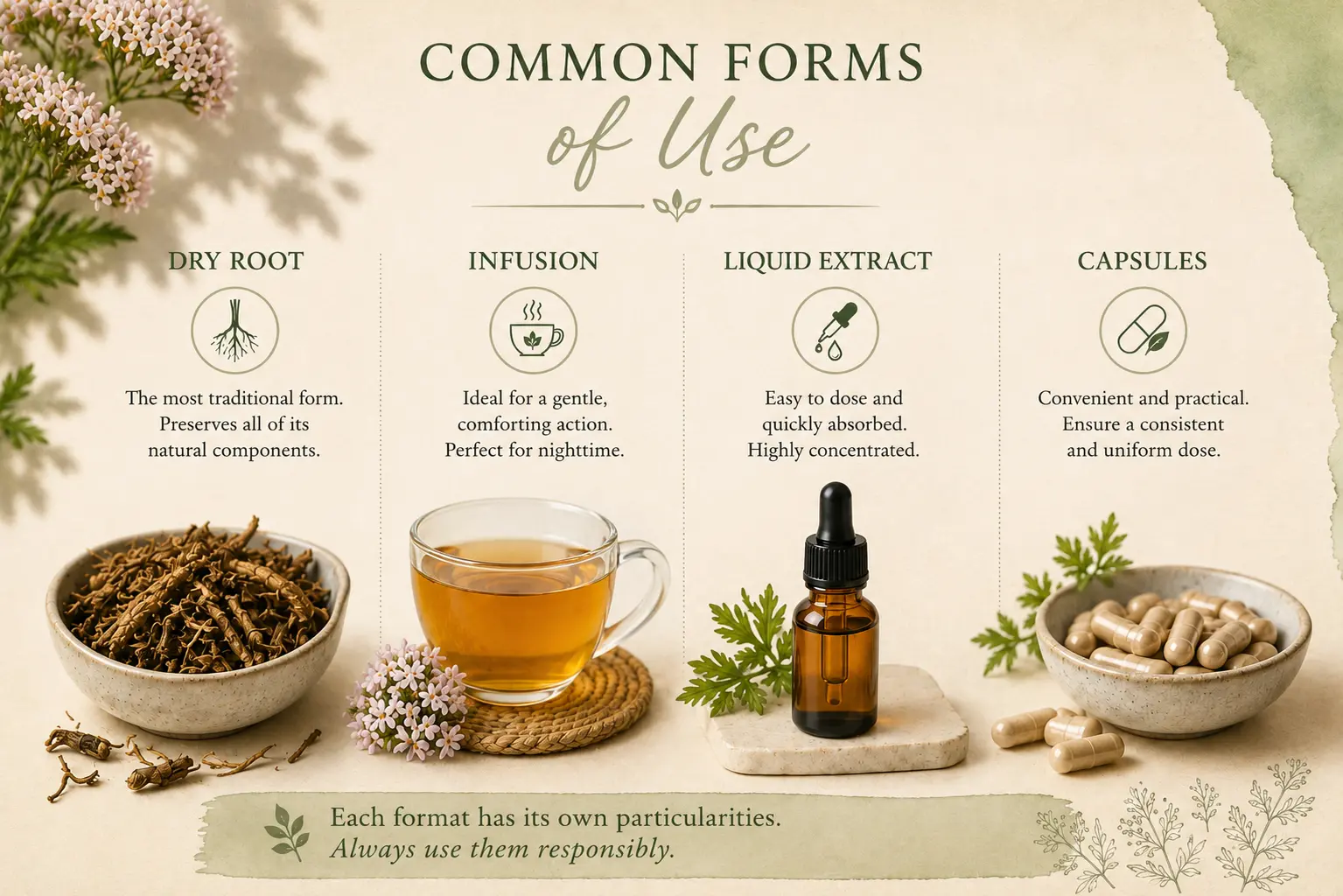
One of the advantages of valerian is that it can be found in different forms, each with its own characteristics.
The most traditional form continues to be theinfusion of dried rootMany people enjoy preparing a hot cup at the end of the day, taking advantage of that moment as a break before going to bed.
Its flavor and, above all, its aroma are quite intense. Not everyone connects with it immediately, so it's common to combine valerian with other aromatic plants like lemon balm, chamomile, or lavender to obtain a more pleasant infusion.
Preparations made from the root are also available in the form of liquid extracts, tinctures, capsules, or tablets. These products tend to have a more standardized composition, although it is always important to follow the manufacturer's instructions and consult a healthcare professional if you have any questions or special circumstances.
In any case, it is worth remembering something that is often overlooked.
Valerian should not be understood as an isolated solution.
If a person sleeps few hours, keeps very irregular schedules, consumes large amounts of caffeine at the end of the day, or remains in front of bright screens until bedtime, no plant can replace the importance of good rest habits.
Often, medicinal plants find their true value when they are part of a healthier lifestyle.
And perhaps that is one of the most important lessons that nature offers us: there is almost never a single solution to a complex problem.
Growing valerian at home
Although we usually see it used in infusions or herbal preparations, valerian can also be grown relatively easily.
It is a hardy plant that thrives in cool, humid environments. It grows naturally in meadows, along riverbanks, and in areas where the soil retains moisture for much of the year.
It prefers places with good lighting, although it can also develop properly in semi-shaded areas, especially in regions where summers are very hot.
Its flowers typically begin to appear between late spring and summer. They are small, delicate, and give off a soft fragrance that attracts numerous pollinating insects.
If the goal is to use the root, it is usually necessary to wait until the plant has reached sufficient maturity, since it is at that moment that it concentrates a greater amount of the compounds for which it is known.
Growing it also offers a wonderful opportunity to closely observe the natural cycle of a medicinal plant. Watching it sprout, bloom, and complete its development reminds us that nature has its own rhythms, very different from the accelerated pace to which we are accustomed.
And perhaps that is another small lesson that valerian gives us without saying a single word.
Sometimes, caring also means learning to wait.
Interesting facts, precautions, and a final thought
After learning about its history, its traditional uses, and what scientific research has been able to discover so far, perhaps valerian no longer seems to you simply "a plant for sleep."
And, as with many medicinal species, behind it lies a world full of curiosities, anecdotes and small details that rarely appear on the packaging or on a simple label.
That's precisely where the most beautiful part of learning about plants begins: discovering that each one has its own story.
Interesting facts you may not know
Why does it smell so strong?
If you have ever prepared an infusion of valerian root, you will surely remember its smell.
It's intense.
Very intense.
In fact, many people describe it as earthy, damp, and even somewhat unpleasant.
But that smell has an explanation.
During the drying process, the root releases various natural aromatic compounds that are part of the plant's chemical identity. It is precisely these compounds that have attracted the attention of researchers for decades.
The curious thing is that what many people find unpleasant provokes a completely different reaction in some animals.
The surprising relationship with cats
This is probably one of the best-known curiosities about valerian.
Some cats feel a strong attraction to its smell.
Upon smelling the root, they may begin to roll around, rub against it, or become especially active for a few minutes.
This behavior is reminiscent of that produced by the well-known catnip (Nepeta cataria), although not all animals react in the same way.
Scientists believe that certain aromatic compounds present in both plants stimulate receptors related to feline behavior, although they are still investigating this phenomenon.
So if you ever see a cat completely fascinated by a bag of valerian, you know it's not a coincidence.
The origin of its name
The nameValerianIt could come from the Latin verbto be worthwhich means "to be strong", "to be healthy" or "to enjoy well-being".
Although there are different theories about its exact origin, this explanation is one of the most accepted and reflects quite well the role it has historically played within traditional medicine.
It's interesting to see how even the name of many plants holds a little story.
A plant much loved by insects
When valerian blooms, its small white or pink flowers go almost unnoticed by us.
But not for bees.
Not even for the butterflies.
Nor for many other pollinating insects.
During flowering it becomes a true meeting point for numerous species that play a fundamental role in ecosystems.
Therefore, cultivating medicinal plants can also become a small way to help biodiversity.
Sometimes taking care of ourselves also means taking care of the environment around us.
Important precautions
Talking about medicinal plants also involves talking about responsibility.
There is a fairly widespread idea that "if something is natural, it can't do any harm."
And that's not always true.
Many plants contain active substances capable of producing effects on our bodies. That is precisely why they have been used for centuries.
Valerian is generally considered a plant with a favorable safety profile when used properly, but that does not mean it is appropriate for everyone or in every circumstance.
For example, if a person is taking medication to promote sleep, for anxiety, or other treatments that act on the nervous system, it is advisable to consult with a healthcare professional before combining both.
Similarly, during pregnancy and breastfeeding, it is generally recommended to act with special caution because the available scientific information remains limited.
It is also advisable to avoid activities that require a high level of attention—such as driving or operating machinery—if drowsiness occurs after consuming valerian.
And, of course, if insomnia, nervousness, or any other discomfort persists for a long time or significantly affects quality of life, it is best to consult a healthcare professional who can assess each case individually.
Medicinal plants can be part of health care, but they should never replace a diagnosis or treatment when it is necessary.
Beyond the plant
Perhaps the greatest lesson that valerian teaches us has nothing to do with its chemical compounds.
Not even with its potential benefits.
Perhaps its greatest lesson is something much simpler.
We are used to looking for quick solutions.
We want to sleep better tonight.
Feel less stressed this afternoon.
Regain your energy as soon as possible.
But nature works differently.
The plants grow slowly.
They need time.
Water.
Light.
Patience.
And, interestingly, many times we do too.
Valerian can accompany us within a healthy lifestyle, but true rest usually begins much earlier.
It starts when we turn off the phone a few minutes before.
When we slow down at the end of the day.
When we learn to say no.
When we stop demanding so much of ourselves.
When we accept that resting is not a waste of time.
It's about preparing ourselves to live better tomorrow.
Perhaps that's why herbal medicine still makes so much sense today.
Not because it promises miracles.
But because it reminds us of something we've been forgetting for too long:
that taking care of ourselves is also part of life.
A little self-care for today?
Don't try to sleep better tonight.
Try simply ending the day a little more slowly.
Prepare an infusion.
Read a few pages.
Turn off your mobile phone a few minutes before going to bed.
Listen to the silence.
And remember that rest doesn't begin when we close our eyes.
It starts much earlier.
It starts with the way we choose to take care of ourselves each day.