
Tutorial to Automate Your Trading: Automated DCA Tutorial on Olympex
In the fast-paced world of decentralized finance (DeFi), timing the market can feel like a high-stakes gamble. Emotional decision-making, price volatility, and constant monitoring often lead to inconsistent results. Dollar Cost Averaging (DCA) is a proven investment strategy that removes these emotional pitfalls by investing a fixed amount at regular intervals, regardless of market conditions.
What is Dollar Cost Averaging (DCA)?
Dollar Cost Averaging is a strategy where an investor divides the total investment into smaller, periodic purchases of an asset, reducing exposure to market volatility.
Example: Instead of buying $1,200 worth of ETH in one transaction, you might invest $100 every week for 12 weeks. This spreads out your entry points, often resulting in a better average price over time.
Key benefits of DCA:
- Reduces volatility risk by spreading purchases across different price levels.
- Removes emotional bias from trading decisions.
- Encourages disciplined investing by following a fixed schedule.
Works in both bull and bear markets as it focuses on long-term accumulation.
DeFi Strategy Comparison: Risk, Return, and Automation
The DeFi ecosystem offers a wide range of strategies for users to grow their assets, manage risk, and automate their investments. However, each approach comes with different levels of risk, expected return, automation, and complexity. Understanding these differences is key to building a strategy that fits your experience and goals.
1. DCA (Dollar-Cost Averaging) — Perfect for Beginners
DCA involves investing a fixed amount at regular intervals, reducing exposure to market volatility.
- Risk: Low
- Expected Return: Medium
- Automation: High (programmable via bots or smart contracts)
- Complexity: Low
Example: If you invest $100 weekly into ETH, some weeks you buy at higher prices and some at lower, averaging your cost over time. Ideal for users new to crypto who want consistent exposure without stressing over timing the market.
2. Staking (Single or Dual) — Earn Rewards While Holding
Staking allows users to lock tokens in a protocol to earn rewards. Dual staking can slightly increase risk but also boosts potential returns.
- Risk: Low–Medium
- Expected Return: Medium
- Automation: Medium
- Complexity: Low–Medium
Example: Staking ETH or a stablecoin in a DeFi protocol, or providing dual-token staking like ETH/USDC. Great for users seeking steady yield without active trading.
3. Yield Farming / Liquidity Mining — Higher Returns, Moderate Risk
This strategy involves providing liquidity to pools in exchange for rewards, often amplified with platform incentives. Auto-compounding vaults can maximize efficiency.
- Risk: Medium
- Expected Return: Medium–High
- Automation: Medium
- Complexity: Medium
Example: Supplying USDC/ETH to a decentralized exchange and reinvesting rewards automatically. Best for users with some DeFi experience and moderate risk tolerance.
4. Advanced Automation — Efficiency at a Cost
Strategies like auto-compounding, automatic rebalancing, or hedging with options enhance performance but require deeper understanding and monitoring.
- Risk: Medium–High (varies by strategy)
- Expected Return: Medium–High
- Automation: Medium–High to High
- Complexity: Medium–High to High
Example: Using an auto-rebalancing portfolio to maintain a target allocation or options to hedge against volatility. Suited for semi-professional or experienced DeFi users.
5. Specialized Strategies — For Advanced Users
These include arbitrage, concentrated liquidity, strategy stacking, or NFT + DeFi combinations. Returns can be significant, but risk and complexity are also high.
- Risk: Medium–High to High
- Expected Return: Medium–High to High
- Automation: Medium–High to High
- Complexity: High
Example: Running a bot to exploit cross-DEX price differences, or stacking farming strategies across multiple protocols. Ideal for advanced users seeking maximum yield with automation tools.
Why DCA in DeFi?
While DCA is common and sure in traditional markets, its potential in DeFi is even greater:
- 24/7 markets mean more entry opportunities.
- Access to multiple asset classes including cryptocurrencies, stablecoins, and tokenized assets.
On-chain transparency ensures you can track every step of your investment.
How Olympex Makes DCA Easy
Olympex is designed to simplify DeFi trading for both newcomers and seasoned traders. Its Automated DCA Tool allows you to set up recurring purchases with just a few clicks.
Core features of Olympex DCA:
- Support for leading tokens and trading pairs.
- Flexible scheduling: daily, weekly, or monthly.
- Transparent fee structure with no hidden costs.
- Seamless wallet integration.
Step-by-Step Tutorial: Setting Up DCA on Olympex
Step 1: Connect Your Wallet
Visit Olympex DCA and connect your preferred wallet (e.g., MetaMask, WalletConnect).

Connect Your Wallet
Step 2: Select Your Asset
Choose the cryptocurrency you wish to accumulate — for example, ETH, BTC, or USDC.
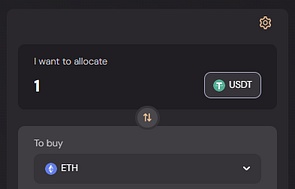
Select Your Asset
Step 3: Define the Amount and Frequency
Set how much you want to invest and the time interval (daily, weekly, or monthly).
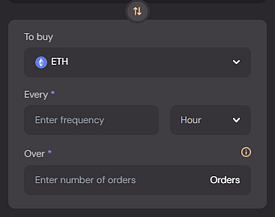
Define amount and frequency
Step 4: Confirm and Activate
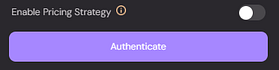
Confirm
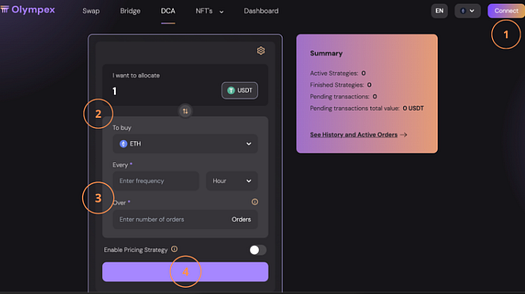
step by step
Practical Use Cases
- Long-term investors: Build positions steadily without worrying about short-term market swings.
- Crypto newcomers: Start investing without needing perfect market timing.
- DAO treasuries: Diversify holdings automatically over time.
DCA Performance Insights
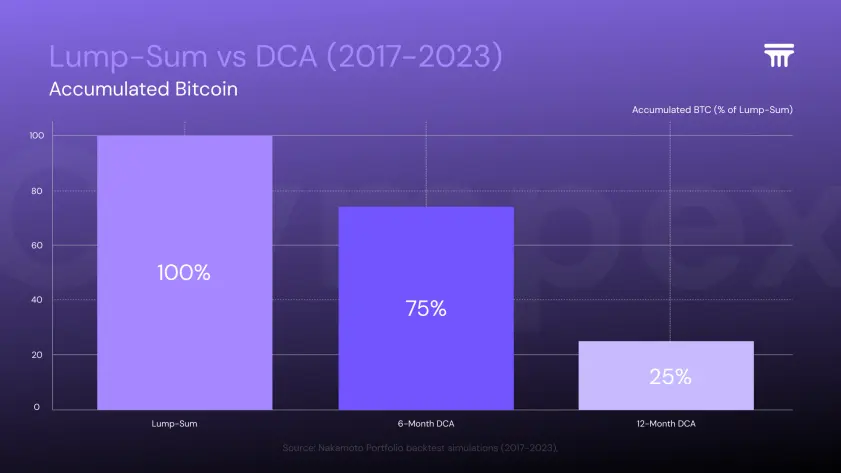
Historical data shows that DCA often outperforms lump-sum investing in volatile markets by achieving a lower average purchase price and reducing the impact of short-term price fluctuations.
For example, investing $100 weekly in BTC over the last 2 years would have yielded a more stable entry price and lower drawdowns compared to a single lump-sum purchase.
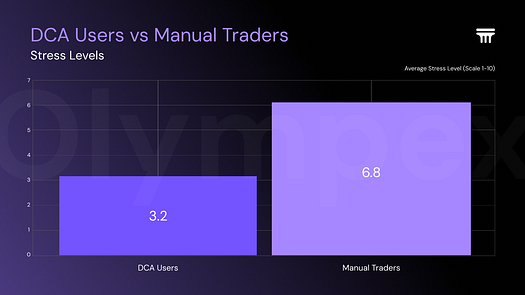
DCA Users vs Manual Traders
- WunderTrading. (2025). What is the Best DCA Bot Strategy? https://wundertrading.com/journal/en/learn/article/what-is-the-best-dca-bot-strategywundertrading.com+1
- Bitunix. (2025). Copy Trading vs Bots vs Manual: Which Strategy Wins? https://blog.bitunix.com/copy-trading-vs-trading-bots-vs-manual-trading/Bitunix |
- TradersPost. (2023). Automated Trading vs Manual Discretionary Trading: Which is Better? https://blog.traderspost.io/article/automated-trading-vs-manual-discretionary-trading-which-is-betterblog.traderspost.io
Conclusion
The future of DeFi cannot be separated from the story of automation. Since the pandemic, when millions of new retail users entered trading for the first time, the foundations have been set for a new era. Now, with artificial intelligence accelerating innovation, automation in trading is no longer optional, it is inevitable.
DeFi should be the space leading this transformation. Every day more money flows into the market, and more of it is directed toward speculation. For this reason, the real opportunity lies in building tools that empower retail users, tools that remove friction and allow them to benefit from automation without losing control.
The challenge ahead will not only be technological, it will be educational. Users will need training and guidance to use these tools wisely, so that automation serves as a multiplier of good strategy, rather than a shortcut to mistakes.
At Olympex, we believe that if DeFi succeeds in combining automation with artificial intelligence while keeping education and transparency at the center, the sector’s growth will be exponential. It could become one of the most active arenas of the global economy. And for those of us already here, building and experimenting today, the reward will come when this vision becomes reality.
That is why we invite you to explore Olympex. Not as another platform, but as part of this broader movement to make DeFi simpler, smarter, and truly accessible. If you share this vision, do not just read about it. Experience it with us.
Start your automated DCA plan today at olympex.io





