
Press enter or click to view image in full size

Transparency Is No Longer Optional
In the DeFi ecosystem, where a single decision can move millions in seconds, transparency has shifted from being an aspirational ideal to a vital requirement. During the early years, many projects thrived on aggressive marketing, promises of high yields, and a narrative of “decentralization” that rarely matched the technical reality.
But recent history has shown the opposite: when transparency fails, systems collapse. Hacks, frauds, and bankruptcies have left a lasting mark: trust is not built with slogans, but with verifiable facts.
Today, transparency is not a luxury or a differentiator. It is the blueprint for survival: the only way for a protocol to sustain itself in an environment where users are increasingly informed and demanding.
The Cost of Opacity in DeFi
Opacity always comes at a price, even if it disguises itself as early success. Projects like Terra/Luna hid structural risks until it was too late; Multichain collapsed due to a lack of clarity around key management; even centralized exchanges like FTX, which projected an image of security, crumbled in days once the truth came to light.
Press enter or click to view image in full size
The lesson is simple but harsh:
Opacity buys time, but it never builds trust.
An opaque protocol might attract capital in the beginning, but sooner or later, the lack of visibility leads to doubts, distrust, and in the worst cases, total collapse.
(sourse: Chainalysis)This bar chart shows that 82% of all cryptocurrency theft in 2021–2022 affected DeFi protocols, underlining how risks magnify when visibility and transparency are low.
Press enter or click to view image in full size
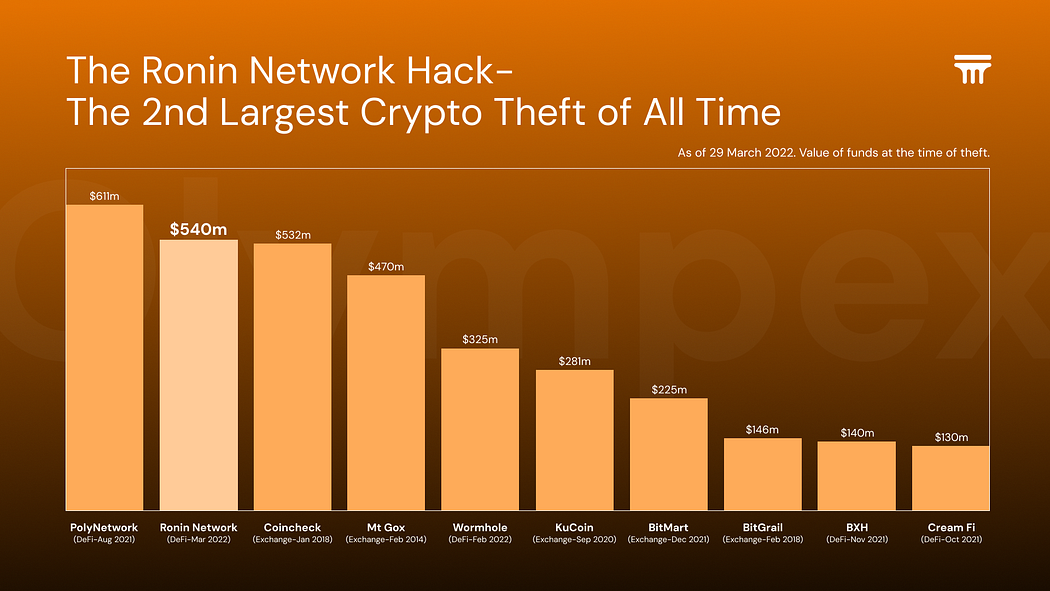
Highlights the size of the Ronin hack (~$540–625 million), showing how massive losses occur when transparency and visibility are lacking — even in supposedly secure systems.
Communicational Transparency vs. Technical Transparency
This is where many protocols get it wrong. Being “transparent” doesn’t mean publishing an occasional Twitter update or writing optimistic blog posts. That is communicational transparency: necessary, but insufficient.
What truly matters is technical transparency, which provides proof instead of words:
- Open-source, auditable code in public repositories.
- Verified smart contracts visible on block explorers.
- Governance logs accessible on-chain, with every proposal and vote recorded immutably.
- On-chain treasuries, trackable in real time by any user.
- Documented upgrade processes with clear review times and community oversight.
The difference is stark:
- Communication builds initial trust.
- Technical transparency builds lasting trust.
A serious protocol doesn’t fear showing how it works. Its strength lies in the fact that anyone can verify its security, not in asking everyone to simply believe in its promises.
On-Chain Dashboards, Visible Logs, and Open Governance
Transparency becomes real when it is translated into practical tools that users can access without intermediaries. Three pillars make the difference:
- On-chain dashboards: panels showing real-time metrics like TVL, fees, liquidity distribution, or treasury movements. Not just pretty graphics on a website, but direct reflections of blockchain data.
- Visible logs: every upgrade, governance decision, and treasury expenditure recorded immutably on-chain, with no possibility of later manipulation.
- Open governance: critical decisions put to on-chain votes with results that are public and immutable. No room for shadow decisions or unilateral actions.
These mechanisms don’t just increase security. They also create accountability, where founding teams are answerable to a community that has the power to verify and challenge.
How User Perception Changes When They See the System
Transparency is not only technical, it is also psychological. A user’s trust changes completely when it no longer depends on a “trust us,” but on a “verify it yourself.”
When an investor or user can access an on-chain dashboard and directly see how the protocol operates:
- They feel more secure about allocating capital.
- Friction is reduced when deciding to participate.
- They become active advocates of the system because their confidence is based on objective data, not marketing.
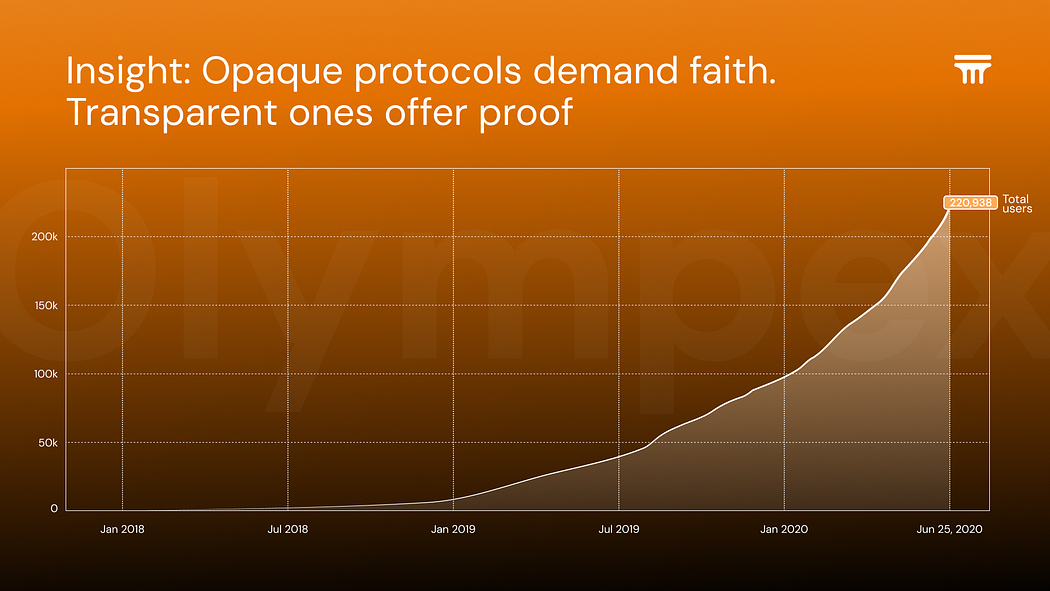
Insight: Opaque protocols demand faith. Transparent ones offer proof.
Press enter or click to view image in full size
This chart tracks the thousands to millions of DeFi users (massive adoption in 2020) illustrating how visibility and trust can lead to user adoption at scale.
The Community as the First Line of Defense
When information is public and auditable, the community stops being a passive observer and becomes a distributed auditor. Technically skilled users can identify anomalies, question decisions, and flag vulnerabilities before they become systemic risks.
Transparency transforms the community into a decentralized security layer, where every participant becomes a guardian of protocol integrity.
Olympex: Transparency as Infrastructure, Not Marketing
A practical example of this philosophy is the Olympex approach:
- Open architecture: distributed governance accessible directly on-chain.
- On-chain dashboards: liquidity, treasury, and upgrades displayed publicly.
- Continuous audits: not as one-off events, but as ongoing, living processes.
- Real-time monitoring: visible alerts and open logs that minimize blind spots.
In this model, transparency isn’t a slogan; it’s baked into the structural design of the protocol.
Conclusion: Transparency as the DNA of Survival
The future of DeFi won’t be built on empty promises or sleek interfaces, but on protocols capable of proving their resilience. Transparency is no longer optional; it’s the dividing line between projects that survive and those that collapse.
Questions every user should ask before interacting with a protocol:
- Can I verify in real time how funds are managed?
- Are governance decisions open and recorded on-chain?
- Are dashboards, logs, and audits publicly accessible?
- Does the community play an active oversight role, or is everything centralized in one team?
Answering these questions is not academic; it’s the difference between protecting your capital and losing it in the next collapse.
Transparency is more than a Web3 ideal; it’s a survival mechanism. In an environment where risks are real and mistakes are costly, protocols that fail to adopt radical transparency will be left behind.
Final Reflection:
In DeFi, every user has a choice: to rely on words or to rely on proof. The first option may feel easier, but the second is the only one that guarantees long-term resilience.
The protocols that endure the coming years will be those that understand that transparency isn’t a marketing strategy, it’s the DNA of security and sustainability itself.
Next time you evaluate a protocol, don’t ask what it promises. Ask what you can verify. Because in DeFi, the future belongs to those who build on structural transparency, not on fleeting promises.





