The Rise and Fall of NFTs: Speculation, Burnout, and What’s Next
From the euphoric peak of JPEG speculation to market fatigue, NFTs are now evolving toward real utility. Here’s how incentive design and infrastructure will shape their next chapter, and why Olympex is part of it.
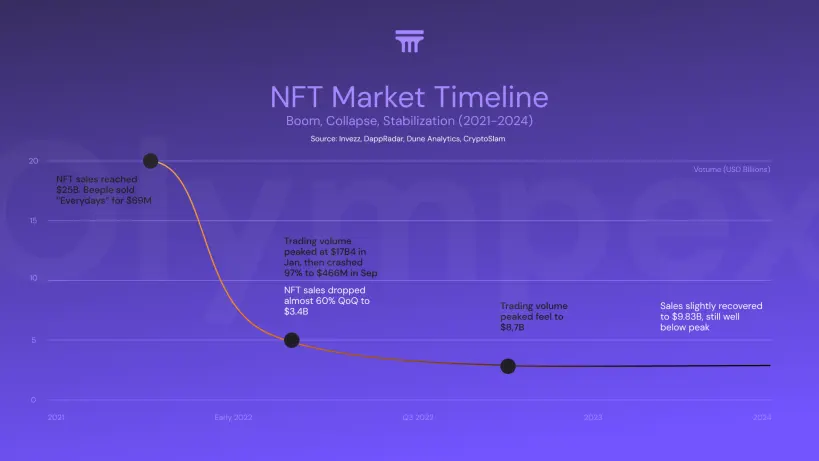
NFT Market Timeline: INVEZZ, DAPPRADAR, DUNNE, CRYPTOSLAM (2021, 2024)
2021 Peak: JPEGs, Digital Identity, and Speculative Euphoria
In 2021, NFTs exploded into mainstream awareness. Profile pictures (PFPs) became digital status symbols, entire communities formed around pixelated art, and prices skyrocketed overnight. The concept of digital identity through NFT ownership became a cultural phenomenon. A mix of art, status, and speculative investment.
Crypto Twitter and Discord servers buzzed with whitelist hunts, gas wars, and rare trait sniping. For many, flipping JPEGs wasn’t just a hobby; it was a full-time job.
Saturation: Projects Without a Value Proposition
But as the market flooded with collections, the cracks began to show. Many projects offered no real value proposition beyond artwork and hype. Roadmaps promised the world but rarely delivered, and thousands of derivative collections diluted attention and capital.
The NFT space became a sea of indistinguishable projects, making it harder for even high-quality initiatives to break through the noise.
Collapse: From Unrealistic Promises to Infrastructure Disconnect
The inevitable happened: floor prices plummeted, communities lost momentum, and speculative buyers exited. The root causes?
- Lack of real-world or on-chain utility: NFTs were often just static images.
- Overpromised, underdelivered roadmaps: trust eroded quickly.
- Poor integration with broader DeFi and Web3 infrastructure: assets remained siloed instead of becoming interoperable tools.
The “NFT Winter” was less about the death of NFTs and more about the burnout from unsustainable hype cycles.
The Reconfiguration: Utility, Incentives, and Infrastructure
NFTs aren’t dead! They’re evolving. The next phase moves beyond speculation into designed incentives and functional integration. NFTs can become:
- Access keys to DeFi strategies and DAOs.
- Dynamic assets that change based on user actions.
- Bridges between digital and physical products.
- Composable tools in multi-chain ecosystems.
For this to happen, infrastructure must allow NFTs to interact with swaps, bridges, liquidity pools, and other core DeFi tools in a single operational flow.
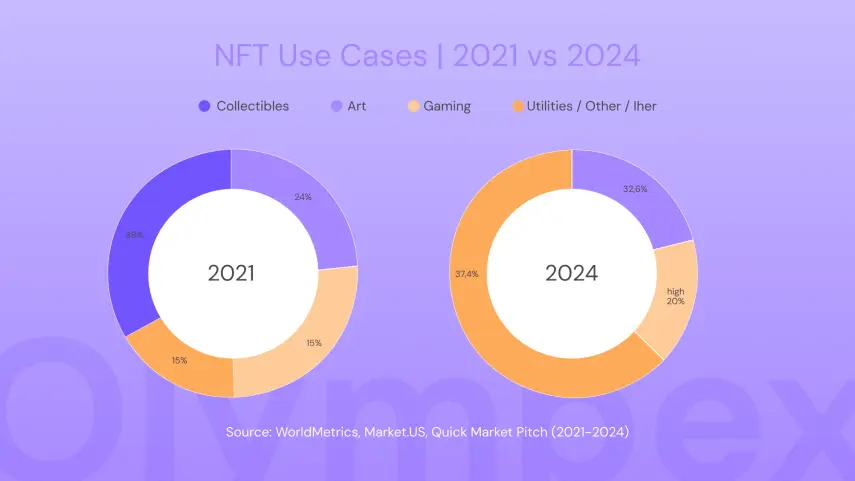
Olympex: The Infrastructure Layer for the NFT 2.0 Era
At Olympex, we’re building exactly that: a modular, all-in-one infrastructure layer where NFTs aren’t just collectibles but functional components within an integrated on-chain experience.
Imagine minting an NFT that instantly connects to cross-chain swaps, farming strategies, or gated liquidity pools, without switching platforms or wallets. That’s the kind of utility-driven NFT economy we believe in.
▶️ Open the door to new possibilities for financial growth and long-term participation in a next-generation DeFi platform.





