
For decades, gold has been considered one of the safest assets investors can hold.
When inflation rises, when currencies weaken, or when geopolitical uncertainty increases, capital tends to flow back into the same place. Gold becomes the asset investors trust to preserve purchasing power when other financial instruments begin to look fragile.
But there is an important nuance that most investors rarely consider. Owning gold is not always the same as having true control over it. In fact, most people who believe they are investing in gold today are actually interacting with a much more complex financial structure.
Understanding that difference is increasingly important in today’s financial environment.
Central Banks Are Quietly Accumulating Gold
One of the clearest signals that gold continues to play a central role in global finance comes from central banks themselves.
Across the world, monetary authorities have been steadily increasing their gold reserves. These institutions are responsible for managing national reserves, and their investment decisions are typically driven by long-term risk management rather than short-term speculation.
When central banks accumulate gold, they are usually positioning for structural uncertainty. Currency instability, geopolitical fragmentation, and monetary policy risks all contribute to the decision to hold a neutral reserve asset.
The chart below shows the pace of central bank gold purchases in recent months.
Press enter or click to view image in full size
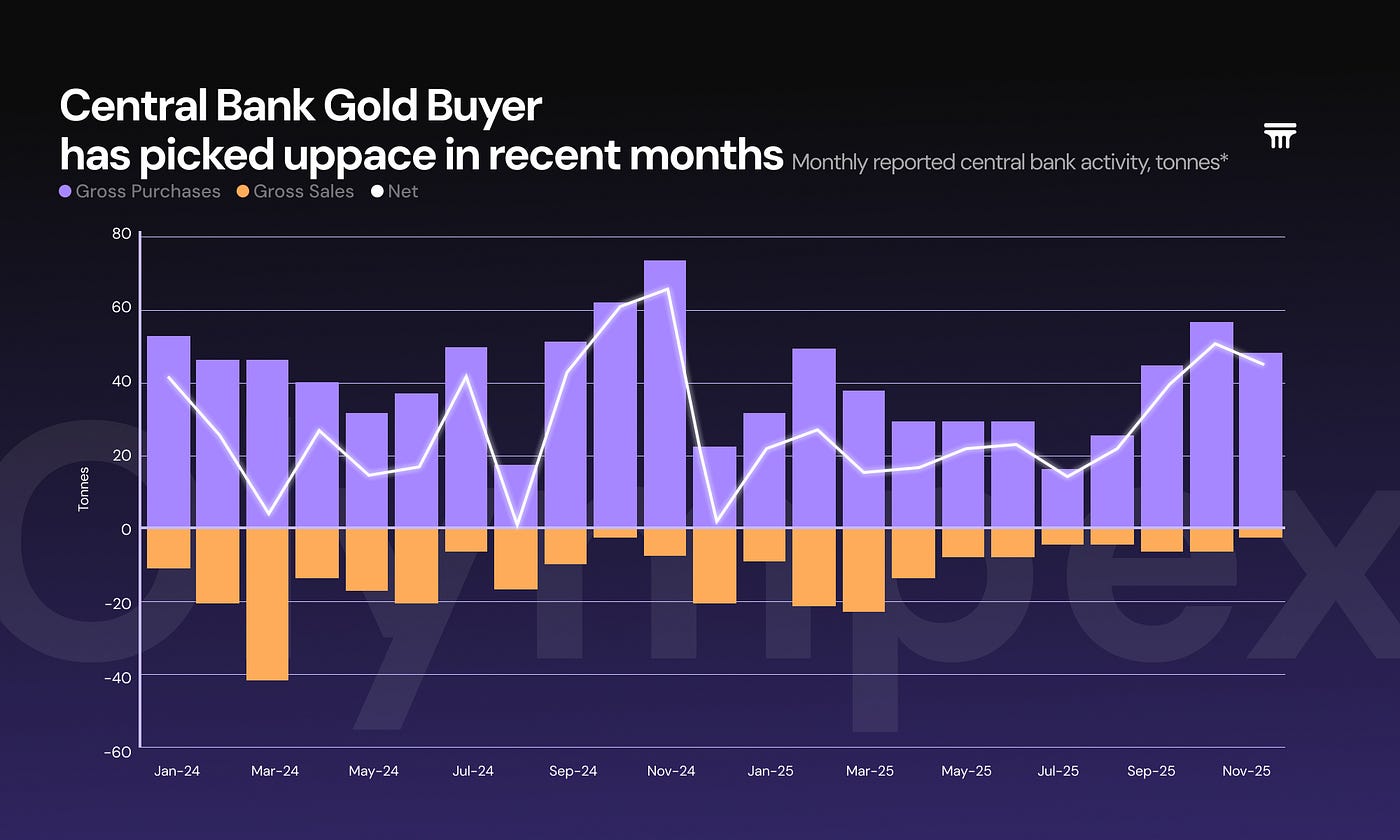
What this trend reveals is relatively simple. Gold continues to function as a strategic asset in the global financial system. Even in a world dominated by digital markets and complex financial instruments, the oldest store of value still holds a critical role.
However, while central banks typically hold physical gold reserves directly, most investors access the asset through financial products instead.
Most Investors Don’t Actually Own Gold
Today, the majority of investors who seek exposure to gold do so through financial intermediaries.
Exchange traded funds, brokerage products, and derivative instruments allow investors to track the price of gold without ever interacting with the physical asset itself. These products are convenient, liquid, and easy to trade.
The growth of gold ETFs illustrates just how significant this trend has become.
Press enter or click to view image in full size
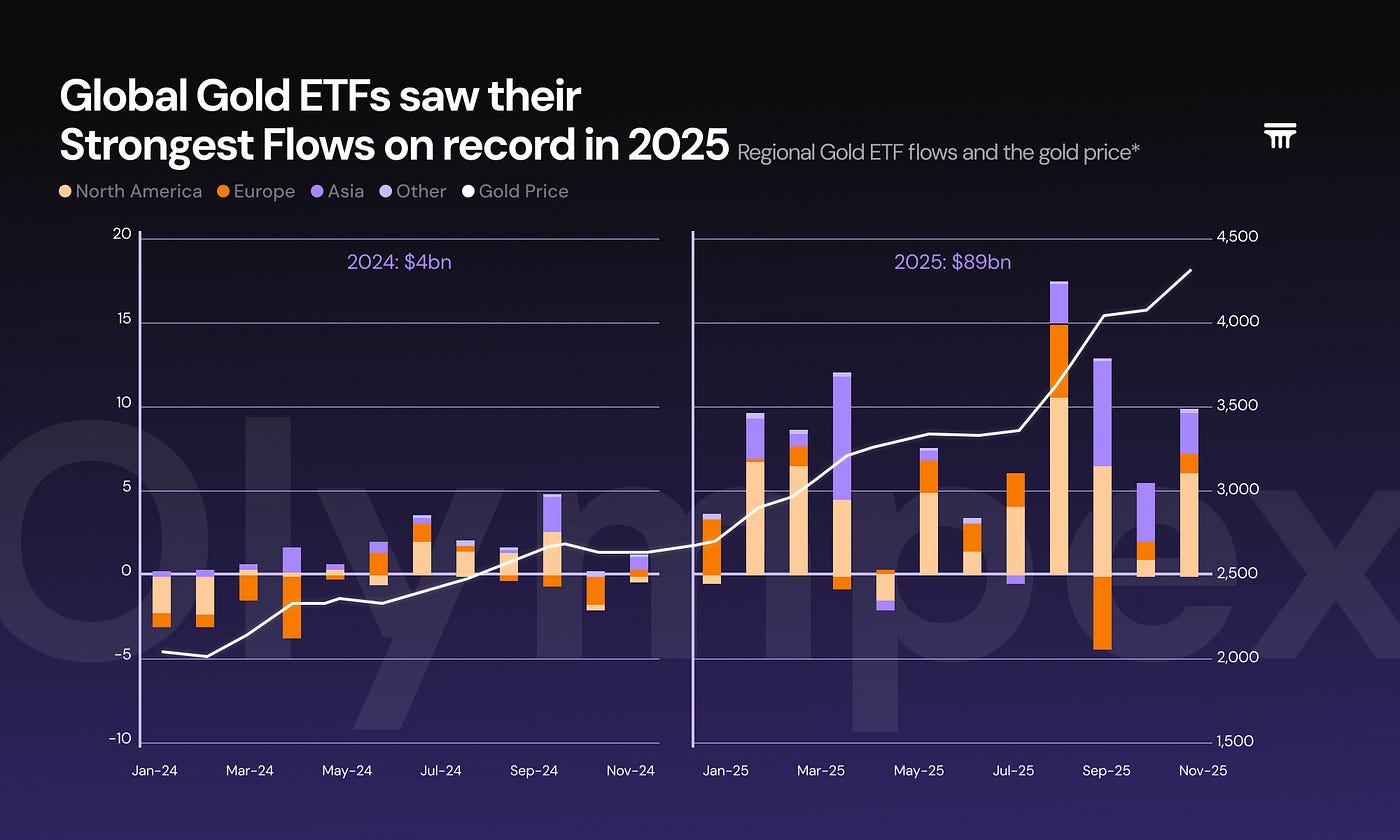
Over the past years, billions of dollars have flowed into these vehicles as investors attempt to position themselves in what they perceive as a safe haven asset.
But there is an important structural distinction.
Owning shares of a gold ETF is not the same as owning gold.
Between the investor and the underlying asset exists a chain of institutions. Custodians hold the metal, financial institutions structure the products, and markets provide liquidity. The investor gains price exposure, but control over the underlying asset remains embedded within the financial system.
For many investors this arrangement works perfectly well. Yet it also introduces an additional layer of dependency that rarely receives much attention.
And that dependency is precisely what a new generation of investors is beginning to question.
The Rise of Self-Custody
Over the last decade, the growth of digital assets has introduced a new financial behavior that did not previously exist at scale.
Millions of individuals are now accustomed to holding assets directly through digital wallets rather than relying entirely on traditional custodial institutions.
The growth of the global digital wallet market reflects this shift.
Press enter or click to view image in full size
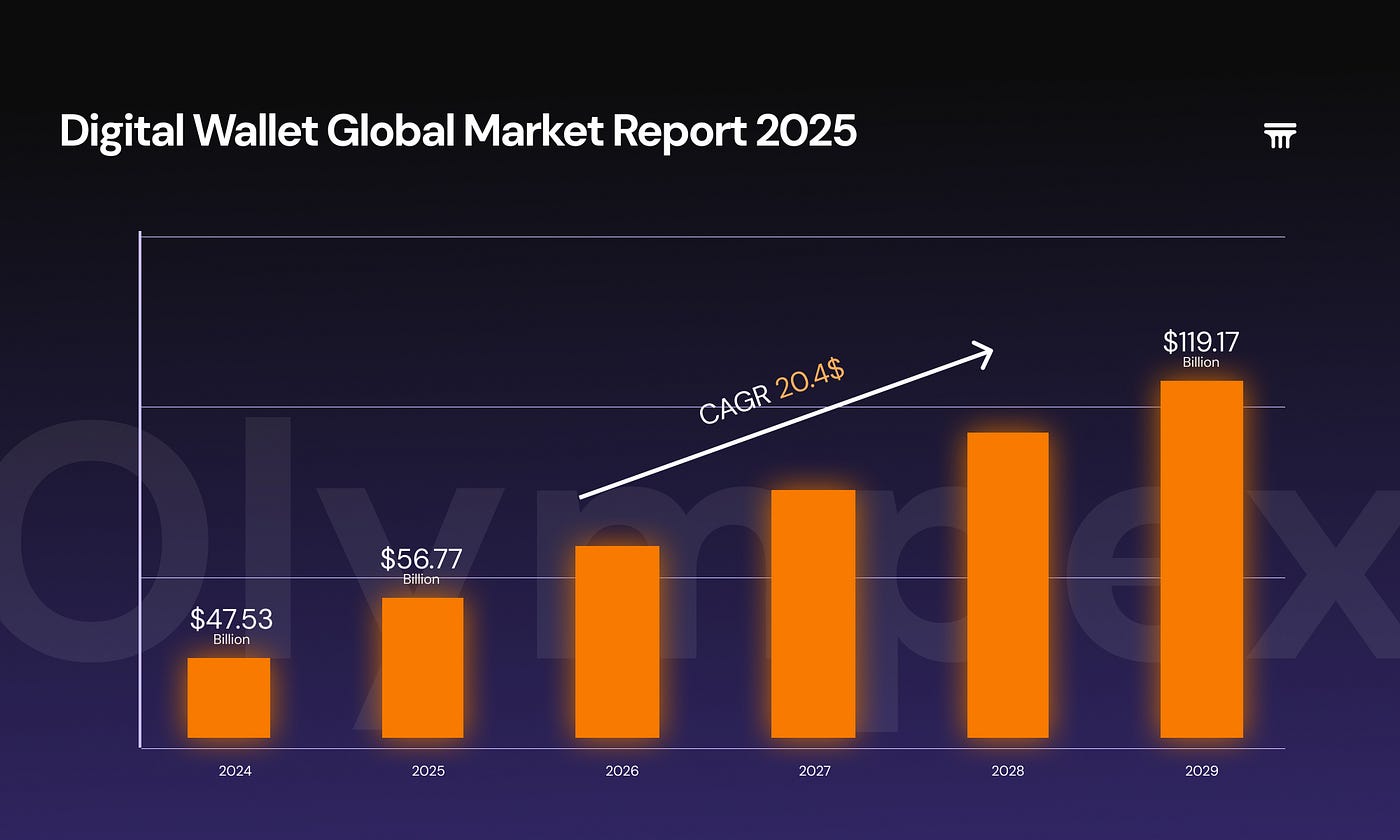
What this trend represents is more than technological adoption. It signals a broader cultural change in how investors think about ownership.
In traditional finance, assets are often held through layers of intermediaries. Brokerage firms, custodians, clearinghouses, and banks all sit between the investor and the underlying asset.
In decentralized systems, ownership becomes much more direct.
Users hold assets in wallets they control. Transactions occur on open networks. Custody becomes a personal responsibility rather than an institutional service.
This shift has already transformed how millions of people interact with digital assets. Increasingly, it is also beginning to influence how investors think about traditional stores of value like gold and silver.
A New Model for Precious Metal Ownership
The intersection of traditional assets and digital infrastructure is opening the door to new ways of accessing precious metals.
Technologies originally developed within blockchain ecosystems are making it possible to rethink how assets like gold and silver can be owned, transferred, and secured.
Instead of relying exclusively on financial intermediaries, investors can begin to explore models where ownership structures are more transparent and custody can be more flexible.
This emerging model does not replace traditional markets, but it expands the possibilities available to investors.
Gold remains the same asset it has always been.
What is changing is the infrastructure through which investors interact with it.
Join Our Webinar: Investing in Gold and Silver With Privacy
These structural shifts are exactly what we will explore in our upcoming webinar.
In this session, we will examine how modern financial infrastructure is reshaping the way investors can access assets like gold and silver. We will discuss how new technologies allow individuals to reduce intermediary risk, maintain greater control over custody, and explore alternative investment models that combine traditional stores of value with digital financial tools.
If you are interested in understanding how these systems work and how they may influence the future of investing, we invite you to join the discussion.
You can also join our Telegram community, where we share updates, research, and upcoming educational sessions related to decentralized finance and modern investment infrastructure.
The financial system is evolving quickly. Understanding how ownership, custody, and access to assets are changing may become one of the most important skills investors develop in the coming years.





