
Volatility is one of the defining traits of crypto. Prices rise fast, fall fast, and shift unexpectedly as liquidity moves across markets and narratives. In the middle of that storm, stablecoins act like an anchor, a place where traders, institutions, and DeFi users can store value without exiting the blockchain. They are the silent infrastructure beneath the entire ecosystem, quietly keeping markets liquid, accessible, and predictable.
In this second lesson of the Olympex School of Crypto, we explore what stablecoins are, how they hold their value, and why they’re essential for trading, yield strategies, and efficient on-chain execution. If you’ve ever wondered how DeFi maintains stability while operating without banks, stablecoins are the answer.
Press enter or click to view image in full size
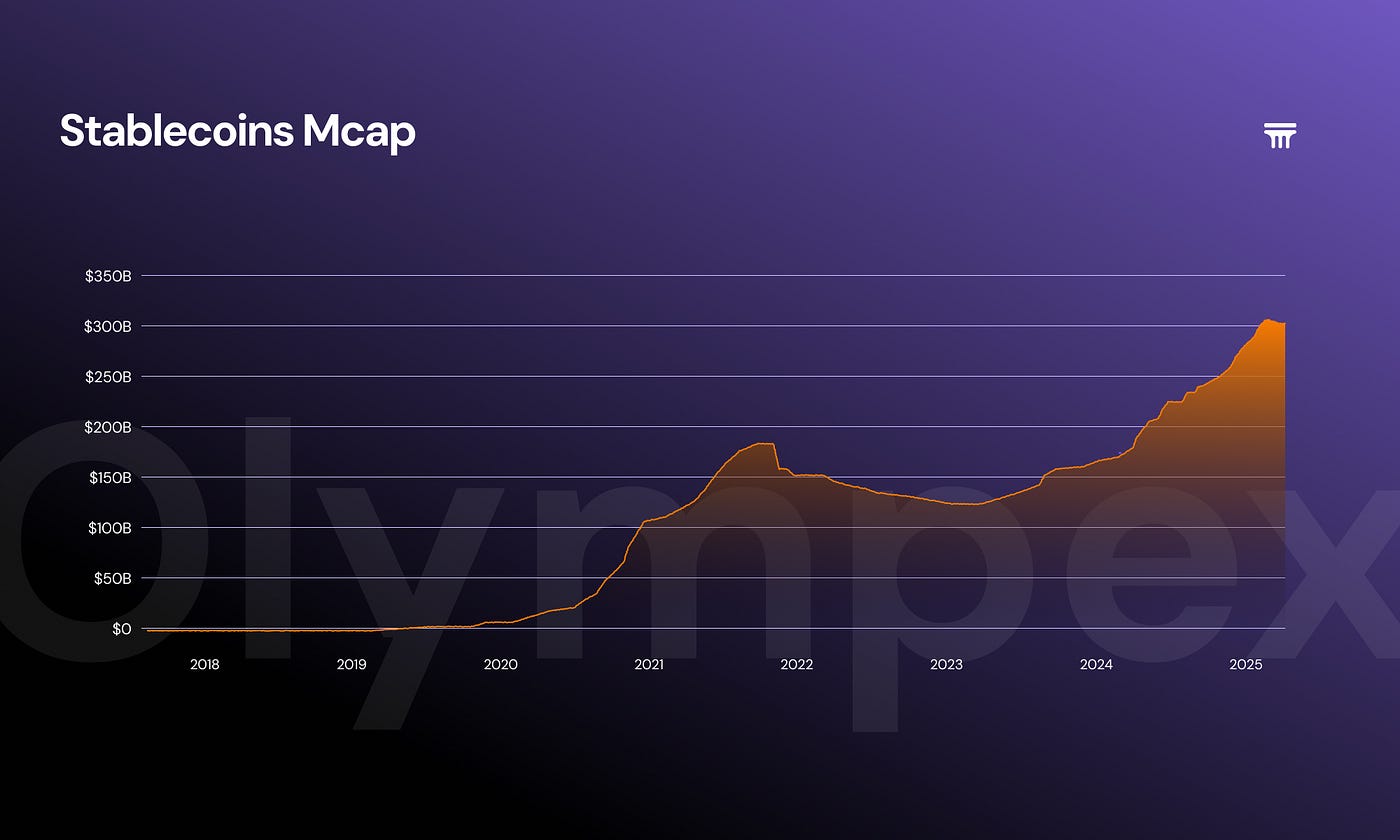
Source: https://defillama.com/?stablecoinsMcap=true&tvl=false
What Stablecoins Are, and Why They Matter
A stablecoin is a cryptocurrency designed to maintain a steady price, typically pegged to the U.S. dollar. Unlike Bitcoin or Ethereum, which fluctuate constantly, stablecoins aim to preserve value, making them ideal for payments, trading, cross-chain transfers, and liquidity management.
Stablecoins solve one of the biggest challenges in DeFi:
how to participate in an open, global financial system without being exposed to constant volatility. They act as digital dollars on the blockchain, allowing users to move funds instantly, avoid price swings, and interact with protocols without relying on banks or traditional transfers.
Stablecoins are also a pillar of modern DeFi infrastructure. Most swaps, liquidity pools, yield strategies, and cross-chain systems rely on stablecoins as their base asset, including many of the operations executed inside Olympex.
If you missed Lesson 1 and want to revisit the basics, you can return to:
“DeFi 101: From Wallets to Yield: Your First Steps in the Decentralized World”
The Different Types of Stablecoins
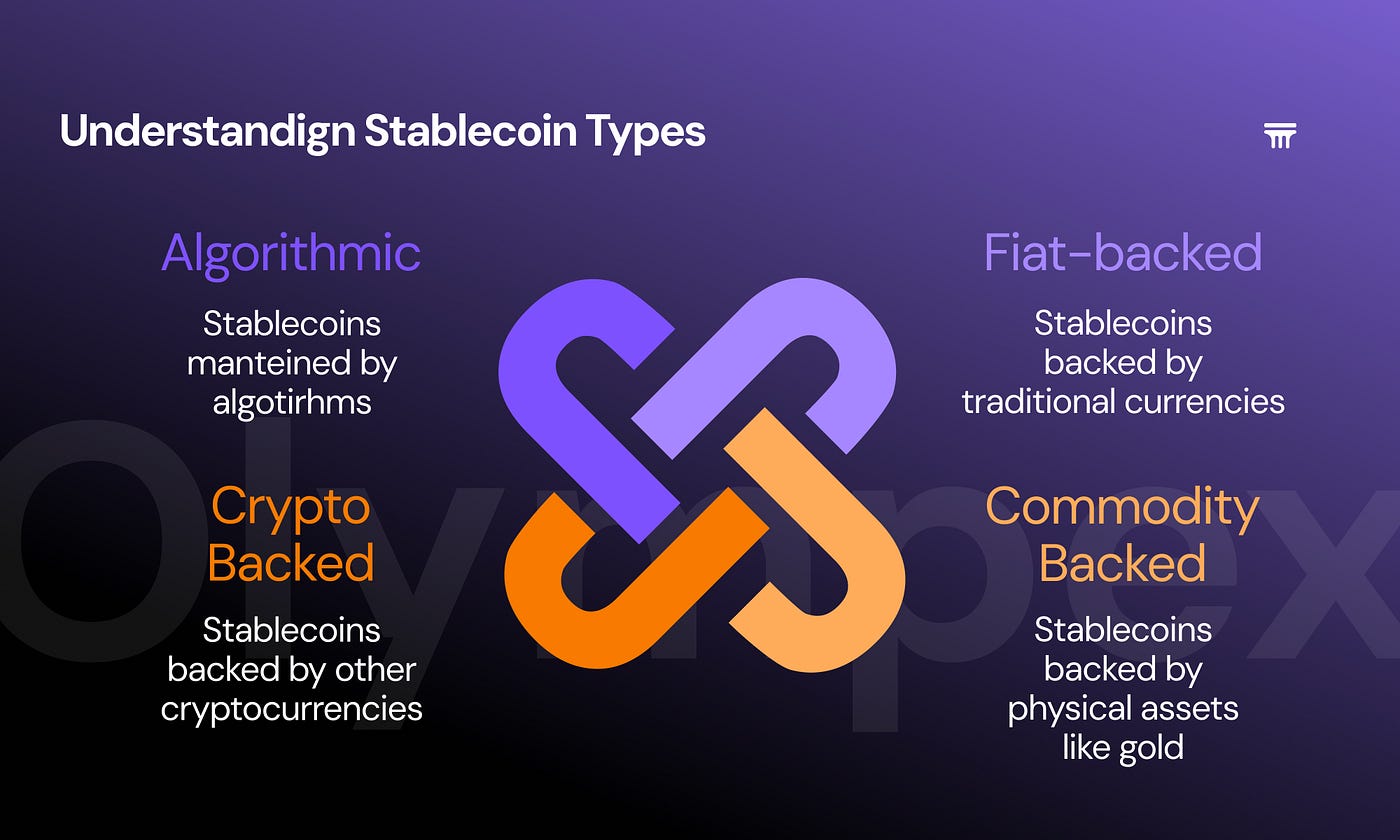
Although all stablecoins aim to hold their value close to $1, they rely on very different mechanisms to maintain stability. Understanding these categories helps you evaluate which ones are safer, which are more decentralized, and which carry higher risk during market stress.
1. Fiat-Backed Stablecoins (USDT, USDC)
These stablecoins are backed by real-world assets such as dollars, treasury bills, or cash equivalents stored by the issuing company. Their peg is maintained because each token can, in theory, be redeemed for one dollar. USDT and USDC dominate this category and are widely used in both CeFi and DeFi due to their liquidity and stability.
2. Crypto-Backed / Overcollateralized Stablecoins (DAI)
Instead of being backed by dollars, these stablecoins are collateralized by cryptocurrencies locked inside smart contracts.
DAI, the most prominent example, is typically backed by assets such as ETH or wBTC at 120–150% collateral ratios.
This overcollateralization protects the peg during market volatility and makes DAI one of the most resilient decentralized stablecoins in the ecosystem.
3. Commodity-Backed Stablecoins (e.g., XAUT, PAXG)
Commodity-backed stablecoins represent ownership of real physical assets such as gold or other precious metals.
For example, PAX Gold (PAXG) and Tether Gold (XAUT) are each backed by one troy ounce of investment-grade gold stored in audited vaults.
These coins allow users to hold commodities on the blockchain, gaining exposure to assets far more stable than crypto, while benefiting from digital transferability, low friction, and global portability.
They function as an alternative safe haven for traders who want stability without returning to fiat.
4. Algorithmic Stablecoins
These stablecoins attempt to maintain their peg through incentives or supply adjustments instead of collateral.
While some have worked at small scale, most algorithmic designs have struggled under extreme volatility. The collapse of UST in 2022 remains the most famous example of how fragile this model can be when incentives break down.
The key takeaway is that not all pegs are created equal, and the mechanism behind a stablecoin determines how it performs during stress.
Press enter or click to view image in full size
How Peg Mechanisms Work
The “peg” is the mechanism that keeps stablecoins near $1.
For fiat-backed coins, it’s straightforward: reserves are held off-chain, and tokens can be redeemed for equivalent funds.
For decentralized stablecoins like DAI, the peg is maintained on-chain:
1. Users lock collateral (ETH, wBTC, etc.).
2. They mint DAI against it.
3. If collateral value falls too much, positions are liquidated to protect stability.
Algorithmic stablecoins try to maintain the peg through incentives, adjusting supply based on market conditions, but this model has proven fragile in times of extreme volatility.
Regardless of the mechanism, the goal is the same: keep the price close to $1 so traders can rely on stablecoins as a safe harbor.
Why Stablecoins Matter in DeFi
Stablecoins play a much larger role in DeFi than simply offering a safe place to store value. They are the quiet infrastructure that keeps the entire ecosystem running. When traders move in and out of volatile assets, they almost always pass through a stablecoin first, using it as a neutral base that protects them from sudden price swings. The same is true for liquidity providers: many of the deepest and most active pools pair volatile tokens with USDT or USDC, using the stability of these assets to keep markets liquid and efficient.
Their importance becomes even clearer in yield strategies. Because stablecoins hold their value, they allow users to earn return through lending, pooling, or automated strategies without taking on the price risk of typical crypto assets. This combination of stability and productivity is one of the primary reasons why stablecoins are the foundation of so many DeFi protocols.
And beyond trading and yield, stablecoins have transformed on-chain payments. They move instantly across borders, don’t require bank approval, and cost only a fraction of traditional transfer fees. For many people, they are the simplest and most accessible way to interact with digital money.
In short, stablecoins are the bloodstream of DeFi. Without them, liquidity would dry up, volatility would dominate every transaction, and the on-chain economy would be far more intimidating for newcomers. Their stability is what allows DeFi to function smoothly, and what makes the ecosystem accessible to millions of users around the world.
For more on how transparency supports stablecoin trust, you can later check:
“The Risk Everyone in Crypto Knows and Still Ignores”
Press enter or click to view image in full size
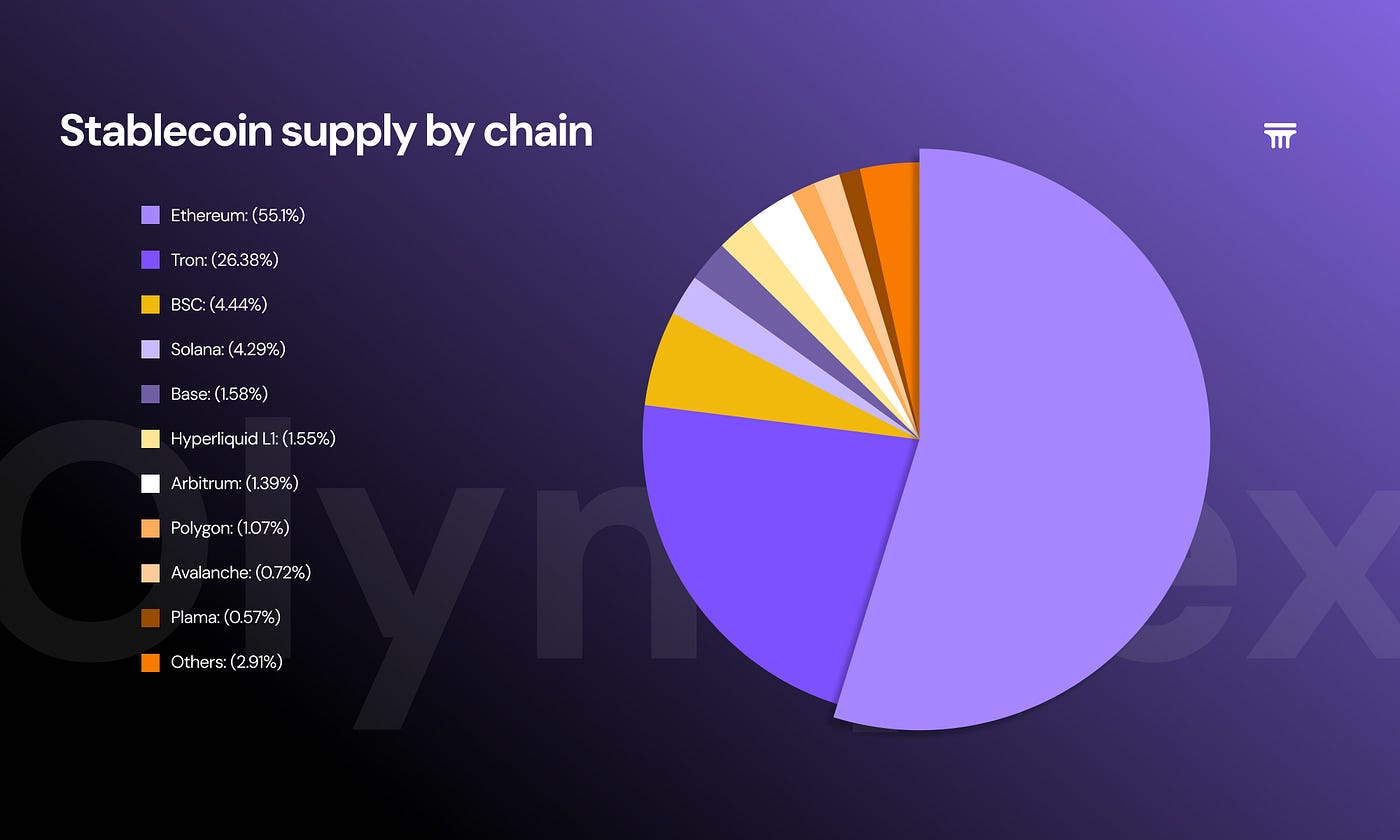
Source: https://defillama.com/stablecoins/chains
Stablecoins Inside Olympex: The Engine Behind Smooth Execution
Stablecoins play an essential role inside Olympex, shaping how trades execute and how liquidity moves across chains. Because their value doesn’t fluctuate, they often serve as the intermediate asset in multi-step swaps, allowing the routing engine to calculate the best possible price with minimal slippage. The same stability makes cross-chain activity more reliable, since liquidity can move between networks without the risk of price swings mid-transfer.
Stablecoins also support simple, low-risk yield strategies and give traders an easy way to step out of volatility without leaving the blockchain. With a single swap into USDT or USDC, users can protect their capital while staying fully on-chain.
In practice, this means stablecoins aren’t just another asset class inside Olympex, they’re part of the infrastructure that enables smoother execution, safer liquidity movement, and a more consistent trading experience overall.
A Simple Exercise to Build Your Stablecoin Confidence
Before moving to Lesson 3, try this short hands-on activity:
1. Open MetaMask or your preferred wallet.
2. Swap a small amount of crypto into USDT or DAI using Olympex.
3. Observe how the price barely moves, regardless of market noise.
4. Track the transaction in a block explorer to see how the smart contract executed the swap.
5. Swap the stablecoin back into another asset and compare the experience.
Understanding stability through interaction, not just theory, is one of the most valuable steps in your DeFi journey.
Stability Is the Foundation of Freedom in DeFi
Stablecoins make DeFi usable. They reduce volatility, enable seamless trading, and allow users to stay on-chain without exposing themselves to constant price swings. They are the quiet infrastructure powering the decentralized economy, and one of the most important concepts you will ever learn in crypto.
Stablecoins are often the first place where clarity replaces chaos in crypto. If you want to continue building that clarity and see how other users use stablecoins in real on-chain scenarios, we invite you to join the Olympex Telegram community. There, we discuss market conditions, share practical examples, and connect lessons like this one with what is actually happening across DeFi. Learning why stability matters is easier when you explore it alongside others who are on the same path.
Join the Olympex Telegram community and keep strengthening your foundation in DeFi, one concept at a time.
Ready for the next step?





