
The gaming industry has always been built on participation. Players invest time, skill, and creativity to progress through virtual worlds, build characters, and acquire in-game items. Yet for decades, the economic value generated inside games rarely belonged to the players themselves. Play-to-Earn, often abbreviated as P2E, emerged from the crypto ecosystem with a radically different proposition: what if players could actually own the assets they earn and extract real economic value from their time spent playing?
This idea gained traction during the last crypto cycle, when blockchain-based games started attracting millions of users worldwide. In some regions, especially where traditional job opportunities or financial infrastructure are limited, Play-to-Earn was not just entertainment but a new source of income. At the same time, hype, speculation, and unsustainable token models raised legitimate questions. Are Play-to-Earn games truly profitable, or was this just a temporary trend driven by market euphoria?
Press enter or click to view image in full size
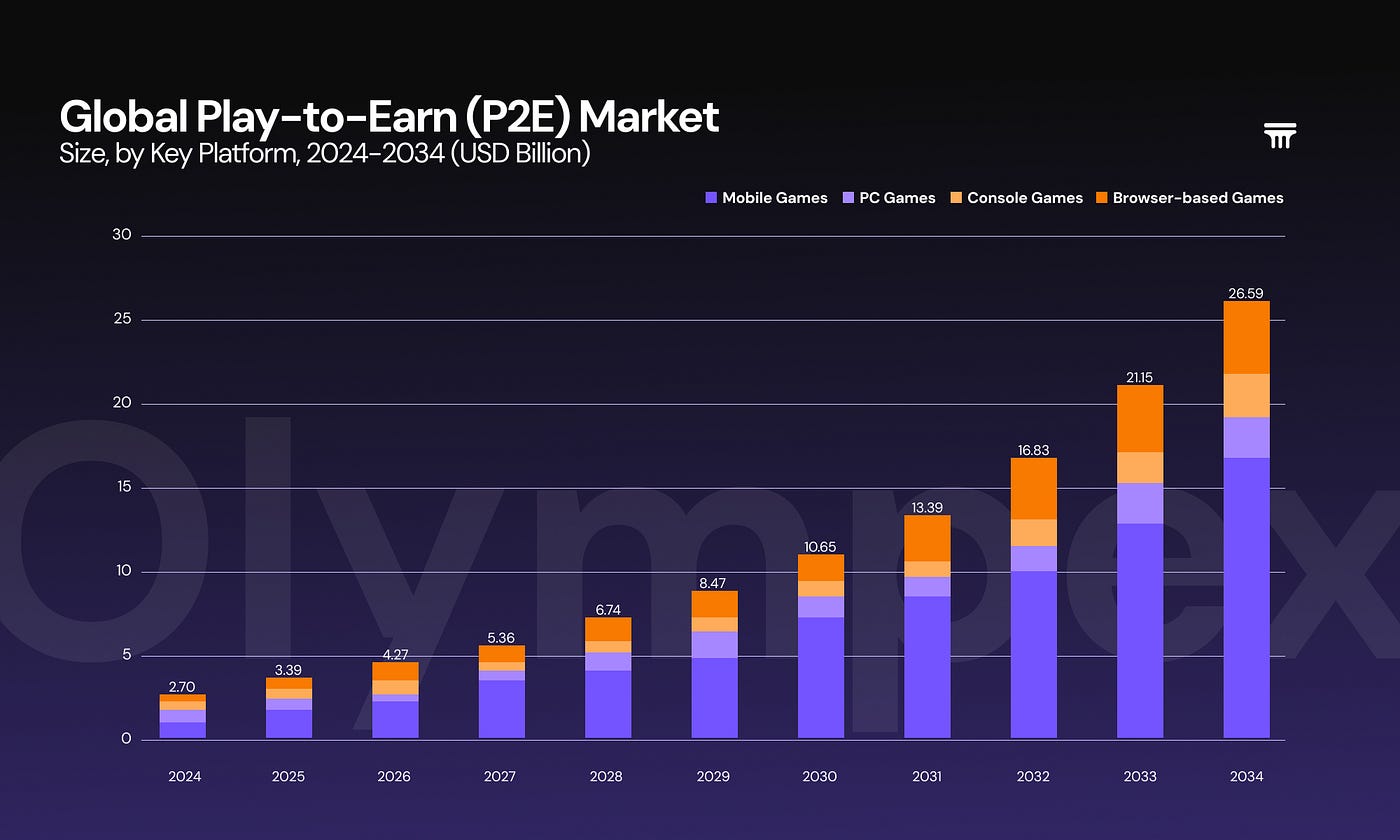
Source: https://market.us/report/play-to-earn-p2e-market/
What “Play-to-Earn” Really Means
At its core, Play-to-Earn refers to games that reward players with blockchain-based assets. These assets can be native tokens, NFTs, or other digital items that exist on-chain and can be traded, sold, or used outside the game itself. Unlike traditional games, where items remain locked within centralized servers, P2E games give players direct ownership through wallets and smart contracts.
This ownership fundamentally changes the player–developer relationship. Progress inside the game becomes economically meaningful, and skill or time invested can translate into real-world value. In this sense, Play-to-Earn is less about “earning money for playing” and more about transforming games into open digital economies where players participate as economic actors rather than passive users.
Tokens, NFTs, and Digital Rewards
Most Play-to-Earn ecosystems rely on a combination of rewards. Fungible tokens are commonly used as in-game currencies, governance tools, or incentives for participation. NFTs represent unique or scarce assets such as characters, land, equipment, or cosmetic items, each with verifiable ownership and transferability.
Some games emphasize competitive skill and reward top performers, while others focus on creativity, community participation, or resource management. The most advanced ecosystems blend these elements together, creating layered economies where players can choose how they engage. However, the type of reward matters greatly, as it directly impacts sustainability and long-term value.
Not all Play-to-Earn models generate value in the same way. Some rely heavily on token emissions, others on NFT trading or staking mechanics, while newer games experiment with hybrid approaches. Understanding how rewards are structured is essential to evaluating whether a game can remain profitable over time.
Press enter or click to view image in full size
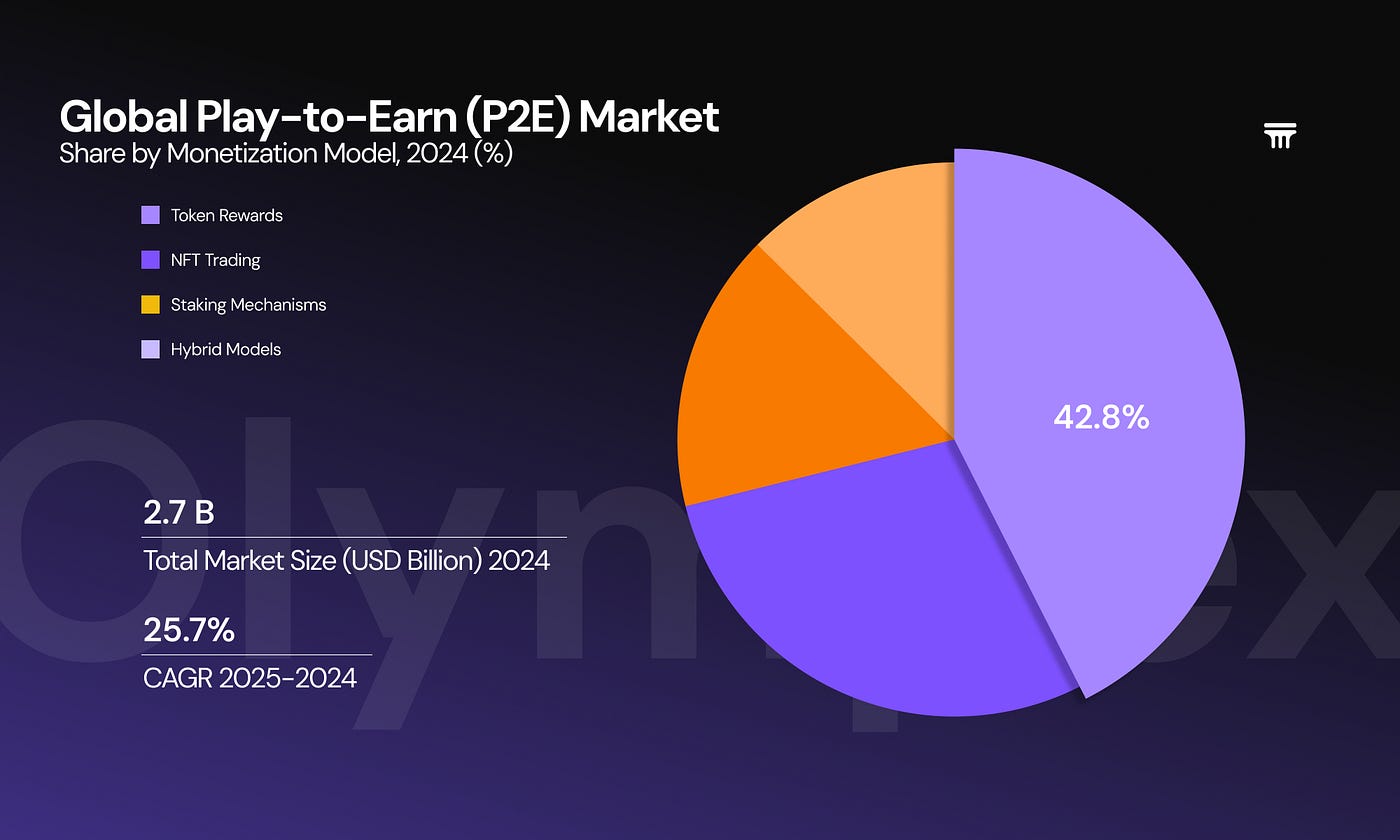
Source: https://market.us/report/play-to-earn-p2e-market/
How Play-to-Earn Game Economies Work
A sustainable Play-to-Earn game functions like a real economy. Value must enter the system through new players, marketplace transactions, partnerships, or external demand for in-game assets. That value is then distributed between players, developers, and the broader ecosystem.
Problems arise when rewards depend almost entirely on new participants buying tokens from earlier users. In those cases, inflation quickly erodes value, and earning potential collapses once growth slows. Strong P2E economies rely on utility, spending mechanisms, and balanced token issuance rather than endless emissions. Understanding how value is created and recycled inside a game is essential before committing time or capital.
This dynamic mirrors broader crypto market cycles, where early participation is often rewarded, as explored in “Understand the Cycles to Start Winning Before They Begin”.
Popular Games and Real-World Examples
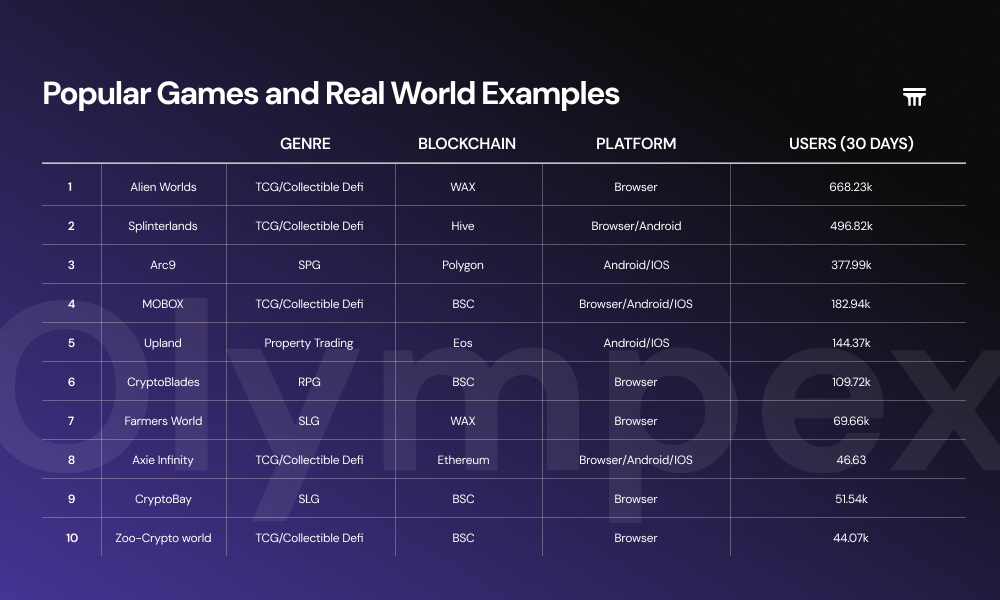
Several Play-to-Earn games demonstrated both the promise and the limitations of the model. Early pioneers like Axie Infinity showed how players could earn meaningful income during periods of strong demand, especially in emerging markets. Other projects such as The Sandbox and Decentraland focused on virtual land ownership and creative economies, allowing users to monetize experiences rather than repetitive gameplay.
Beyond well-known case studies, user activity data helps separate short-lived hype from sustained engagement. When we look at active users across different Play-to-Earn titles, clear patterns emerge around accessibility, platform choice, and underlying blockchain infrastructure.
Press enter or click to view image in full size
More recent projects have shifted toward competitive gameplay, social interaction, or hybrid “play-and-own” models that prioritize enjoyment first and rewards second. These evolutions reflect a growing understanding that games must be engaging on their own, not just profitable on paper.
Risks and Challenges Players Must Consider
Despite their potential, Play-to-Earn games carry real risks. Token prices can be highly volatile, and rewards earned today may lose significant value tomorrow. Inflationary reward structures can dilute earnings, especially when too many tokens are issued too quickly. Scams and low-quality clones also remain a problem, often exploiting new users with unrealistic promises.
Security is another critical concern. Interacting with unfamiliar contracts, marketplaces, or third-party tools exposes players to wallet risks similar to those found across DeFi. Many of the same precautions discussed in Safe or a Trap? It’s Your Money apply directly to P2E environments.
How to Evaluate Whether a P2E Game Is Sustainable
A useful rule of thumb is simple: if a game is not enjoyable without financial rewards, it is unlikely to survive long term. Sustainable Play-to-Earn projects usually demonstrate strong gameplay loops, clear token utility, controlled emissions, and active development teams.
Transparency also matters. Roadmaps, on-chain data, and community governance provide insight into whether a project is designed for longevity or short-term speculation. Evaluating a P2E game requires thinking like both a gamer and an investor, balancing entertainment value with economic fundamentals.
Maximizing Earnings Without Losing the Fun
Players who succeed in Play-to-Earn ecosystems tend to diversify their participation and avoid overcommitting to a single game or token. Some focus on skill-based competitions, others on asset trading or community roles. Reinvesting earnings into better in-game assets or improving efficiency often produces better results than chasing hype.
Just as important, maintaining enjoyment is critical. Burnout is common when gameplay becomes purely transactional. The most resilient earnings usually come from games where participation feels rewarding even without immediate financial pressure.
The Broader Impact on Gaming and the Global Economy
Play-to-Earn has already influenced how the gaming industry thinks about ownership and participation. It introduced millions of users to wallets, NFTs, and on-chain economies, often before they ever interacted with traditional DeFi protocols. In doing so, it became a powerful onboarding channel into the broader crypto ecosystem.
As the space matures, Play-to-Earn is evolving toward more balanced models that emphasize ownership and engagement over pure extraction. The long-term impact may be a gaming industry where players are no longer just consumers, but stakeholders in the worlds they help build.
Final Thoughts
Play-to-Earn games are neither guaranteed income nor empty hype. They are an evolving experiment at the intersection of gaming, crypto, and digital ownership. When designed well, they reward skill, creativity, and participation. When designed poorly, they collapse under inflation and speculation.
Understanding the mechanics behind these games allows players to participate more intelligently, manage risk, and recognize real opportunities. As with all things in Web3, the greatest rewards tend to flow to those who engage early, think critically, and understand how value is created on-chain.
Play-to-Earn rewards participation, but strategy determines results.
If you want to understand how on-chain economies, liquidity, and execution shape these digital worlds, explore how Olympex helps you navigate Web3 with more clarity and control.
Join the Olympex Telegram community to discuss on-chain trends, strategies, and insights with other builders and investors.





