
Not Just Moving Tokens: Why Real Bridges Connect Experiences
For most people entering the world of decentralized finance, the concept of a blockchain bridge typically begins and ends with one simple function: transferring tokens from one chain to another. It’s an image that’s easy to grasp, like a digital highway where assets can cross from Ethereum to Polygon, or from Binance Smart Chain to Avalanche. But this view, while useful at first, drastically underestimates the true potential of what bridges can and should be.
The reality is that a bridge limited to acting as a “token pipe” falls short of addressing the needs of a rapidly expanding multi-chain ecosystem. Tokens may arrive at their destination, but too often they lose much of their purpose. Liquidity becomes fragmented, utilities don’t always translate, and users are left holding assets that feel disconnected from the vibrant DeFi opportunities they once had.
This is where the concept of real bridges comes into play. A new generation of cross-chain solutions is emerging, bridges that do far more than replicate tokens across networks. These bridges are designed to unify liquidity, extend the functionality of DeFi applications, and create seamless user experiences across multiple chains. They allow a token, an NFT, or even a smart contract action to carry its utility with it, no matter the ecosystem it enters.
In this article, we’ll explore why the evolution of bridges matters, how they’re moving from simple asset transfers to enabling interoperable experiences, and what this shift means for the future of decentralized finance.
The Limitations of the “Token Pipe”
The earliest generation of blockchain bridges was designed with a simple goal in mind: allow tokens to move from one chain to another. On the surface, this seems sufficient. For example, sending ETH to a sidechain typically results in wrapped ETH (wETH), which can then be used within that chain’s ecosystem. While this solves the immediate problem of token transfer, it introduces a series of limitations that have become increasingly apparent as DeFi evolves.
- Utility Often Doesn’t Follow
A token may arrive on a new chain, but its original functionality, staking, governance participation, lending, or NFT-related capabilities, does not automatically transfer. This disconnect reduces the practical usefulness of the asset, limiting what a user can actually do with it. - The Rise of “Zombie Assets”
Tokens that exist but cannot interact meaningfully within their new ecosystem are sometimes referred to as “zombie assets.” These are assets that may have value on paper but remain largely inactive, locked away because the cross-chain environment does not support their intended functions. For users, this can create frustration and missed opportunities. - Liquidity Fragmentation
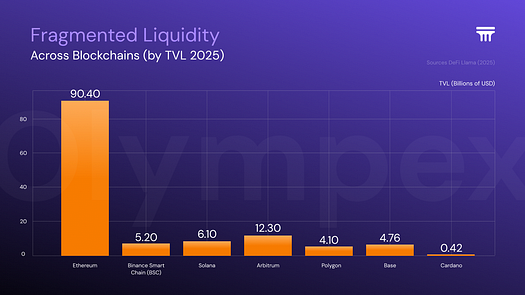
Each isolated transfer spreads liquidity thin across multiple chains. Instead of building a cohesive, unified pool of resources that can be efficiently accessed, liquidity becomes scattered, reducing the overall efficiency of DeFi markets. Lower liquidity can lead to higher slippage, less favorable rates, and missed arbitrage or yield opportunities. - Operational Complexity and Risk
Managing multiple wrapped assets across chains also increases operational complexity. Users must keep track of different token versions, ensure compatibility with protocols, and monitor for potential vulnerabilities in smart contracts. Each step introduces potential friction, mistakes, or even security risks.
In short, while early bridges solved the basic problem of moving tokens, they fell short of enabling a seamless, functional, and interoperable DeFi experience. They highlight the need for a new approach, one that carries not just the token but also its utility, liquidity, and ecosystem integration across chains.
More Than Assets: The Importance of Functional Interoperability
A truly useful bridge doesn’t just replicate assets, it enables the functional layer of DeFi to While moving tokens across chains solves one problem, the real power of modern bridges lies in their ability to carry functionality along with those assets. In other words, a bridge shouldn’t just replicate the token; it should replicate its utility, allowing users to fully interact with DeFi ecosystems no matter which chain they operate on.
- Cross-Chain Lending
With functional interoperability, users can deposit collateral on one blockchain and borrow assets on another. This opens up a world of possibilities: optimizing interest rates, leveraging liquidity across multiple chains, and executing more complex financial strategies without being confined to a single ecosystem. - NFT Utility Across Chains
Non-fungible tokens (NFTs) are more than collectibles — they often come with staking rewards, governance rights, or exclusive access to services. Functional bridges ensure that these capabilities travel with the NFT, so an asset’s full value and functionality are preserved across networks. Users no longer need to worry about “locking” their NFT’s potential when moving it to another chain. - Cross-Chain Messaging
A bridge that supports functional interoperability also enables smart contracts on different blockchains to communicate. This means contracts can trigger actions, execute workflows, or synchronize data across chains securely. For example, a lending protocol on Ethereum could automatically adjust collateral ratios based on events happening on Binance Smart Chain, all in real time.
In this sense, bridges evolve from being mere “highways for tokens” to networks of experiences. They allow assets to retain their full functionality, facilitate complex DeFi strategies, and create a seamless multi-chain environment where liquidity, utility, and innovation move freely together.
The UX Factor: Why Simplicity Matters
Even the most secure bridge can fail to gain traction if it is difficult to use. In DeFi, user experience (UX) often determines adoption. Long transaction times, confusing interfaces, unclear instructions, or hidden risks can erode trust and discourage users, no matter how robust the underlying technology is.
Bridges that abstract complexity and make cross-chain actions seamless, intuitive, and transparent play a critical role in scaling real adoption. They reduce friction, empower users to execute multi-chain strategies confidently, and minimize errors that could result in lost funds or failed transactions.
Lessons from Past Bridges
The evolution from early token-wrapping solutions to advanced interoperability protocols like LayerZero, Axelar, or Wormhole has taught the industry several key lessons:
- Security Must Be Layered
Audits, independent watchers, and multi-party computation (MPC) ensure that vulnerabilities are caught early and that no single failure can compromise the system. Security isn’t just about technology; it’s about building redundancy and resilience into the entire bridge ecosystem. - Liquidity Must Be Unified
Fragmented liquidity reduces efficiency, increases slippage, and limits opportunities. Successful bridges consolidate resources across chains, enabling users to access deeper markets and better rates, while supporting more complex financial strategies. - Functions Matter as Much as Tokens
Users care about what they can do with their assets, not just their ownership. Functional interoperability, like cross-chain lending, NFT utility, and smart contract messaging, ensures that the true value of tokens travels with them, making bridges not just highways for assets, but pathways for real DeFi experiences.
By combining intuitive UX, layered security, unified liquidity, and functional interoperability, modern bridges create an environment where users can confidently explore the multi-chain world of DeFi without being bogged down by technical complexity.
Olympex: Bridging Liquidity and Experiences
Olympex builds on these lessons by creating a bridge that unifies liquidity and functionality across chains. Instead of merely transferring assets, Olympex:
- Enables native experiences across networks, allowing dApps to function seamlessly in a multi-chain environment.
- Focuses on security-first architecture, with layered defenses and governance.
Simplifies the user experience, making cross-chain interaction intuitive, fast, and transparent.
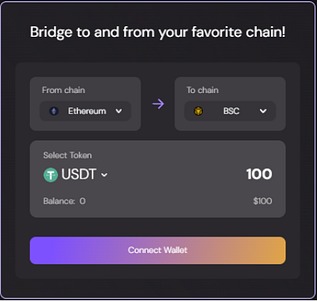
In other words, Olympex is not just about “moving tokens.” It’s about enabling a truly connected DeFi ecosystem, where value, utility, and user experience travel together.
Conclusion
Bridges are no longer just about “moving tokens.” They are becoming the connective tissue of DeFi, linking not only liquidity, but also experiences, governance, and innovation across ecosystems. The evolution from simple asset pipes to functional, secure, and user-friendly interoperability solutions marks a turning point for the industry.
As users and builders, the challenge is to look beyond fragmented transfers and embrace the potential of real bridges: ones that unify liquidity, preserve utility, and create seamless cross-chain experiences. The future of DeFi will not be defined by single chains, but by the networks that connect them.
If you want to see how this vision is being applied in practice, explore how Olympex is shaping the next generation of bridges, where assets, functions, and experiences truly flow together.





