
Diversification is one of the most widely accepted principles in investing. It is repeated so often that it feels almost unquestionable. The idea is straightforward. Spread capital across different assets, reduce risk and allow the portfolio to perform over time. But the reality is far less simple.
Most investors believe they are diversified because they hold multiple assets. In practice, what they have is exposure, not diversification. And the difference between the two becomes more evident as markets evolve.
Press enter or click to view image in full size
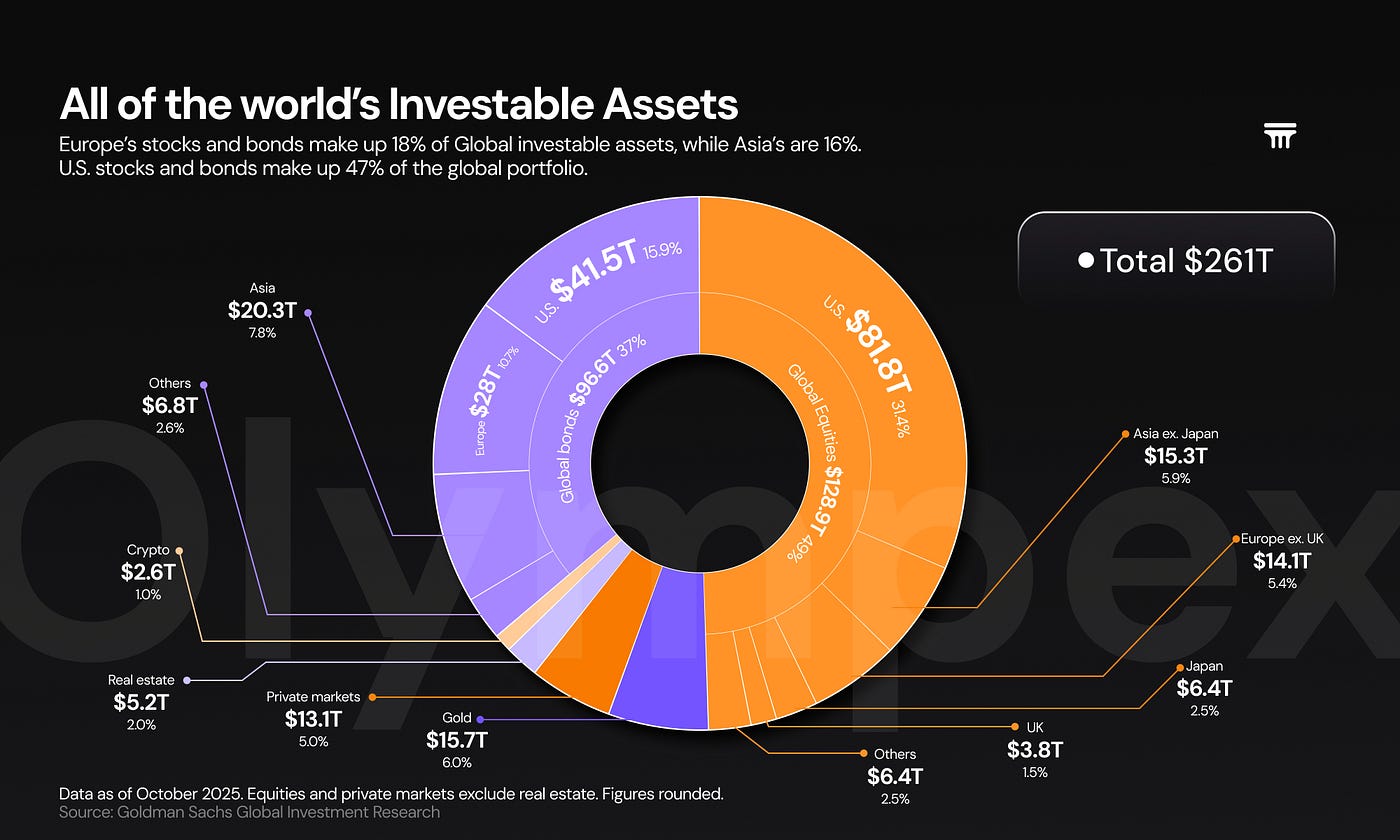
When we step back and look at the global landscape of investable assets, the scale and complexity of the system become immediately clear. Capital is not concentrated in a single market or category. It is distributed across equities, bonds, commodities, private markets and an increasing number of alternative assets.
Each of these plays a different role. Equities are typically associated with growth. Bonds tend to offer stability. Gold often acts as a form of protection. Private markets introduce different return dynamics that are not always correlated with public markets.
From a distance, this looks like an advantage. The investor has access to a wide range of opportunities. In theory, constructing a well balanced portfolio should be easier than ever.
Yet this is where the problem begins.
Press enter or click to view image in full size
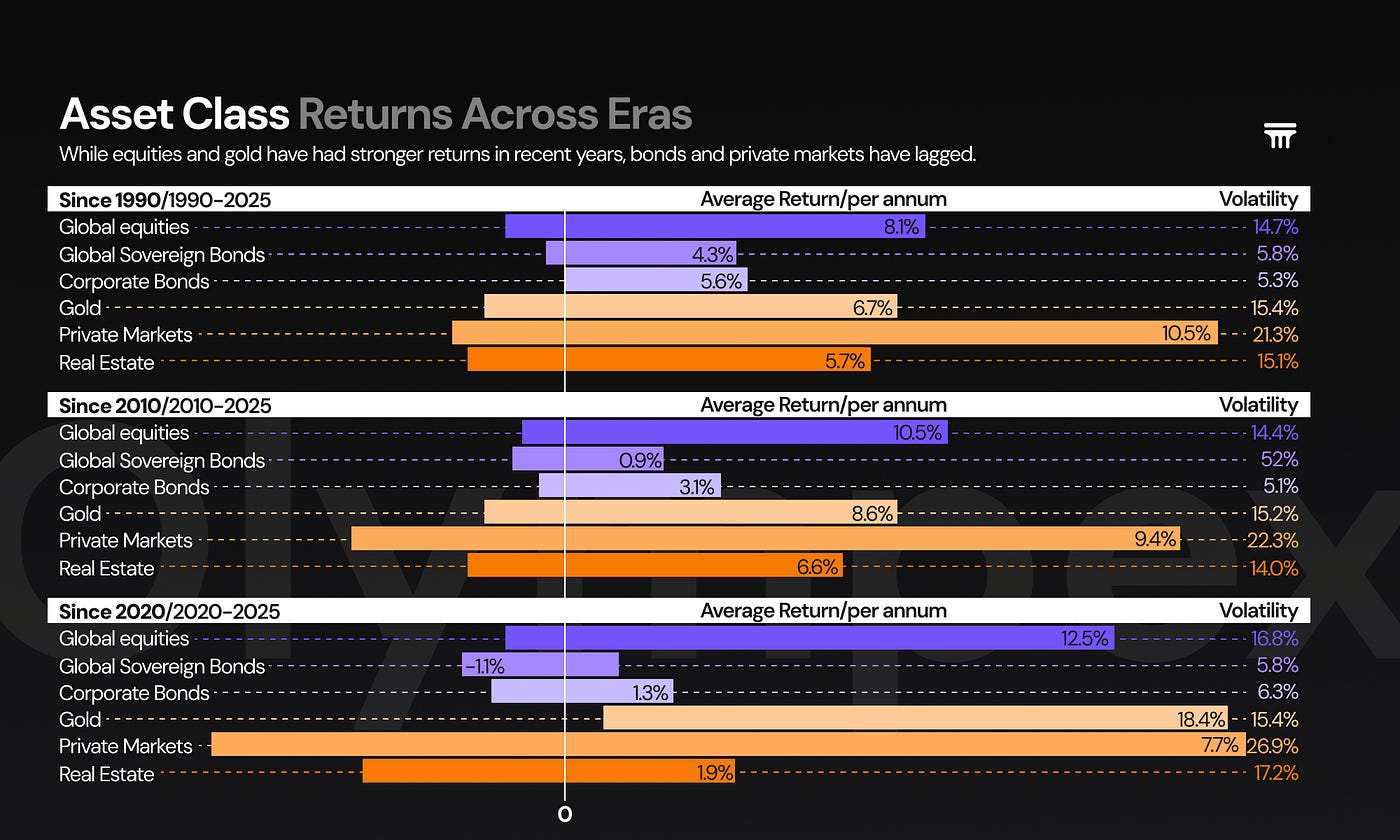
The behavior of these assets is not static. It changes over time, often in ways that are difficult to predict in advance. Periods of strong equity performance are followed by phases where other asset classes take the lead. Bonds, commodities or gold may outperform depending on the macroeconomic environment.
What becomes evident when looking across different timeframes is that there is no permanent winner. Leadership rotates. Performance shifts. The conditions that favor one asset class eventually change, and with them, the structure of returns.
This introduces a subtle but critical issue. A portfolio that was well positioned for one environment can become inefficient in the next without any changes being made. Diversification, if it is treated as a static allocation, gradually loses effectiveness.
Press enter or click to view image in full size
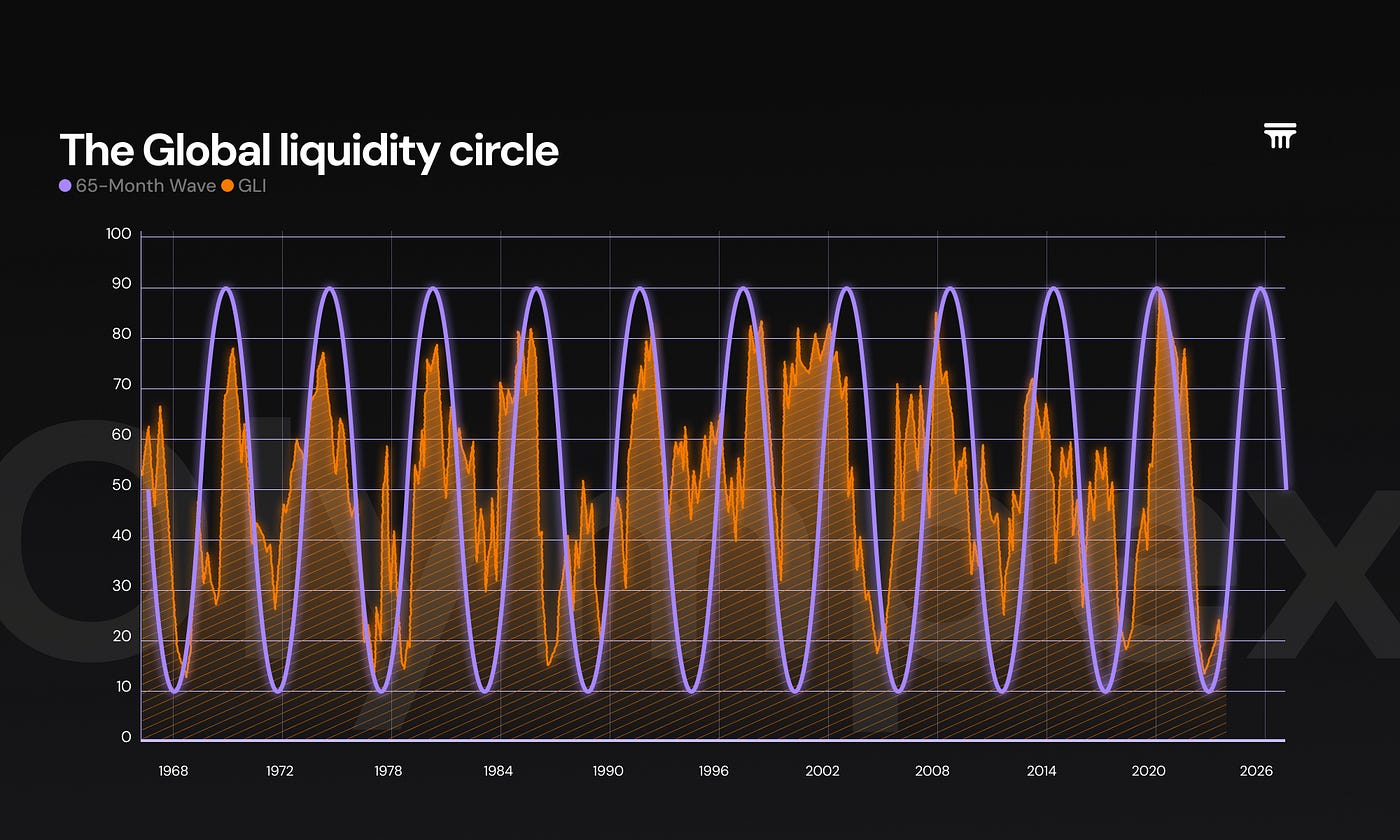
These shifts are not random. They are deeply connected to broader liquidity cycles that shape the behavior of markets over time. Periods of expansion tend to support risk assets, while periods of contraction shift the focus toward more defensive positioning.
The exact timing of these cycles is difficult to anticipate, but their existence is undeniable. They repeat, influence capital flows and redefine which assets perform best under different conditions.
The implication is not that investors need to predict every cycle. It is that portfolios must be able to respond to them.
This is where the gap between theory and practice becomes evident.
Diversification is often presented as a simple concept, but implementing it effectively requires more than holding different assets. It requires the ability to adjust, to reallocate and to move capital as conditions change.
In traditional systems, this is not always straightforward. Different asset classes are accessed through different platforms, intermediaries and structures. Managing a diversified portfolio can quickly become an exercise in managing complexity rather than managing strategy.
As a result, many portfolios remain static, not because investors choose to keep them that way, but because adapting them introduces friction.
True diversification is not defined by how many assets are included in a portfolio. It is defined by how effectively that portfolio can adapt to changing conditions.
Without flexibility, diversification becomes superficial. It exists in structure, but not in function.
And in an environment where leadership rotates, liquidity shifts and opportunities evolve constantly, that distinction matters more than ever.
If you want to understand how to build portfolios that can actually adapt, move across asset classes efficiently and make better use of the tools available today, join our Telegram.
Stay informed. Stay adaptable. Olympex.





