
Infrastructure as a Product: Lessons from Web2 Applied to Web3
Web2 companies like Stripe, Shopify, AWS, and Figma mastered the art of turning infrastructure into intuitive products. I'd like you to please discover how DeFi can apply these lessons.
From Web2 to Web3: Why Infrastructure as a Product Wins
In Web2, the products that scaled fastest weren’t necessarily the flashiest; they were the ones that transformed complex infrastructure into seamless user experiences. Stripe didn’t just offer payment rails; it delivered a developer-friendly API and onboarding experience. Shopify didn’t just offer an e-commerce backend; it provided store owners with a ready-to-use digital shop in minutes. AWS didn’t just offer servers; it turned cloud hosting into an accessible, elastic service. Figma made design collaboration feel as simple as sharing a Google Doc.
What all these companies have in common is a deep understanding that infrastructure is not just a technical layer; it’s a product in its own right. Their growth came from making complex systems invisible to the user while empowering them with control, speed, and confidence.
Why Web3 Needs the Same Mindset
Decentralized finance (DeFi) has built powerful protocols and tools, but the user experience often feels like raw infrastructure, characterized by fragmented interfaces, manual workflows, and a steep learning curve.
While Web3 prides itself on decentralization and permissionless innovation, adoption depends on something more: making that infrastructure feel like a polished, unified product.
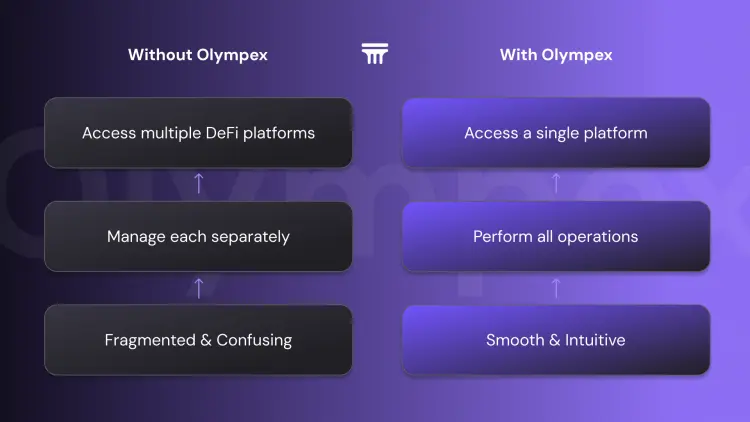
Today, many DeFi users must:
- Swap tokens on one DEX.
- Bridge assets through another app.
- Manage yield farming manually.
- Monitor performance across multiple dashboards.
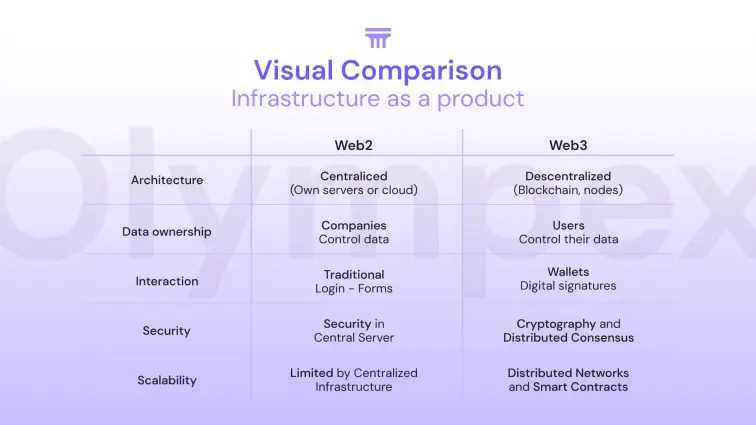
This is equivalent to Web2 developers having to rent raw server racks, manually configure networks, and piece together their payment gateways. In Web 2, that friction would have killed adoption. In Web3, it’s slowing down growth.
What DeFi Can Learn from Web2 Leaders
1. Abstraction Without Loss of Power
Stripe hides payment complexities without removing developer flexibility. In DeFi, this means offering a unified dashboard that integrates swaps, bridges, lending, and analytics, while still allowing advanced users to customize parameters.
2. Narrative as Trust Infrastructure
AWS didn’t just sell servers; it sold reliability, scalability, and security. Similarly, DeFi platforms must project institutional-grade trust through brand consistency, clear communication, and transparent processes.
3. Frictionless Onboarding
Shopify’s store setup is measured in minutes, not days. DeFi should aim for onboarding flows that are guideline-driven, with error prevention tools and educational touchpoints.
4. Collaborative and Modular Ecosystems
Figma thrives because it enables collaboration and integrates into existing workflows. In DeFi, infrastructure should be modular, allowing third-party integrations without sacrificing usability.
Olympex: Infrastructure with a Face, a Story, and Trust
Olympex approaches DeFi infrastructure not as raw tools, but as a complete product experience.
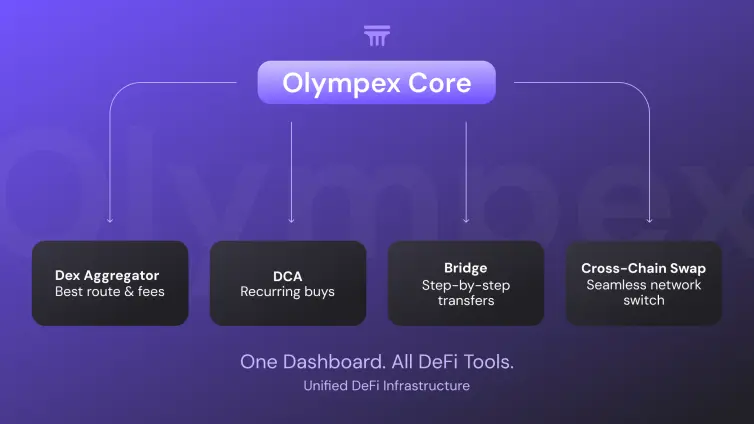
Instead of expecting users to navigate multiple platforms, Olympex integrates:
- DEX Aggregator: Best routing, best fees.
- Cross-Chain Swaps: One-click network switching.
- Bridges: Guided, step-by-step workflows.
- Limit Orders & DCA: Strategy automation from a single dashboard.
But beyond features, Olympex focuses on narrative, presenting itself as a reliable, professional layer that Web2 companies can trust when entering Web3. By speaking the language of usability, scalability, and compliance.
Olympex builds a bridge between ecosystems.
Infrastructure Is Not Invisible
In Web3, we can’t just build protocols and hope adoption follows. We must package infrastructure as an approachable, trustworthy product, just as Web2 leaders did. The winners in DeFi will be those who understand that every blockchain transaction is not just code execution; it’s a user experience.
Olympex is committed to simplifying the complexity of DeFi into a single, coherent product, bringing Web3 infrastructure to the usability and trust standards that enabled Web2 giants to scale.
🌐 Join Us





