

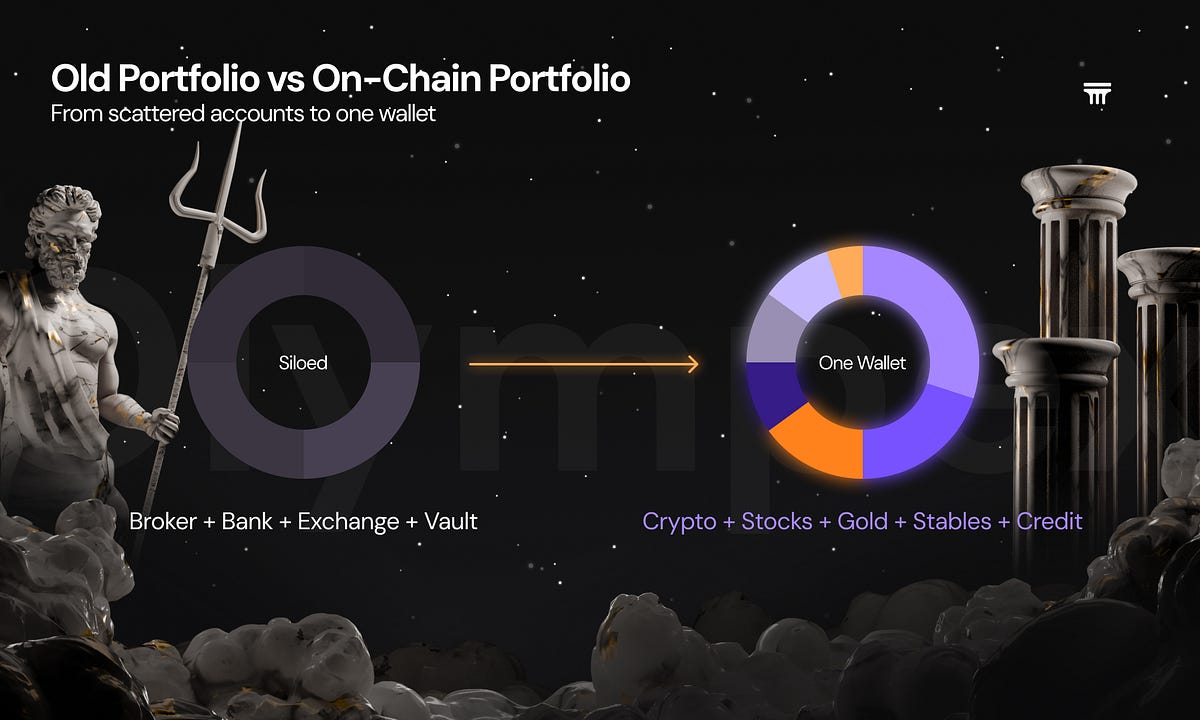
For most of history, a balanced portfolio meant a broker for stocks, a bank for bonds, and maybe a little crypto on the side, each in its own silo, each with its own gatekeeper. In 2026 that is changing. Tokenized real world assets let you hold stocks, gold, treasuries and private-market exposure on chain, next to your crypto, in the same wallet. That does not just add convenience. It changes how you can build and rebalance a portfolio.
This guide is a practical framework for balancing a modern portfolio when part of it lives on chain.
Why RWA changes the game
Real world assets on chain remove the walls between asset classes. Capital that used to be trapped by settlement cycles and account types can now move between equities, crypto and commodities in seconds. That unlocks two things a traditional portfolio never had: instant rebalancing and true composability, where the same asset can be held, traded, or used as collateral without leaving the chain.
The result is a portfolio that is not just diversified, it is liquid and programmable.
The four building blocks
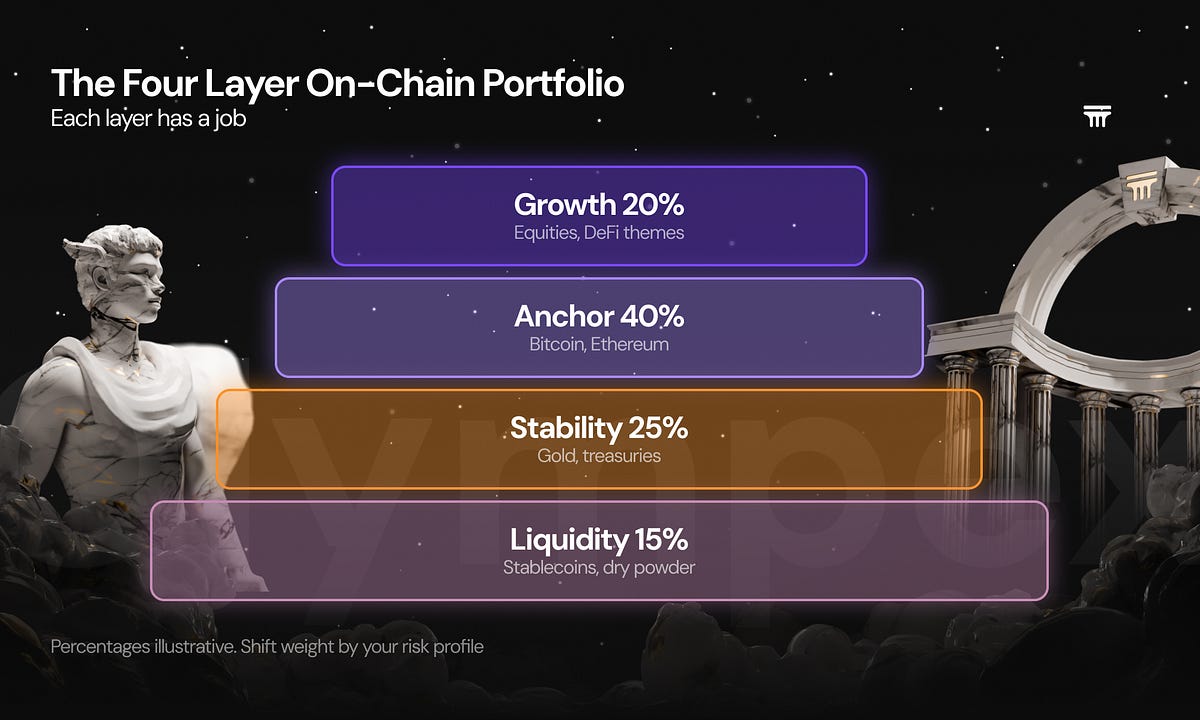
A balanced on-chain portfolio can be built from four layers, each with a different job.
The Anchor layer: crypto bluechips like Bitcoin and Ethereum. High growth potential, high volatility, the engine of the portfolio.
The Stability layer: tokenized gold and treasuries. Low volatility, the counterweight that holds value when everything else moves.
The Growth layer: tokenized equities like NVIDIA or thematic DeFi assets. Themed upside tied to specific narratives.
The Liquidity layer: stablecoins. Dry powder ready to deploy, and a safe harbor during drawdowns.
An example framework
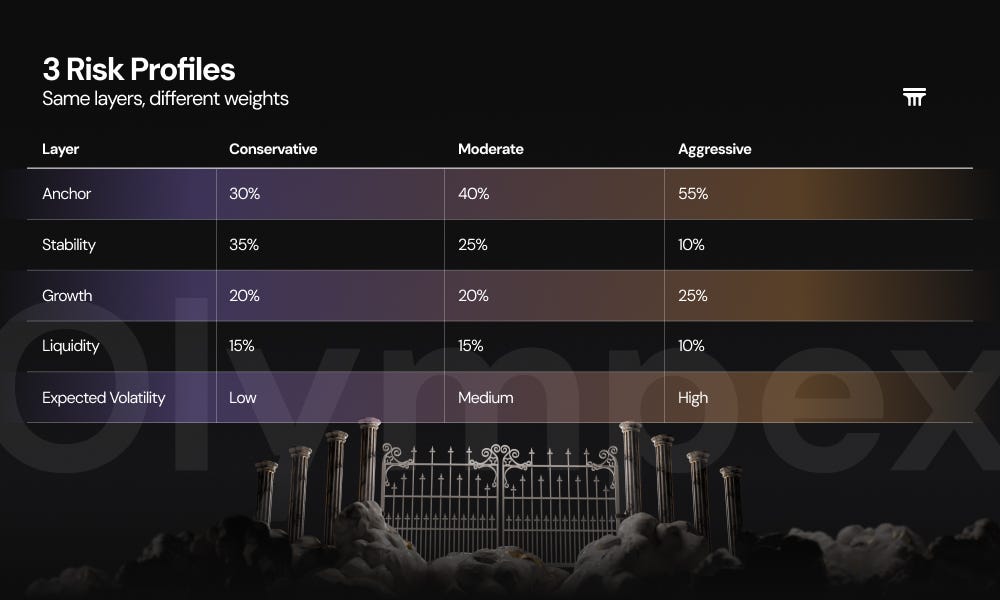
There is no universal allocation, but a moderate on-chain portfolio might look like this as a starting point for discussion, not a recommendation:
Anchor 40 percent, Stability 25 percent, Growth 20 percent, Liquidity 15 percent. A more conservative investor shifts weight toward stability and liquidity. A more aggressive one leans into anchor and growth.
The discipline that actually matters: rebalancing
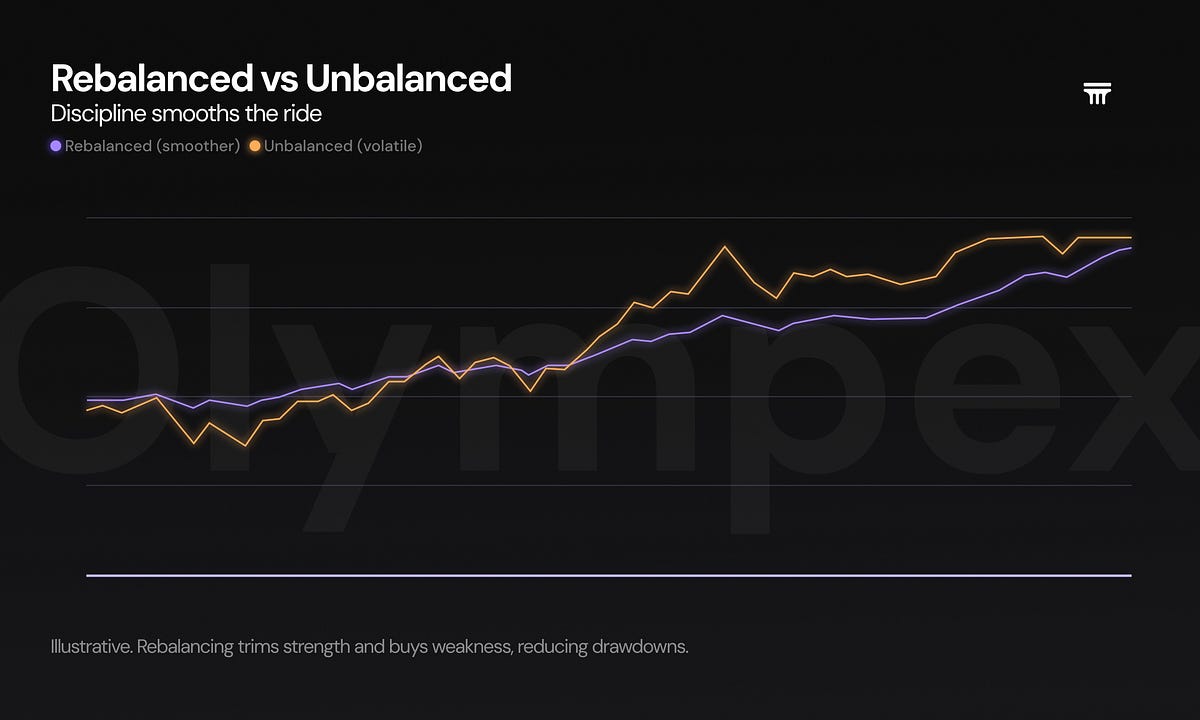
The real advantage of an on-chain portfolio is how easily you can rebalance it. Traditional rebalancing means selling in one account, waiting for settlement, and buying in another. On chain, it can happen in one flow.
A simple rule: when any single layer drifts too far from its target, bring it back. If your growth layer doubles and becomes 35 percent of the portfolio instead of 20, trim it and rotate into stability or liquidity. This forces you to sell strength and buy weakness, the opposite of what emotion tells you to do.
Automating recurring buys handles the accumulation side, and periodic rebalancing handles the risk side. Together they remove most emotional decision making.
Managing the risks
On-chain portfolios carry risks a traditional one does not. Smart contract risk on any protocol you touch. Liquidity risk on newer tokenized assets, where thin pools mean high price impact. Regulatory risk, since RWA rules are still forming. And custody risk, which self custody solves for control but shifts full responsibility to you.
The mitigation is the same discipline that has always worked: size positions sensibly, keep a liquidity buffer, verify what backs any tokenized asset, and never allocate more than you can afford to lose to a single contract.
Where Olympex fits
A four-layer, multi-asset, multi-chain portfolio only works if you can move between the layers easily. That is the practical problem Olympex solves. As a DEX aggregator, it lets you buy, swap and rebalance across crypto, tokenized assets and stablecoins, across multiple chains, from one wallet, always routing to the best available path. Rebalancing that used to take days across separate accounts can happen in a single flow.
And because it is decentralized, the whole portfolio stays under your control. You keep privacy and self custody at every step, no broker deciding what you can hold, no platform holding your assets for you.
The modern portfolio is no longer scattered across institutions. It lives in your wallet, and the tools to balance it live there too.
This article is for educational purposes only and does not constitute financial advice. Allocations shown are illustrative examples, not recommendations. Always do your own research and consider your personal situation before making any investment decision.





