
What's goin on, Investors?
I actually wrote this for my friend's son, but the information is so important that I shared it here. YOUNG AJ, keep your eye on the ball and follow this.
I know some of you will read this and see it as maybe an interesting article, while others will read it and realize I have given you a golden financial key. All you have to do is understand it's all in the numbers, and if you input numbers properly, they can never lie to you. Works at any age, but this is targeted for teens, 20s & 30s. The sooner you get started, the better.

The Millionaire's Secret: Why Your Salary Isn't Your Destiny
A counterintuitive truth about building wealth in your 20s and 30s
Here's a stat that might surprise you: Less than 1% of people with a 401(k) have more than seven figures in their account. But here's what's truly mind-bending about that elite group—most of them aren't high earners.
That's right. The majority of 401(k) millionaires don't have six-figure salaries or MBA-level financial expertise. They're not day-trading crypto or picking the next Apple stock. So what separates them from the 99% who never reach that milestone?
The Real Differentiator
According to Jack VanDerhei of the Employee Benefit Research Institute, these financial winners share one critical trait: "constant participation and high contribution rates." It's not about being brilliant with money—it's about being consistent.
Think about that for a moment. In our culture of get-rich-quick schemes and overnight success stories, the actual path to millionaire status is surprisingly mundane. It's showing up, month after month, year after year, and consistently putting money away.
The Math That Changes Everything
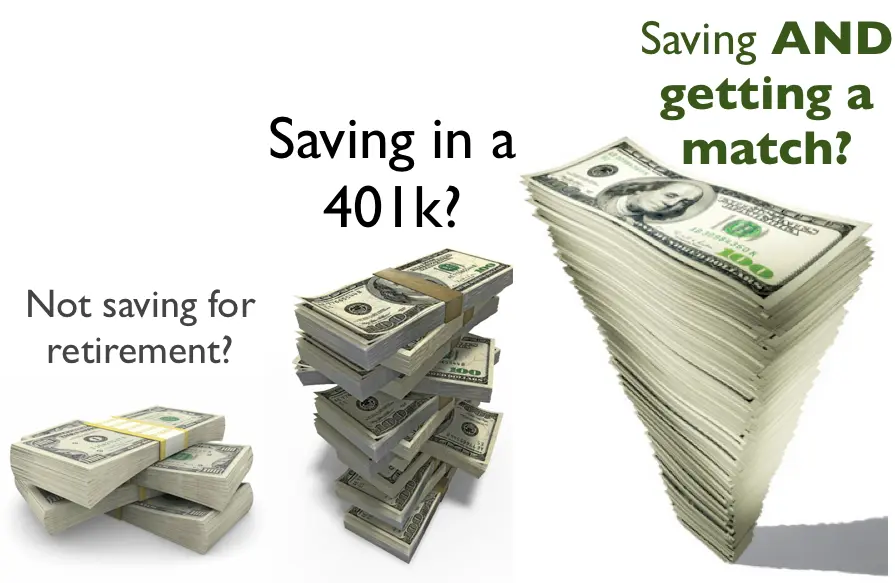
Let's break down what this actually looks like in practice. Someone earning $35,000 annually who saves 12-13% of their income (Including Company Match), receives modest 3.5% annual raises, and earns 7% returns will accumulate $1 million over a 40-year career. I realize that not everyone can get a company match, so look for it when job hunting and use it if you get it!
Read that again. $35,000. That's barely above the poverty line in many major cities, yet it's enough to become a millionaire by retirement age.
If you're in your 20s or 30s earning more than $35,000—which statistically, you probably are—you're actually ahead of the curve. Higher salary or better returns just get you there faster.

The Participation Problem
Here's where it gets frustrating: Most people aren't even trying to win this game. The IRS allows you to contribute up to $23,000 to your 401(k) in 2024 (up from the $19,500 mentioned in older data), yet less than 9% of participants max out their contributions.
This isn't necessarily because people can't afford it—it's often because they don't realize the opportunity cost of not participating fully. Every year you contribute less than the maximum is a year you're leaving potential wealth on the table, compounding into the future.
Why This Matters More in Your 20s and 30s
Time is the most powerful force in investing, and it's the one asset that decreases every day. If you're reading this in your 20s or 30s, you have something that 40-somethings would pay handsomely for: decades of compound growth ahead of you.
Consider this: A 25-year-old who contributes $6,000 annually to their 401(k) will have more money at retirement than a 35-year-old who contributes $12,000 annually, assuming identical returns. That's the power of time in the market. Again, this is just simple math that almost nobody thinks about!

The Psychology Behind the Numbers
What's really happening here isn't just mathematical—it's psychological. The 401(k) millionaires have figured out something most people haven't: wealth building is a habit, not an event.
They've automated their success by treating their 401(k) contribution not as discretionary spending, but as a non-negotiable expense—like rent or utilities. They've made saving unconscious, which removes the daily temptation to spend that money elsewhere.
The Uncomfortable Truth About Lifestyle Inflation
There's an uncomfortable reality we need to address: most people's spending expands to match their income. Get a raise? Upgrade the apartment. Promotion? New car. This lifestyle inflation is perhaps the biggest obstacle to building wealth.
The 401(k) millionaires have learned to live below their means and direct the difference toward their future selves. They understand that today's sacrifice is tomorrow's freedom.

Making It Practical
So how do you actually implement this? Start with these concrete steps:
Automate everything. Set up automatic contributions so the money comes out before you see it. What you don't see, you won't spend.
Start where you are. If 12-13% feels overwhelming, start with whatever you can manage—even 3% is better than 0%. Then increase it by 1% every year, or whenever you get a raise.
Think in terms of future purchasing power. That $500 monthly contribution isn't just $500—it's potentially $1,500 or more in today's purchasing power when you retire, thanks to compound growth.
Reframe the narrative. Instead of seeing 401(k) contributions as money you're "losing," see it as paying your future self first. You're literally hiring compound interest to work for you 24/7 for the next several decades.

The Bottom Line
Becoming a 401(k) millionaire isn't about having exceptional income or investment genius. It's about having the discipline to consistently save a meaningful percentage of your income, starting as early as possible, and letting time and compound growth do the heavy lifting.
The opportunity is sitting right there in your benefits package. The question isn't whether you can afford to max out your 401(k)—it's whether you can afford not to.
The math is simple. The execution is straightforward. The only variable is whether you'll actually do it.
Your future self is counting on the decision you make today…and you’re welcome.
Until next time, this is The Dark Sage singing out PEACE! ✌️
Faucets That Work:
POLYGON ECOSYSTEM TOKEN FAUCET
Other Passive Income:
BITCOIN CREDIT CARD up to 15% BACK
GEMINI EXCHANGE 6% SOL STAKING






