
What's goin on, Investors?
In this article, I'm going to continue my thought pattern from the last article ETFs Aren't Just For Bitcoin, the point being you should expand your portfolio to include income-paying ETFs, not just BTC. I warned people on another social posting platform, which is now DEAD and GONE, that ETFs weren't a good thing, and this article explains more in depth why.
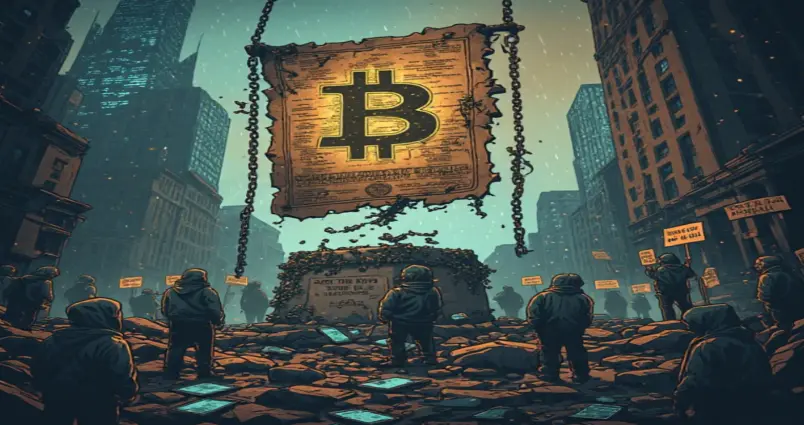
What Was Never Meant To Be
Bitcoin was supposed to be the great escape. A peer-to-peer electronic cash system, decentralized, censorship-resistant, and free from the very institutions that had broken the global economy in 2008. Satoshi Nakamoto embedded a newspaper headline in Bitcoin's genesis block for a reason: "The Times 03/Jan/2009 Chancellor on brink of second bailout for banks." The message was unmistakable. Bitcoin was born as an alternative to the system, not a product for it.
Yet here we are, watching the price unravel in real time, and the fingerprints are everywhere. The same Wall Street machinery that Bitcoin was designed to circumvent has now become its primary driver of demand, its largest holder of supply, and—ironically—its most efficient mechanism for destruction.
The spot Bitcoin ETFs, launched to great fanfare in early 2024, were heralded as the moment of institutional validation. "Mainstream adoption," the headlines read. "The floodgates are open." BlackRock's iShares Bitcoin Trust (IBIT), Fidelity's Wise Origin Bitcoin Fund (FBTC), and a dozen others promised to democratize access, bringing pension funds, family offices, and retail investors into the fold through familiar brokerage accounts.
What they actually brought was a new kind of fragility.
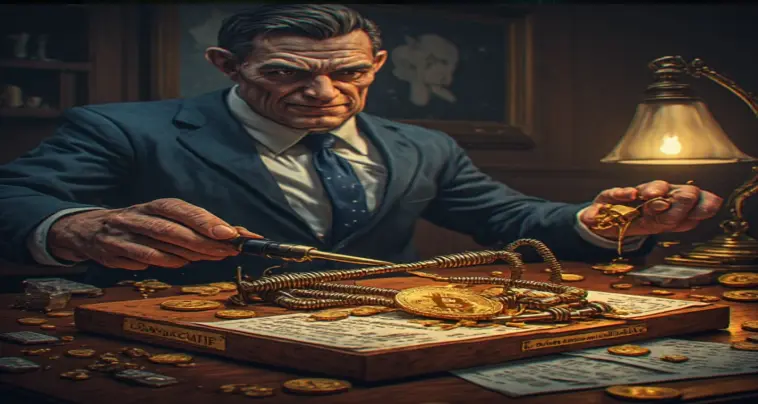
The ETF Trap
Wall Street does not buy assets the way Bitcoin's early adopters did. The original ethos was simple: hold your own keys, verify your own transactions, trust no intermediary. The ETFs inverted this entirely. Investors do not hold Bitcoin. They hold shares of a fund that holds Bitcoin, managed by custodians who hold the keys, regulated by agencies that can change the rules, and traded on exchanges that operate during market hours while Bitcoin trades 24/7.
This structural mismatch creates volatility amplifiers, not dampeners. When traditional markets sell off—equities, bonds, risk assets—ETF holders dump their shares in real time. The authorized participants who create and redeem ETF shares must then sell actual Bitcoin into the market to balance the fund's net asset value. The result is a feedback loop: falling prices trigger ETF outflows, which trigger more Bitcoin selling, which drives prices lower.
In the early days of 2024 and 2025, this worked in reverse. Inflows were relentless. The ETFs soaked up more new Bitcoin than miners could produce, creating artificial scarcity and driving the price to all-time highs near $110,000. But the mechanism is symmetric. What the ETFs giveth in bullish conditions, they taketh away in bearish ones.
And now the outflows are relentless.
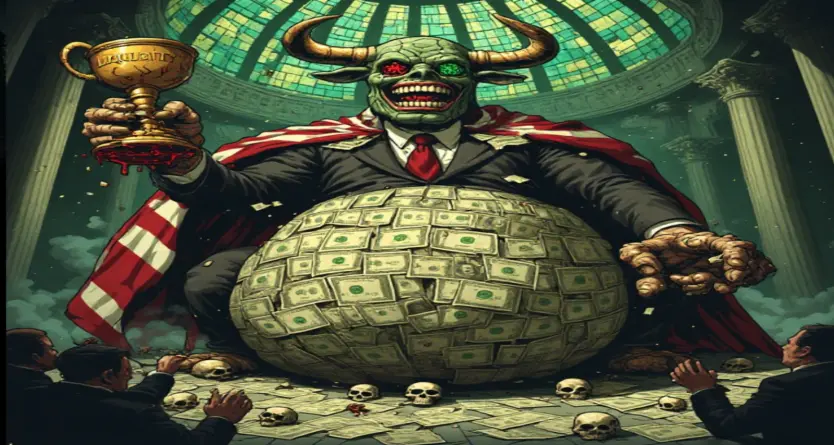
Wall Street's Harvest
The crash reveals a deeper truth that the Bitcoin community spent years denying: Wall Street never came to participate in Bitcoin's mission. It came to financialize it.
The same playbook deployed against gold, commodities, and every other asset class was deployed here. Create derivative products. Fragment ownership. Separate the investor from the underlying asset. Introduce leverage, lending, rehypothecation, and complex structured products built on top of the "simple" ETF wrapper. Then, when the cycle turns, extract value through fees, spreads, and the inevitable forced liquidations of overleveraged participants.
The Bitcoin held in ETF custody is not circulating. It is not being used for payments, for remittances, for savings in collapsing economies, or for any of the use cases that gave Bitcoin its early utility and value. It is dead capital, locked in cold storage, serving only as a reference price for financial instruments that trade at a premium or discount to the underlying. Bitcoin has been captured, neutralized, and converted into a speculative ticker symbol.
Meanwhile, the narrative shifted. Bitcoin was no longer "digital gold" or "sound money." It became a "risk asset," a "tech play," a "high-beta trade" correlated with the Nasdaq. The very language used to describe it was colonized by Wall Street's frameworks. And when the framework says "risk off," the selling is indiscriminate.
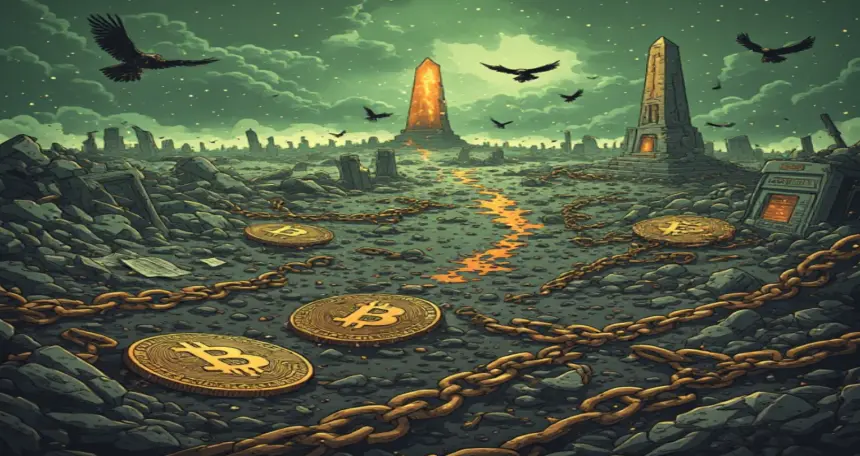
The Fallout
The current crash is not merely a price correction. It is a crisis of identity. Bitcoin's price discovery is now dominated by entities that do not believe in its purpose, do not understand its protocol, and do not care about its survival. They care about quarterly performance, risk-adjusted returns, and regulatory compliance.
The "number go up" crowd, who celebrated every ETF approval as validation, is now learning the hard lesson that institutional adoption is not the same as institutional alignment. Wall Street adopted Bitcoin to extract yield from it, not to nurture it. The ETFs were a trojan horse: they brought capital, yes, but they also brought the dependencies, the correlations, and the fragilities of the traditional financial system.
Miners are capitulating. Hash rate is dropping. Smaller holders who bought near the highs are underwater. The "HODL" meme has become a coping mechanism for those watching their paper wealth evaporate while the ETFs continue to bleed assets.
And the irony is complete. Bitcoin, created to eliminate trusted third parties, is now primarily held by the most trusted third parties in the world: BlackRock, Fidelity, Coinbase Prime. The revolution was not televised. It was securitized.
What Comes Next
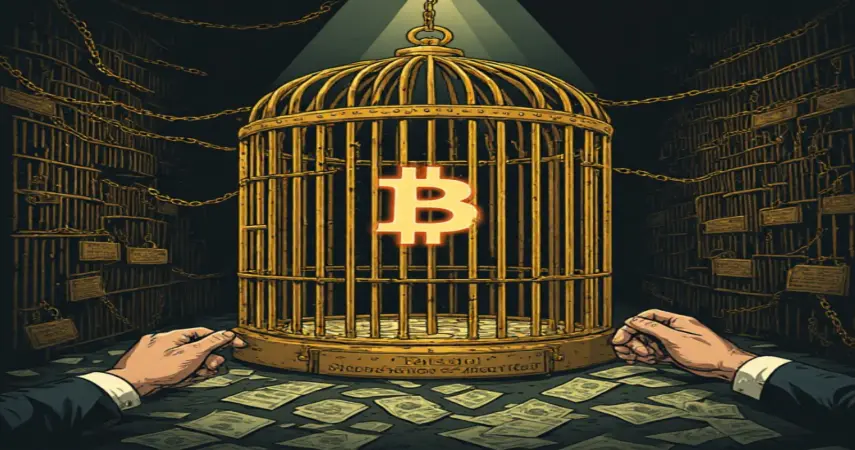
There are two possible paths. The first is that Bitcoin survives this as a financialized asset, permanently tethered to traditional market cycles, its price driven by ETF flows and macro liquidity conditions, its original purpose reduced to a historical footnote. It becomes another commodity, another trade, another line item in a portfolio.
The second path is harder. It requires rejecting the ETF model, returning to self-custody, and rebuilding the peer-to-peer economy that was always the point. It requires accepting that Bitcoin's price may be lower, its volatility higher, and its adoption slower—but that its integrity as a decentralized system matters more than its dollar-denominated market capitalization. (This path is the WISHFUL THINGING / HOPIUM path, because Wall Street would have to abandon its crypto endeavors entirely, like in the beginning.)
The crash is not an accident. It is the predictable consequence of inviting the wolves into the henhouse and mistaking their appetite for validation. Wall Street did not save Bitcoin. It subsumed it. And now the market is pricing in that reality, one red candle at a time.
The question is whether anyone still remembers why Bitcoin mattered in the first place.
 Until next time, The Dark Sage singing out ✌️
Faucets That Work:
POLYGON ECOSYSTEM TOKEN FAUCET
Banks & Exchanges:
CAPITAL ONE SHOPPING GET 40.00 for YOU & 40.00 for ME





