
The issue of privacy is one of the most controversial in the world of browsers.
Increasingly, users are demanding that their data not be tracked, so as to prevent their information from being provided by websites to advertising agencies.
All browsers have the ability to send a certain amount of information to the servers of their manufacturers to improve the functioning of the browser itself and the services connected to it. But in this way, many users are tracked, and a lot of private information is collected.
A recent study by Trinity College in Dublin has compiled a ranking on the best browsers for privacy, allowing us to understand which and how much information the most popular browsers share with their creators.
The list of browsers analyzed included the six most used:
Edge
Brave
Mozilla
Chrome
Safari
Yandex
Obviously other less famous browsers are missing from the list, including TOR, (which is by definition the king of privacy),
Below is the abstract of the paper:
We measure the connections to backend servers made by six browsers: Google Chrome, Mozilla Firefox, Apple Safari, Brave Browser, Microsoft Edge and Yandex Browser, during normal web browsing. Our aim is to assess the privacy risks associated with this back-end data exchange. We find that the browsers split into three distinct groups from this privacy perspective.
And the winner is ...
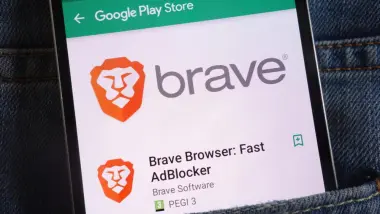
At the top of the ranking we find Brave, defined as the most respectful browser of the privacy of its users. Brave was born to guarantee greater respect for privacy and limit web tracking. It also offers automatic ad blocking, to facilitate page viewing and speed in loading.
Used “out of the box” with its default settings Brave is by far the most private of the browsers studied. We did not find any use of identifiers allowing tracking of IP address over time, and no sharing of the details of web pages visited with backend servers
To the second group we found Chrome, Firefox and Safari.
Chrome, Firefox and Safari all share details of web pages visited with backend servers. For all three this happens via the search autocomplete feature, which sends web addresses to backend servers in realtime as they are typed.
To the third group, the least private, we find Edge and Yandex
From a privacy perspective Microsoft Edge and Yandex are qualitatively different from the other browsers studied. Both send persistent identifiers than can be used to link requests (and associated IP address/location) to back end servers.
For those wishing to know more, below is the link to the paper
https://www.scss.tcd.ie/Doug.Leith/pubs/browser_privacy.pdf
In conclusion...
Brave really puts user privacy at the center. It is open source and based on a blockchain platform, and you can choose to give up advertising.
Also with Brave rewards, you have the option to enable the display of advertisements, and in return you will receive 70% of the ads revenue, in the form of BAT (Basic Attention Token).
Bats can be used to take advantage of vouchers or gift cards, or they can be donated to creators of online content through Brave Rewards.
You can download Brave at the following link:






