
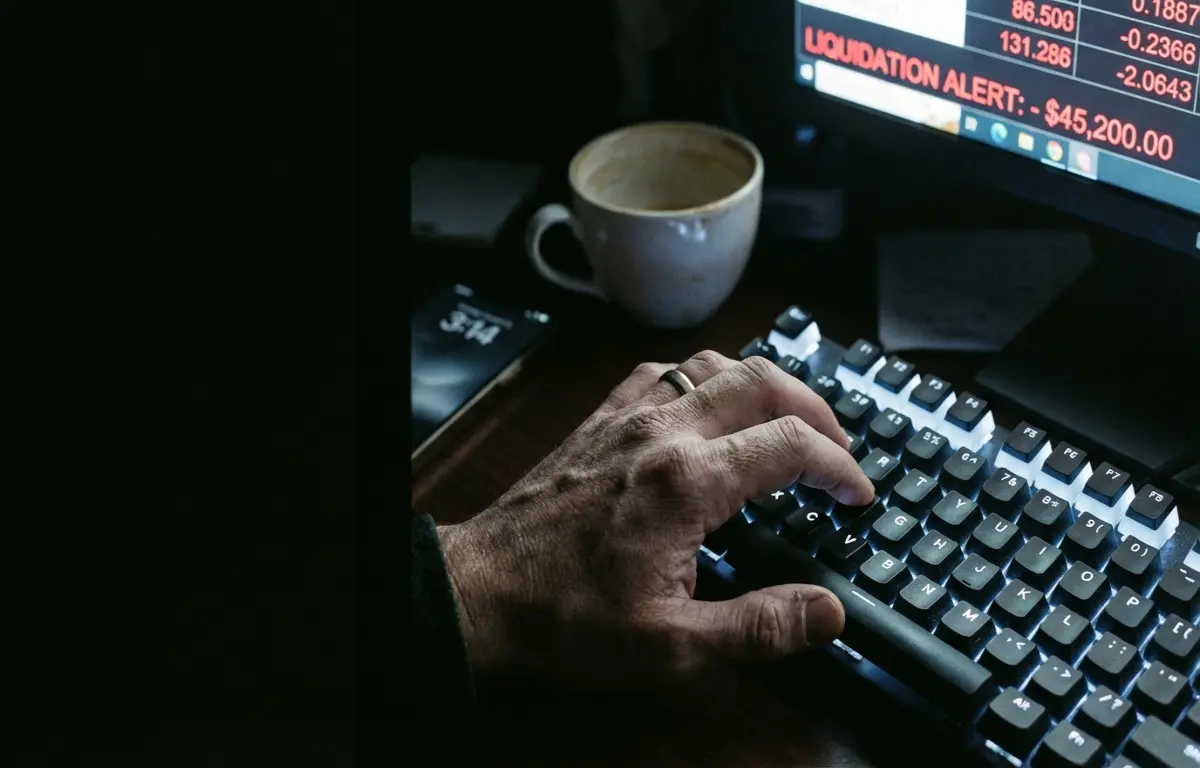
I haven't told my mom about the $41k yet. Probably never will.
It was 3:14 AM — I remember because I looked at the clock on Bybit right as the liquidation hit, like my brain wanted to timestamp the exact moment I became an idiot — and I'd moved my stop on a 25x ETH long. Just once. Just a little. "Give it room to breathe," I told myself, which is what you tell yourself when you already know you're wrong but you're not ready to be wrong yet.
And then it was gone. $41,234.50. Not a round number. Never a round number. And I sat there in the dark, girlfriend asleep in the next room, and my hand — I swear to god, without me deciding anything — started moving toward the keyboard to re-enter.
That's not a trading mistake. That's a brain that's been rewired into something that doesn't work anymore.
The Science of the "Click"
Okay, so here's the thing about dopamine that nobody explains right. I'm not a neuroscientist. I watched a YouTube breakdown of this once at like 2 AM, and then I fell into a Reddit rabbit hole, and then I read half of Kahneman's Thinking, Fast and Slow. So take this as bar-conversation science, not a lecture.
There's this part of your brain — the Ventral Tegmental Area (VTA) — and the way it gets described in pop-science is all warm and fuzzy, like "ooh it's your reward center, how lovely."
It's not lovely. It's a parasite. It doesn't respond to winning money. It responds to the moment before you might win money. The anticipation. So the second you click buy on Binance, before the position even moves a tick, you've already gotten your hit. The trade hasn't done anything yet and your brain is already paid.
-
Which means the outcome is almost beside the point.
-
Which means you were never actually trading.
-
You were just... clicking. For the click.
I refresh my PnL constantly when I'm in a position. I've clocked it — every 10 to 15 seconds sometimes. It's not "staying on top of things." It's a lab rat pressing a lever.
The Electricity of the Loss
And now the part I really didn't want to know. I read somewhere that dopamine neurons don't just spike on reward. They crash after reward. And that crash, that comedown, triggers cortisol.
Here's the part that messed me up: After a while, that cortisol spike starts to feel like the point. The loss. The panic. The "oh god oh god oh god" feeling when a trade goes wrong. It feels real in a way that a quiet winning trade just... doesn't. Think about your last clean profitable trade. How did that feel? Fine, right? Kinda nothing.
Now think about the last time you got liquidated. Terrible. But also electric. Heart rate up. Suddenly very awake. That electricity is the debt coming due. Every dopamine spike shifts your baseline. Now "normal" feels like withdrawal. So you size up. You move the stop just this once. Not stupidity — chemistry.
Willpower is a Lie

I wrote "stay disciplined" in my trading journal for like four months. Cute. Didn't work once.
The prefrontal cortex — the "rational" part — is running on fumes at 3 AM after three red trades. It's getting absolutely stomped by a limbic system that's been trained to override every sensible thought you produce. Willpower can't win that fight. It's a sticky note on a burning building.
The Damage Control Habits
So here's what actually helped me. Not rules. More like... damage control habits I built out of desperation.
-
Physical Friction: After a bad session (for me that threshold is around $500 down), the laptop physically leaves the room. Making the next bad decision slightly harder to execute physically.
-
The 20-Minute Timer: A waiting period after getting stopped out. I set a phone timer. Watching a timer tick down gives the cortisol somewhere to go.
-
Physical Paper: Writing down my position size and my loss limit on actual paper before I open the charts. Not a note on my phone. Paper.
The Final Question
Look at your last ten losing trades. Not the winners. The losers specifically. Try to remember — as exactly as you can — the moment you entered each one. Not when you knew it was wrong. The actual moment you clicked.
Did it feel like a decision... or did it feel like relief?
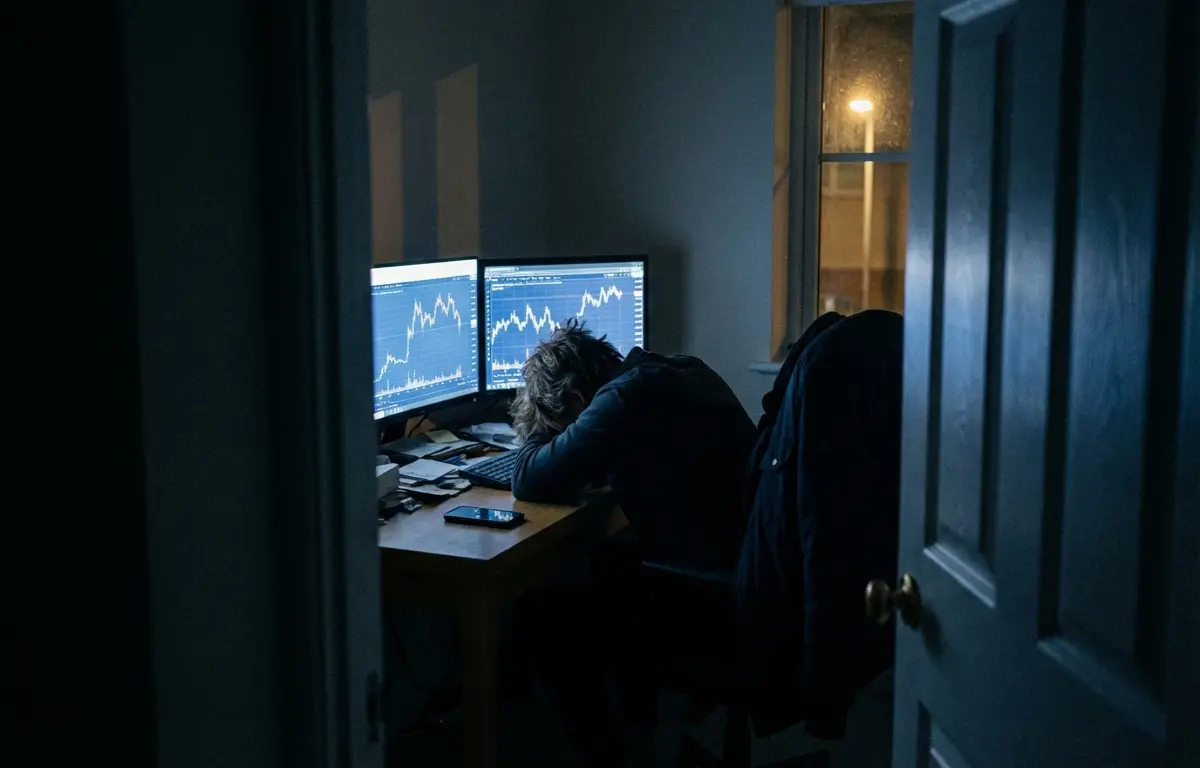
Because if it felt like relief — if that click felt like finally exhaling — you weren't trading. You were medicating. And I promise you, the market has never once cared about being a good pharmacy.
Technical Writing & Research:
I’m a content strategist specializing in the intersection of Behavioral Psychology, Web3, and Finance. I help founders and platforms translate complex market theories into high-retention stories. >
Looking for a deep-dive writer for your project? Let’s connect.
Telegram : @khaogaicherry
Email : [email protected]






