![The History of Cryptocurrency [A Comprehensive Guide]](https://www.publish0x.com/img/97007.webp?action=resize&ar=1&enc=webp&inv=0&ori=1&st=1&up=1&w=1140&signature=f6231f3f462d607b9460be33c5338e01495c84704b8fbcc9eb735edc0966295f)
In The Beginning..
In the beginning there were analytics and engines. In fact many people believe the first ever computer was the Macintosh famously created by Apple founder Steve Jobs. In theory they would be right but only partially. This story will take us back to 1812 and a concept introduced by a man named Charles Babbage, a mathematician, philosopher, inventor and mechanical engineer. The idea was to create a mechanically calculating mathematical table which led to the first calculator and capable of performing eight decimal computations. Ten years later Babbage would introduce an 20 decimal mechanical mathematical computational machine known as the "Difference Engine".
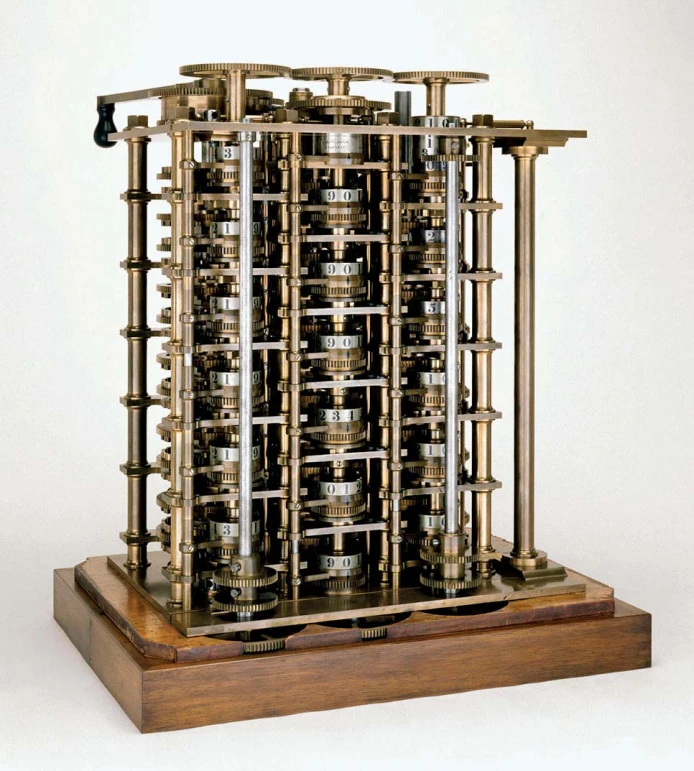
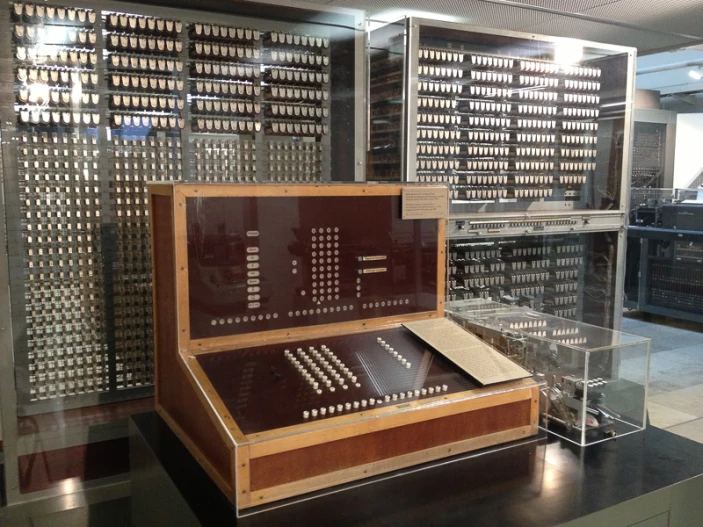
The General Purpose Z3 Computer
Upon achieving success with the "Difference Engine", Babbage continued making contributions and by 1830, introduced the world to a new machine which incorporated an arithmetic logic unit, control flow, conditional branching, loops and an integrated memory known by the term Turing-completeness. Sounds familiar? If not, I will refresh your memory. The computer you're using now is an "Analytical Engine", a system of data manipulation rules (i.e. an instruction set, a programming language and a cellular automation). Every present day computer since 1941, is "Touring-completeness", contributed to the invention of the "Analytical Engine", created by Charles Babbage, back in 1830. And especially since your computer has a memory, processor and thread count. In fact, it wouldn't be until 1941 when the first general purpose computer would be built, based on Charles Babbage blueprint. In Germany 1941, civil engineer, computer scientist, inventor and businessman Konrad Zuse wanted to create the first working programmable, fully automatic digital computer equipped with 2,300 relays and implementing a 22-bit word length that would operate at a clock frequency of 4-5 Hz. In May, the Z3 computer was born. The program code was stored on a punch film and initial values had to be entered manually.
WWII - The Cold War and Technology
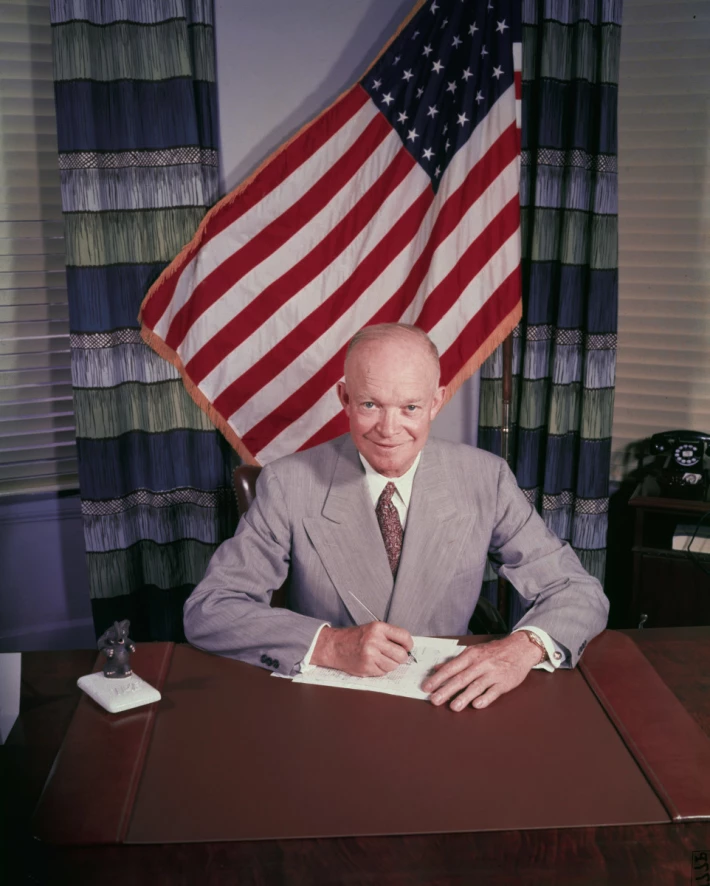
In 1958, the United States was in WWII, the president was Dwight D. Eisenhower and the Soviet Union launched had just launched Sputnik 1, an artificial Earth Satellite responsible for starting the Cold War. During this time, both countries were in a geopolitical conflict which saw the beginning of a new era in political, military, technological, and scientific developments. Sputnik 1 was an accidental success and the United States needed to act. So happened next? The government approved funding to build two new agencies in response to the Soviet Union, the first was the National Aeronautics Space Administration (NASA) and the Advanced Research Projects Agency (ARPA). Together they would work to build the best defenses in rockets, weapons and computers. However, more concerned about thing then what would an attack on the United States telephone system do the nations communication infrastructure, an M.I.T and ARPA scientist named J.C.R Licklider, proposed a galactic network of computers that would be able to communicate with one another as an emergency backup. The concept would be termed as "Packet Switching" which breaks down data into blocks before sending it to its destination with each block having the ability to take its own route instead of be forced to take the same route each time. By 1969, it was time to test the new invention and as apart of the experiment two computers were used, one was stationed at UCLA and another at Stanford. Then it happened a node-to-node message was sent "Login" and with that internet was born, original term was the intranet.
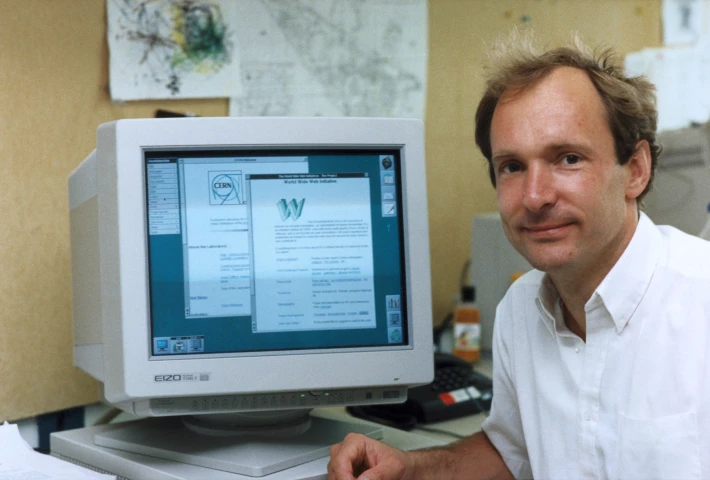
The Tim Berners-Lee Protocol
Since then the Internet has become a revolutionary piece technology but only limited to its original intent which was to be used as an alternative communication device in case of an emergency and by the mid 1990s, would help give birth to the World Wide Web or the Worldwide Network. Berners-Lee, a Switzerland native, would be the man who would transform the internet into what we know it to be today, a web of information that anyone on the internet could retrieve. One year later, the way we accessed the Worldwide Network would become simpler when a group of students and researchers attending the University of Illinois, created the Mosaic browser, known by its later name Netscape. It allowed users to see words and pictures on the same page for the first time and to navigate using scrollbars and clickable links. Then Congress decided that the Worldwide Network could be used for commercial purposes. This resulted in the birth of e-commerce, entrepreneurs began to use the Worldwide Network to sell goods directly to the consumers without which would have never been an Amazon or an eBay.
Cryptography - Public, Private & Hash
Cryptography is the process of generating codes that allow information to be kept secret by converting data into a format that is unreadable and not allowing it to be transmitted by an unauthorized without decoding it back into a readable format. The data maintains its integrity when its sent and the information cannot be read without a key. In fact, many people do not know there are three types of cryptographic processes used in cryptography:
- Symmetric-key Cryptography - In symmetric-key, both the sender and receiver share a single key and the sender uses this key to encrypt plain text and send the cipher text to the receiver. On the other side the receiver applies the same key to decrypt the message and recover the plain text.
- Hash Functions - In hash functions - No key is used in the algorithm and a fixed length hash value is computed as per the plain text that makes it impossible for the contents of the plain text to be recovered.
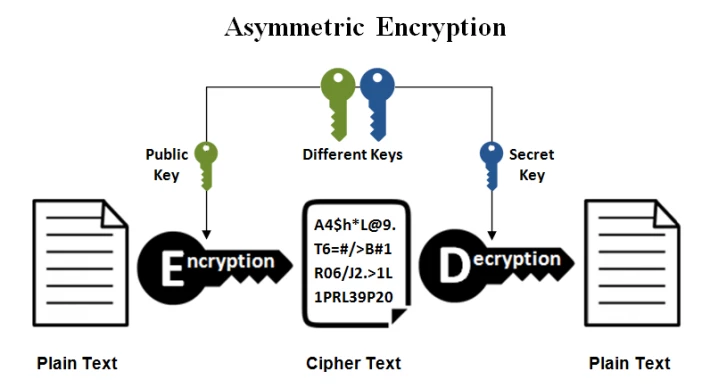
- Public-key Cryptography - Regarded as the most revolutionary concept in the last 300 - 400 years, two keys functions are used known as Public Keys and Private Keys. The public key is accessible to the public while the private key is secret. The Public key is used to encrypt while the private key is used to decrypt.
Who Really Invented Bitcoin
Bitcoins roots are in the block-chain which the distributed ledger technology known for its security and immutability started back in 1991 with Stuart Haber and W. Scott Stornetta. Now lets fast forward to 2009, when the official Bitcoin paper was released! Stuart Haber and W. Scott Stornetta were cited three times. Their plans were to create a cryptographically secure archive, as a way to time stamp documents without revealing their contents. Published in the Journal of Cryptography, was their block-chain patent which lapsed only four years before the inception of Bitcoin. The Bitcoin Paper is noted as revolutionizing the existing block-chain created by Haber and Stornetta.
Who do you think the mystery man or woman is.. sound off in the comment section below.
Thanks for reading :)





