
Let me immerse you in the captivating story of Bitcoin, a revolution born out of the 2008 subprime financial crisis. This crisis exposed the flaws in the traditional financial system and paved the way for the emergence of decentralized alternatives.
It all starts with a riddle: In 2009, an enigmatic person or group, calling himself Satoshi Nakamoto, unveiled an incredible innovation to the world.
On October 31, 2008, Nakamoto published a white paper detailing a revolutionary system dubbed "Bitcoin: A Peer-to-Peer Electronic Cash System".
His ambition? Create a digital currency that works from person to person, without the need for a central authority.
Bitcoin was designed to solve the problems of the traditional financial system, such as high money transfer fees, endless transaction times and dependence on financial institutions. To achieve this goal, Nakamoto introduced blockchain technology, a brilliant innovation.
The blockchain is a shared public register, where each transaction is recorded in a block linked to the others, thus creating an unforgeable chain of transactions. This enables fast, secure and transparent transactions. And let's talk about anonymity: although the transactions are public, Bitcoin users can remain relatively discreet thanks to the use of public and private keys.
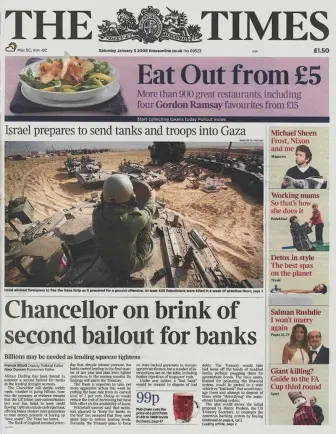
On January 3, 2009 at 7:15 p.m., the very first block in the Bitcoin blockchain, known as the "Genesis block", was created. A special block without reference to a previous block, because it marked the beginning of this extraordinary adventure. Inside the block, an enigmatic message encoded in its header:
"The Times 03/Jan/2009 Chancellor on brink of second bailout for banks".
This message referenced an article from The Times newspaper, highlighting the problems of the traditional financial system and the urgency of finding a decentralized alternative like Bitcoin.
The first 50 Bitcoins, generated in the Genesis block, are considered "unspendable Bitcoins" and have symbolic significance, marking the first creation of value on the Bitcoin blockchain.
Since then, Bitcoin has been on an emotional roller coaster with periods of strong bullishness followed by significant corrections. But its creator, Satoshi Nakamoto, remains a fascinating enigma, having chosen to remain anonymous and no longer communicate with the Bitcoin community as of 2010. His real identity remains, to this day, an intriguing mystery.
Thus, Bitcoin was born out of the 2008 crisis, bringing hope for a decentralized alternative, and since then it has continued to write its thrilling history in the world of cryptocurrencies.
How does bitcoin work?
Bitcoin is traded over a computer network that uses blockchain technology.
The blockchain is essentially a public ledger where all transactions made with Bitcoin are recorded. Each transaction is stored in a block, and these blocks are linked together, forming a continuous, immutable chain of records.
Bitcoin transactions are secured by cryptography, which uses public and private keys to guarantee the authenticity and confidentiality of exchanges.
How are bitcoins created?
Bitcoins are created by a process called "mining".
Miners are participants in the Bitcoin network who use the computing power of their computers to solve complex mathematical problems. When a miner solves a problem, they create a new block of transactions and are rewarded with Bitcoins for their work.
The total number of Bitcoins that can be created is limited to 21 million, making it a finite resource and helping to maintain its value.
What is the halving?
Approximately every four years, the reward to miners for creating new Bitcoins is halved in an event called a "halving". This gradually limits the supply of new Bitcoins and may impact the price as demand remains high.
Why invest in Bitcoin in 2023?
Investing in Bitcoin in 2023 can be an attractive opportunity for several reasons.
First, bitcoin is increasingly accepted as a means of payment around the world, which can increase its value and usefulness.
It is also interesting to note that some countries have adopted Bitcoin as legal tender, such as El Salvador in 2021 and the Central African Republic in 2022.
Additionally, the growing adoption by financial institutions and institutional investors may bring additional stability to the market.
However, it is important to note that Bitcoin is a high risk investment due to its volatility. It is essential to understand how it works and not to invest more than you can afford to lose.
To buy Bitcoin, you can use a cryptocurrency exchange by exchanging euros for Bitcoins.
But always remember to do thorough research and consult with financial experts before making an investment decision.
For further :
If you want to learn more about how Bitcoin works, I recommend watching the fascinating documentary produced by arte titled
This documentary delves deep into the technical and historical aspects of Bitcoin, and offers an interesting perspective on its impact in the financial world. Click on the link to access the video and learn more about this exciting cryptocurrency.
Liens de parrainage :
Kucoin code de parrainage (r3J1LAT)
Bybit code de parrainage (1W2QPP)





