
Research shows that while many companies are using multiple DLT technologies, 81 of the top 100 are using blockchain tech
While cryptocurrencies are just beginning to join the party with institutional money pouring in digital assets, the underlying blockchain technology has been slowly making inroads in the corporate sector. In fact, interest, and adoption in these big-name companies started as far back as 2014. Many of them announced their commitment to joining various consortia or building their own digital ledger networks. And many have indeed gone live with these endeavors.
According to Blockdata, 81 of the top 100 public companies are using blockchain technology. The research further found that there were 30 different technologies used by the top institutions for building their blockchain solutions. The data also showed that many companies were actually using multiple Digital Ledger Technologies (DLT) for their initiatives.
The infographic below (Figure 1) categorizes the blockchain adoption of top companies. Even if we take out the 16 institutions in the research phase, we are still left with almost two-thirds of the companies (65) are actively developing blockchain solutions. The figure does not showcase the 19 companies that are inactive — the ones that initially got involved but are no longer active/or never started.
Apart from Research & Inactive phases, companies are in three other phases of blockchain implementation — Pilot (14), In Development (24) & In Production (27). The pilot phase involves preliminary testing to see if it is viable for business while the development indicates a near-production-ready service. While In Production points to a product or service that is currently live and ready for use.
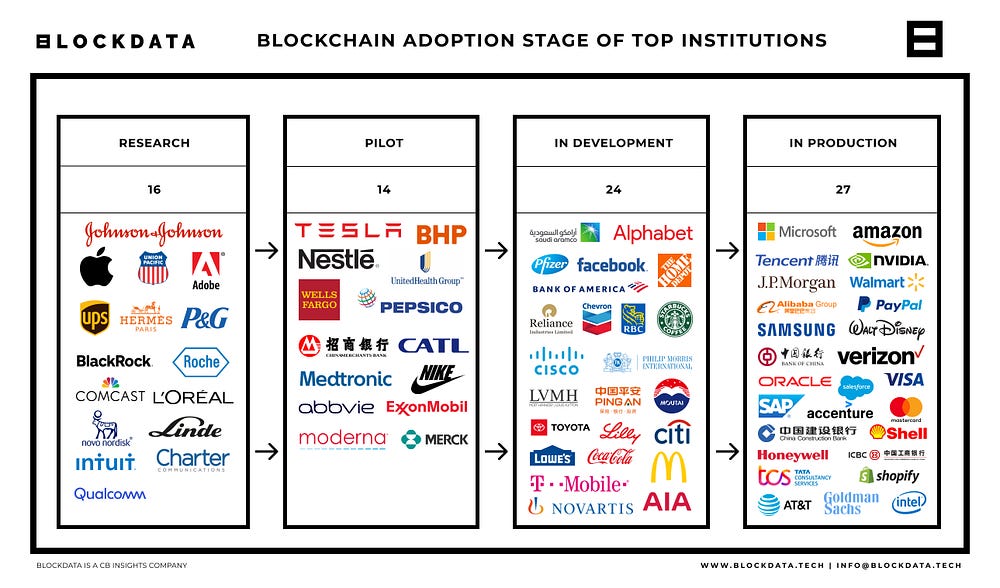 Figure 1
Further analysis by Blockdata suggests there were 30 different technologies used by the top institutions for building their blockchain solutions. Of these 30, Hyperledger Fabric is the most preferred DLT of choice by the top 100, with 26 of them currently using the technology — followed by Ethereum with 18, Quorum with 11 & Corda at 8. The break-up below (Figure 2) showcases how the top 10 technologies are being used by the top 100 companies.
Hyperledger Fabric is an open-source, modular blockchain framework by the Linux Foundation, which has become the de facto standard for enterprise blockchain platforms. It offers a scalable and secure platform that supports private transactions and confidential contracts. Designed for use in enterprise environments specifically, no wonder it is the most popular choice by corporations.
Ethereum, on the other hand, is the premier smart contract platform that enables the development of decentralized applications (DApps). Unlike Hyperledger, Ethereum is a censorship-resistance, global decentralized network, working without any third-party interference. Quorum was founded by JPMorgan Chase in 2017 (acquired by ConsenSys) — combines Ethereum innovation to serve enterprise needs. Corda Blockchain enables businesses to transact directly and in strict privacy with one another.
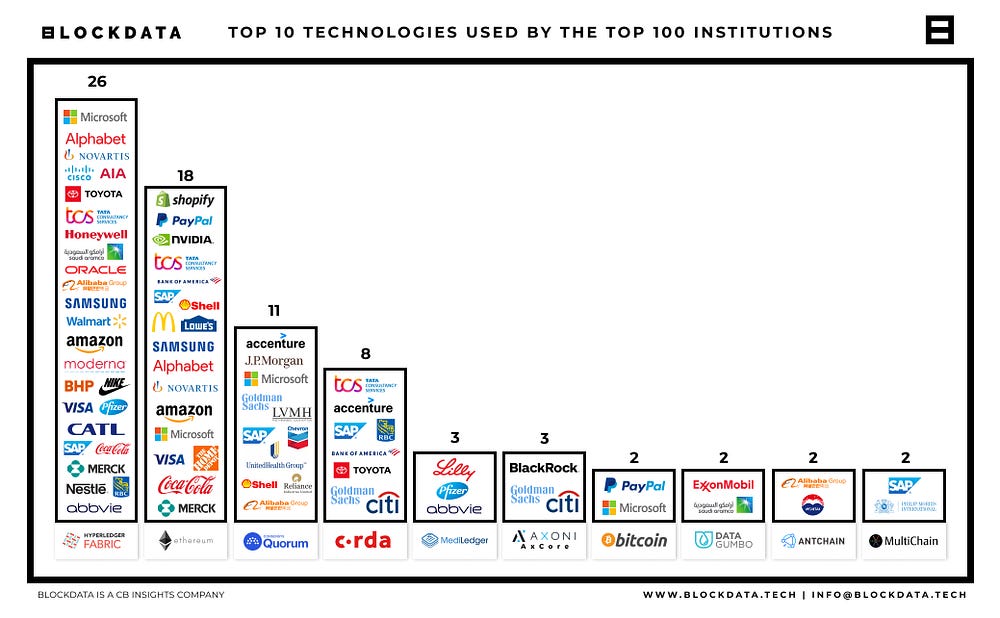
Figure 2
The final statistic points to the use of multiple technologies by the top companies — 11 of the top 100 public companies are working on multiple solutions with different blockchain technologies. SAP leads the pack using 5 different tech solutions, followed by Microsoft, Google & Accenture each using four each. Rest of the seven companies in the group each use three tech solutions. These institutions include multinationals like Coca-Cola, Samsung, Citi group & Samsung, etc.
Unsurprisingly most of these corporations are interested in using secure, permissioned blockchains which allow them to build customized, private solutions. The research rounds off by listing the main use cases of blockchain being utilized by top 100 public companies — listed as Blockchain infrastructure services, supply chain, and Clearing & settlements. I am pretty sure this list is going to grow as does the adoption.
Legacy institutions are beginning to realize the usefulness emanating from the adoption of this blockchain tech — improvement, efficiency & security of their traditional systems and they are not going to be left behind in the digital transformation.
Originally Published on Medium
Email | Twitter | LinkedIn | StockTwits | Telegram | Newsletter







