The latest discovery gives credence to the theory that black holes come in all sizes — from tiny to Ultramassive
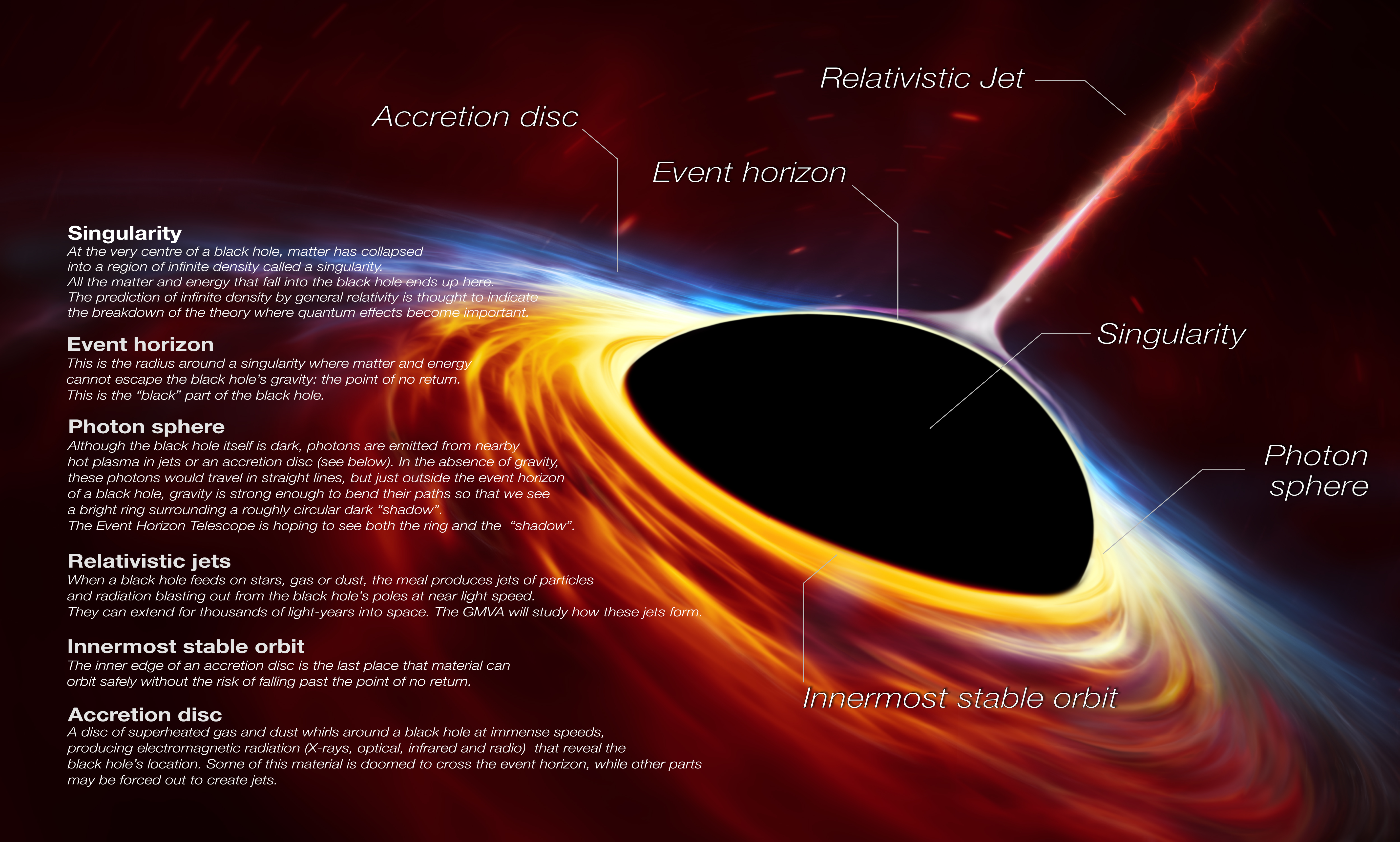
Black Holes are bodies of intense density devouring all energy and matter that comes in their path thus creating a point of infinite density. The scavengers of the universe feed on stars, gas & dust. Astronomers have been fascinated by the size of these supermassive celestial bodies lurking around the center of the galaxies. Our very own Milky Way galaxy has a supermassive black hole dubbed as Sagittarius A*.
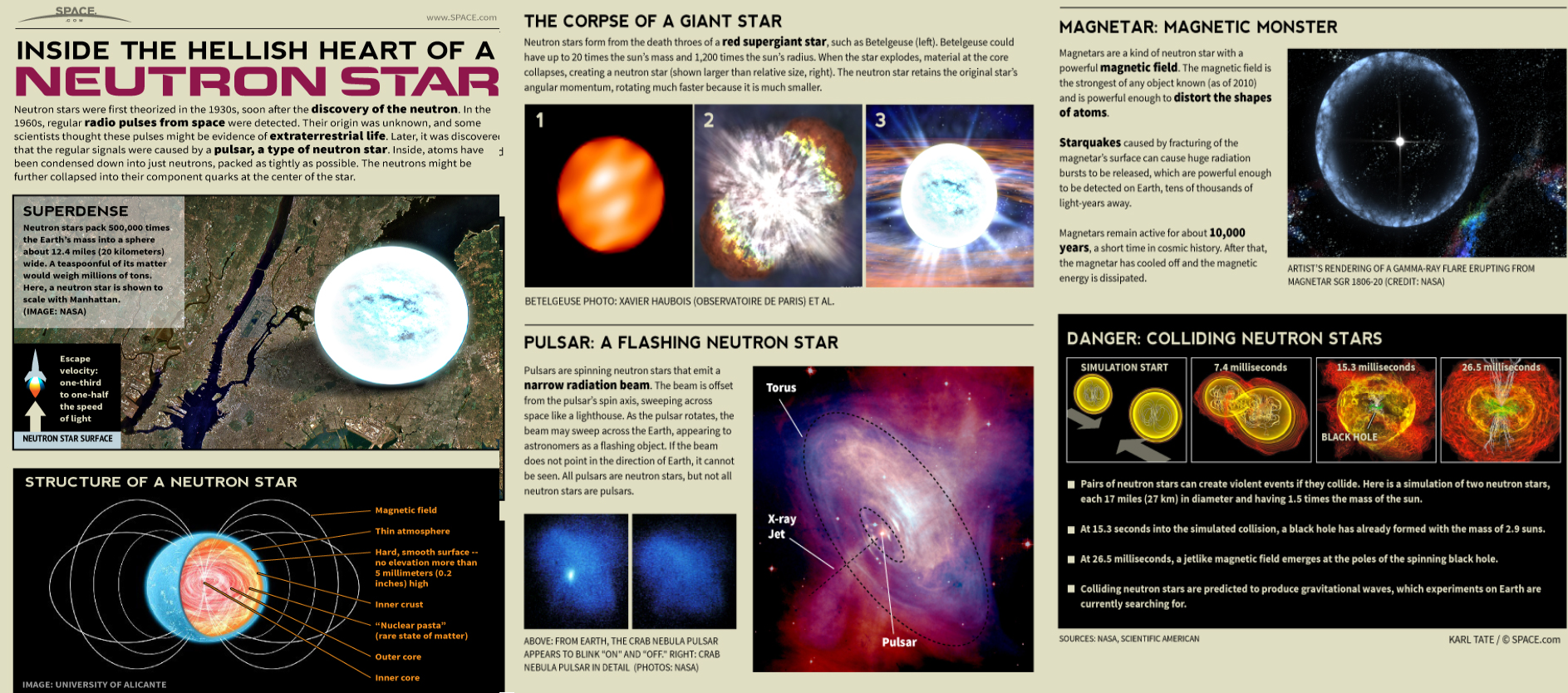
New black holes are being created all the time. When super heavy stars go supernova, they spit out most of the matter into space. The remaining interior takes the shape of dense core forming a neutron star. Sometimes these cores are so ultra-dense that they go onto form a black hole.
The two of the most common sizes of the black holes discovered so far are stellar-mass black holes & supermassive black holes — where the former has a mass of about 5x-30x times the Sun & the latter’s mass equates to a few million suns. Since black holes have always been considered to be huge in size, there has been a race to find a bigger one yet.
One of the biggest black holes ever detected — the biggest by far is quasar TON 618 measuring at 66 billion times the mass of the sun. More recently, astronomers at the Max Planck Institute for extraterrestrial Physics in Germany discovered a black hole behemoth Holmberg 15A weighing about 40 billion times the mass of the Sun. Scientists are calling to classify these humungous black holes as ultramassive.
“What we’ve done here is come up with a new way to search for black holes, but we’ve also potentially identified one of the first of a new class of low-mass black holes that astronomers hadn’t previously known about. The masses of things tell us about their formation and evolution, and they tell us about their nature.” ~ says Todd Thompson, lead author of the study
The reclassification story doesn’t end there. Till now it was presumed that black holes mostly came in two sizes, but there is an obvious size gap in the middle of relatively small to supermassive ones. Scientists have long proposed the existence of intermediate-mass black holes (IMBHs) & a black hole discovery last year fit that description.
Now another discovery seems to have filled the gap at the lower end too — below 5 times the mass of the sun. As described earlier, when stars collapse they transform into either a dense neutron star or a black hole and the limit seems to be about 2.1x the mass of the sun (biggest neutron star). Anything smaller than this forms a neutron star, while over this limit it becomes a black hole.
Researchers at the Ohio State University claim that they have discovered the smallest black hole yet — at 3.3 solar masses. Lying at the outer edge of the Milky Way galaxy, the black hole is about 10,000 light-years away from us, measuring only 12 miles (19 kilometers) across. The team used reached the conclusion after looking at the data gathered from the Apache Point Observatory Galactic Evolution Experiment (APOGEE).
The team looked for a change in the light of the stars measured by APOGEE. Of the 100,000 stars in the catalog, the researchers pinpointed 200 that fit the description they were looking for. The next step was the compilation of thousands of images of these stars using the All-Sky Automated Survey for Supernovae, before isolating one potential candidate — A giant red star, known as 2MASS J05215658+4359220 appeared to be revolving around something.
Further calculations from Tillinghast Reflector Echelle Spectrograph and the Gaia satellite revealed that they had actually discovered a tiny black hole at 3.3x the mass of the sun. With this discovery, we might just have filled the classification gap of black holes. It is increasingly becoming evident that they come in all sizes— Tiny, small, IMBHs, supermassive & ultramassive.
Complete research was published in the Science Journal.
Medium | Twitter | LinkedIn | StockTwits | Telegram