
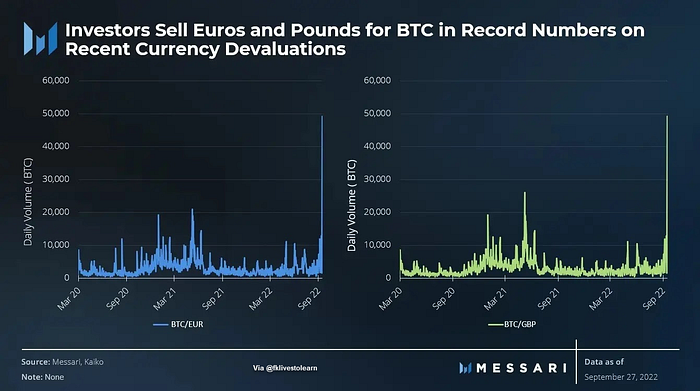
The recent devaluation of the two major European fiat currencies triggered a demand for Bitcoin in the corresponding pairs
It won't be inaccurate to say that might dollar has steamrolled everything in its path this year. And this tremendous strength in the global reserve currency causes hardships for many economies. By some measures, the US currency is already stronger than ever, eclipsing the highs of the early pandemic.
And this historic central-bank-fueled surge in the greenback is unlikely to abate anytime soon — the Fed chair Jerome Powell has reiterated that the American central bank remains solely focused on bringing down inflation rates.
Two more rate hikes are expected before the end of the year, causing more pain to the consumers. Europe is feeling the pinch more than any other region for various reasons — the EU and UK are under substantial pressure at the currency and commodity levels.
As if the currency pressures were not enough, Russia-Ukraine has added another dimension to it. Supply fears of oil & gas are adding to inflationary pressures on the continent. As the central banks reverted to high-interest rates to battle it, UK’s massive tax cuts by the new government have added more confusion to chaos.
These issues are manifesting themselves in pairs like EURUSD and GBPUSD — where the former has already fallen below parity, while analysts are expecting the latter to fall to parity by the end of the year. So much pressure that the prospect of bank bail-ins has entered the collective consciousness of the trader hive mind.
As a result of these pressures and concerns, BTC-denominated volumes in both Euros and Pounds skyrocketed 100–300% (charted above). Just goes to show the impact of recent devaluations has been pretty widespread and not restricted to fiat currency markets only.
Originally Published on Medium
Email | Twitter | LinkedIn | StockTwits | Telegram | Newsletter






