
Inside the Mechanics of Polymarket and the Growing Influence of Decentralized Prediction Platforms.
Prediction markets have long promised to harness collective intelligence to forecast uncertain events. But a dramatic surge in conflict-related betting has raised uncomfortable questions about where forecasting ends, and speculation on global crises begins.
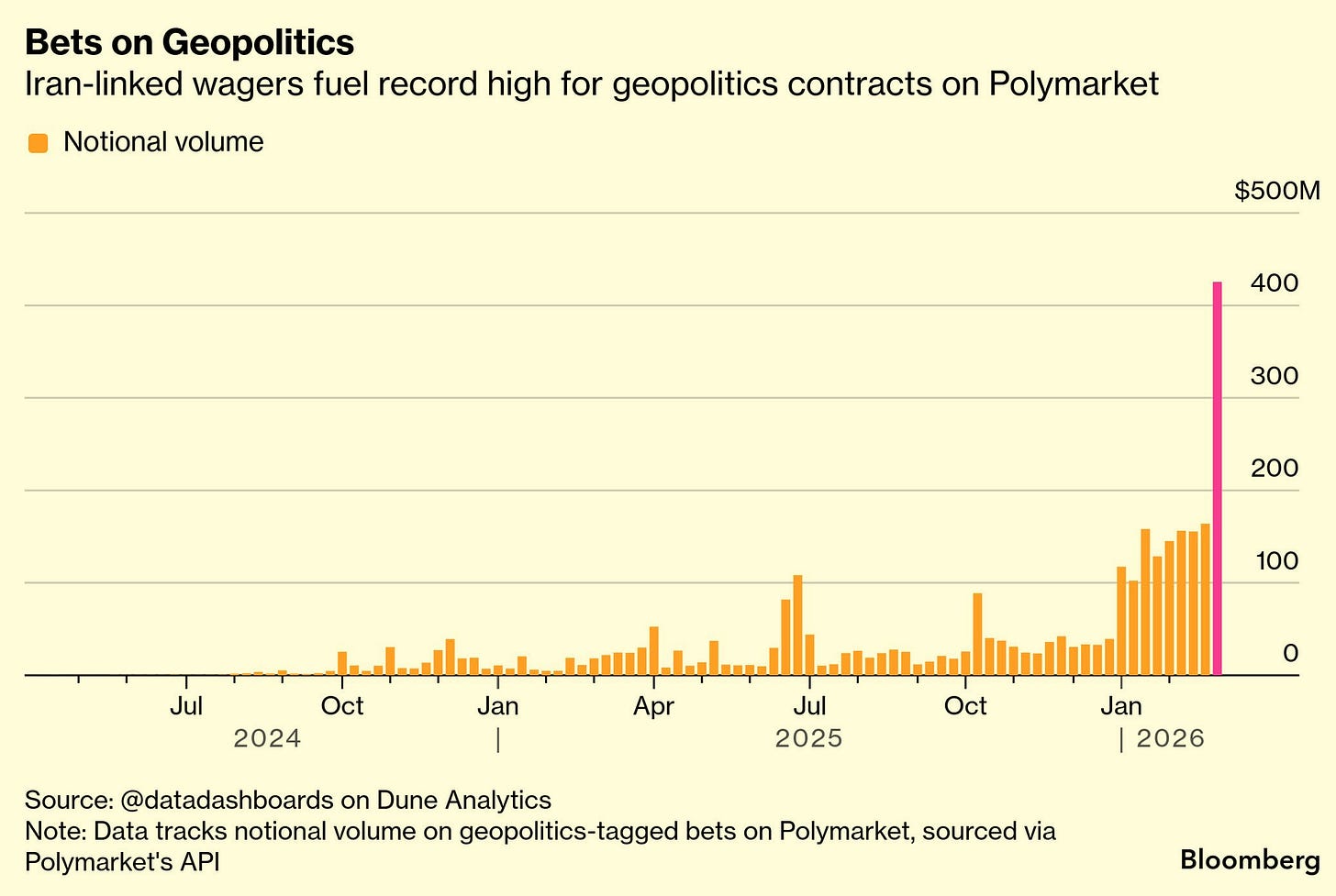
In the final week of February 2026, betting activity on geopolitical outcomes surged to unprecedented levels on the blockchain-based prediction market platform Polymarket. According to data compiled by blockchain analytics dashboards on Dune Analytics, bettors placed approximately $425 million in wagers on geopolitics-related contracts in the week ending March 1. Just one week earlier, the volume had stood at $164 million.
The spike reflects an extraordinary wave of speculation tied to rising tensions involving the United States, Israel, and Iran. Traders poured money into contracts predicting whether US-Israeli strikes on Iran would occur before the end of February, transforming geopolitical risk into a tradable financial instrument.
Data from the chart illustrates how dramatic the surge has been. Throughout much of 2025 and early 2026, weekly notional volumes in geopolitics-related bets were relatively modest, often below $50 million. By early 2026, however, volumes climbed steadily before exploding to more than $400 million in a single week. The vertical spike represents the largest recorded trading activity for geopolitical contracts on Polymarket to date.
The Mechanics of Prediction Markets
Prediction markets operate by allowing participants to buy and sell shares tied to specific outcomes. Each contract typically resolves to either 0 or 1, depending on whether the predicted event occurs. Prices fluctuate in real time, effectively representing the market’s collective probability estimate. For example, a contract asking whether the United States would strike Iran before February 28 would trade between $0 and $1.
If the contract traded at $0.70, the market was signaling a 70% implied probability of the strike occurring. Advocates argue these markets can produce highly accurate forecasts because they aggregate information from diverse participants. Economists have long pointed to prediction markets as tools for forecasting elections, policy decisions, and economic events.
Research by the University of Iowa’s Iowa Electronic Markets demonstrated that prediction markets frequently outperform traditional polling in political forecasting. However, the recent surge in betting tied to potential military conflict highlights a darker side of the model.
Suspicious Trading Patterns Raise Red Flags
Amid the record trading activity, blockchain analysts began noticing patterns that triggered alarm within the crypto research community. Six accounts on Polymarket reportedly generated roughly $1 million in profits by betting that the United States would strike Iran before February 28. What made the trades particularly unusual was the timing and behavior of the accounts.
All six accounts were newly created in February. Each account had exclusively placed wagers related to the same geopolitical question: whether US strikes would occur before the deadline. Such concentrated activity raised the possibility that traders may have had access to privileged information or were attempting to exploit insider knowledge about military developments.
While blockchain transactions are publicly visible, identifying the real-world identities behind these wallets remains difficult. Analysts, therefore, cannot definitively determine whether the activity reflects insider trading, coordinated speculation, or simply highly confident traders. Still, the pattern has intensified scrutiny of prediction markets that allow trading on sensitive geopolitical developments.
Regulatory Gray Zones and Offshore Platforms
The surge in conflict-related betting has also reignited a regulatory debate in Washington. Under US law, financial contracts tied directly to warfare or acts of violence are broadly considered impermissible. The Commodity Futures Trading Commission has historically taken a strict stance against markets that could incentivize or profit from catastrophic events.
Yet platforms like Polymarket operate in a regulatory gray zone. The platform’s primary exchange infrastructure is based offshore, allowing it to avoid direct oversight by American regulators. In 2022, the CFTC fined Polymarket $1.4 million for operating an unregistered derivatives trading platform in the United States.
Since then, the company has restricted US-based users from certain activities, but enforcement remains difficult due to the decentralized and global nature of blockchain markets. Lawmakers are now signaling that renewed enforcement may be coming. Critics argue that allowing traders to profit from the probability of military conflict creates troubling incentives and risks, encouraging speculative manipulation.
The Ethical Debate Around Betting on War
Beyond regulatory concerns lies a deeper ethical question: should markets exist that allow people to profit from the likelihood of armed conflict? Supporters of prediction markets argue that such platforms merely reflect existing geopolitical risk rather than creating it. By aggregating information and sentiment, they claim prediction markets can provide early warning signals about escalating tensions.
Critics counter that monetizing war probabilities crosses a moral line. Turning potential human suffering into a financial trade, they argue, risks normalizing conflict as just another speculative asset class. The extraordinary spike in betting tied to US-Israeli strikes on Iran illustrates how quickly geopolitical crises can become financialized in the digital age.
A New Frontier for Financialized Geopolitics
The surge to $425 million in weekly geopolitical wagers may mark a turning point for prediction markets. Blockchain technology has enabled global participation, pseudonymous trading, and 24-hour markets capable of reacting instantly to geopolitical developments. These characteristics make prediction platforms powerful forecasting tools, but also create new vulnerabilities.
As regulators, policymakers, and analysts grapple with the implications, one thing is increasingly clear: geopolitics is becoming a tradable asset. And when war becomes a market, the line between prediction and speculation becomes far harder to draw.
Originally Published on Substack.






