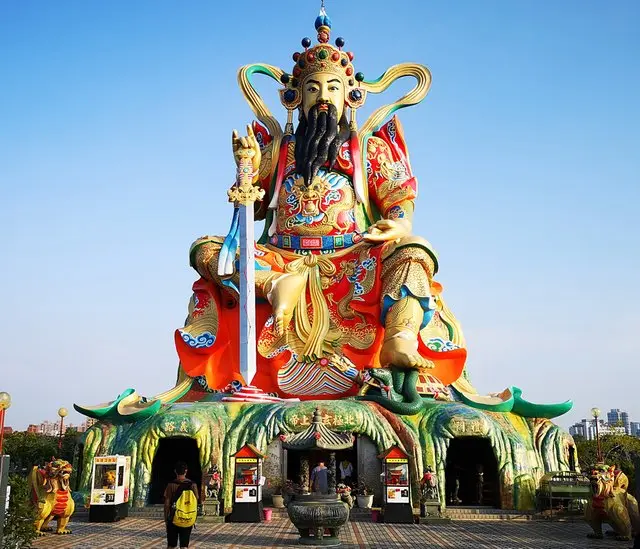
The lake where the gods reside.
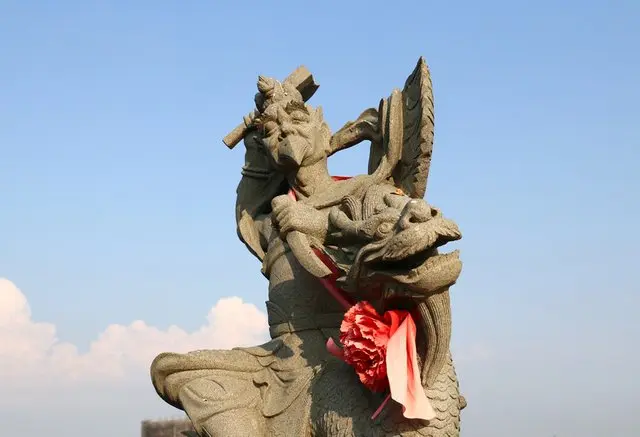
It should bring luck if you enter the dragon tiger pagodas at the lotus lake through the mouth of the dragon and leave them again through the mouth of the tiger.
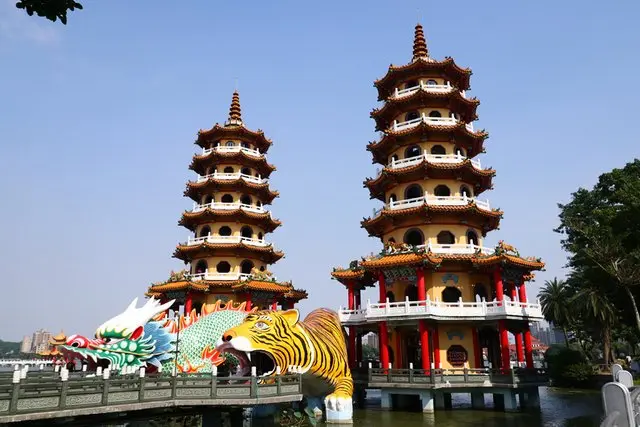
Colourful pagodas, pavilions and richly decorated temples line the waterside of the artificially created Lotus Lake. The tourist attraction is located in the center of Kaohsiung, the second largest city in the southwest of the country. The lotus flowers, which gave the lake its name, had already largely faded when we visited it in October.

Dragon Tiger Pagodas
Dragons and tigers are very important in Chinese culture. They symbolize the different powers of nature and together they form Yin (tiger) & Yang (dragon). While the dragon represents the east and spring, the tiger stands for the west and autumn. In addition, both are represented in the Chinese zodiac.

A bridge zigzags across the lake to the twin pagodas.
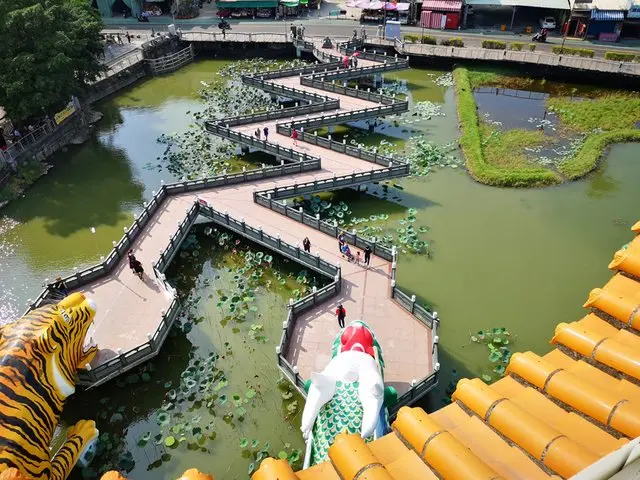
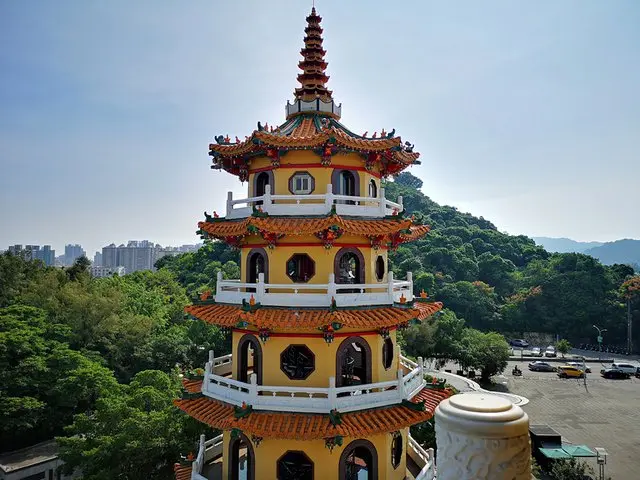
The seven-storey towers with octagonal ground plan are on the inside very colourful and decorated with murals. A spiral staircase leads up to the sixth floor, from where you have a good view over the lake and other temples.

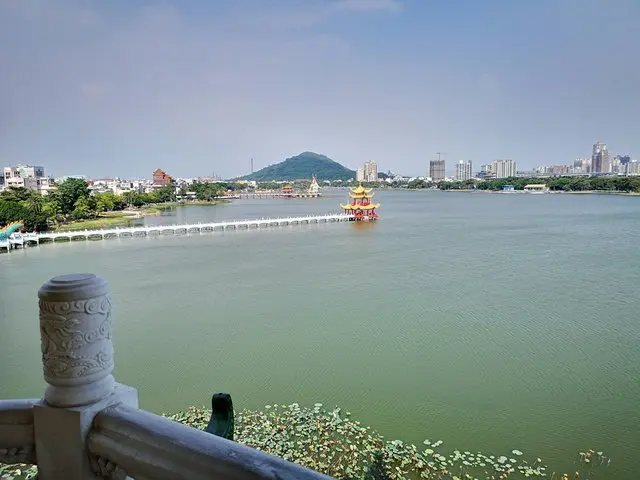
Bao Sheng Dadi Temple
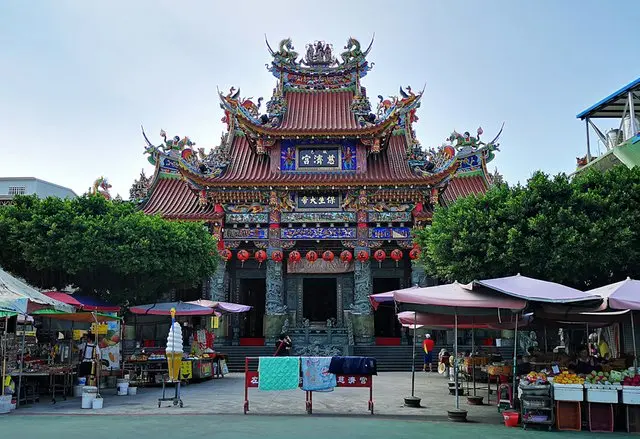
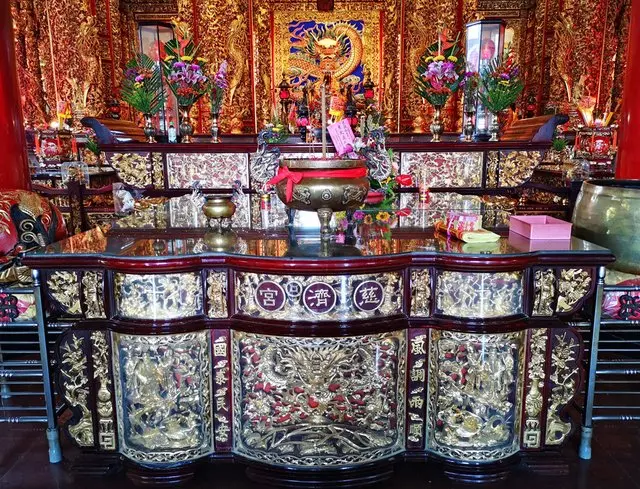
Across the two pagodas the Bao Sheng Da Di Temple (Cih Ji Palace) is situated. It was originally built in Feng Shan in 1719 and later moved to Zuoying at the Lotus Lake. Among other gods, Baosheng Dadi, a deity of healing arts, is worshipped here.
Spring and Autumn Pavilions
In front of the entrance to the two pavilions is a large statue of Guanyin, the goddess of compassion. Legend has it that one day the goddess appeared in the sky in front of the two pavilions riding a dragon.
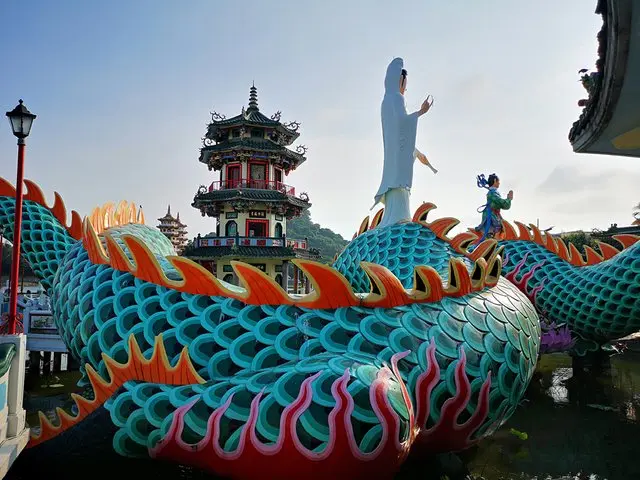
The pavilions were built in 1953. In order to make the gods inclined, one first goes through the mouth of a dragon.


Between the two pavilions, a pier leads to the Wuli pavilion, which is located almost 200 m away in the lake.
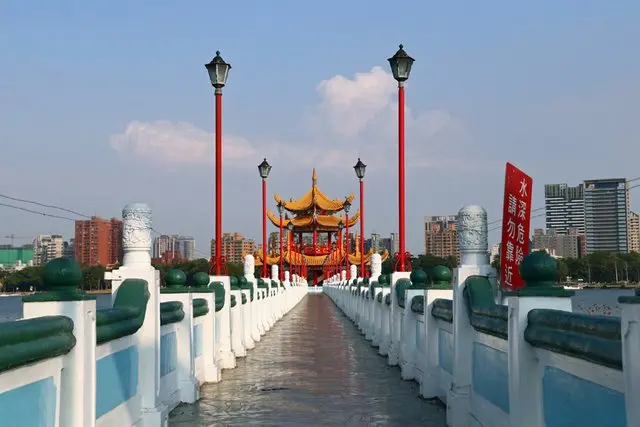
In the nearby pond countless turtles can be seen.

Chi Ming Palace
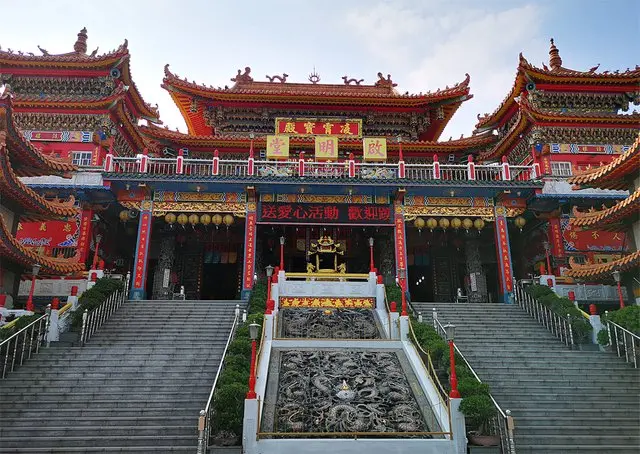
The three-storey temple complex, facing east, was rebuilt in 1973. Confucius and the former Chinese general Guan Yu, who was glorified because of his courage, strength and justice to a god-like figure, are worshipped in this temple above all.
Pei Chi Pavilion
The statue of Xuan Wu, the "Dark Warrior" can be seen from far away. Xuan Wu was one of the most powerful deities of Daoism, especially during the reign of the Ming dynasty (Chinese imperial house from 1368 to 1644).
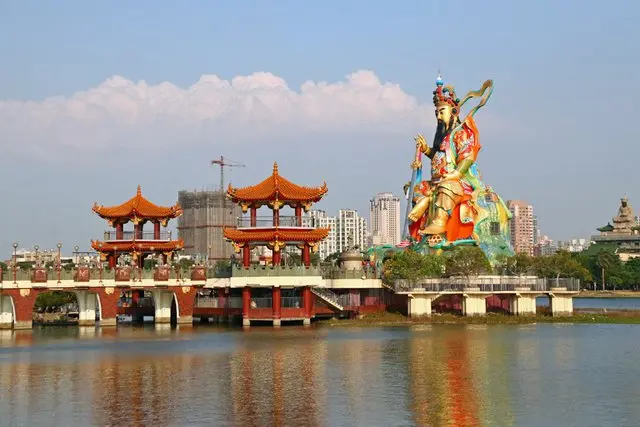

The statue is with 72 m one of the largest water statues in Asia. In the cave-like basement of the statue there is the prayer room.