
Prologue: A Morning Off-Duty at the Motorcycle Dealer
Today ,I decided to take the day off and not go to work because one of my friends asked me to take him to a used motorbike dealer in Kendal. And this morning we monitored used 2021 Honda CRF 150L (as you can see in my photo below). It's a rugged bike, perfect for navigating the steep, winding mountain shortcuts around our regency.
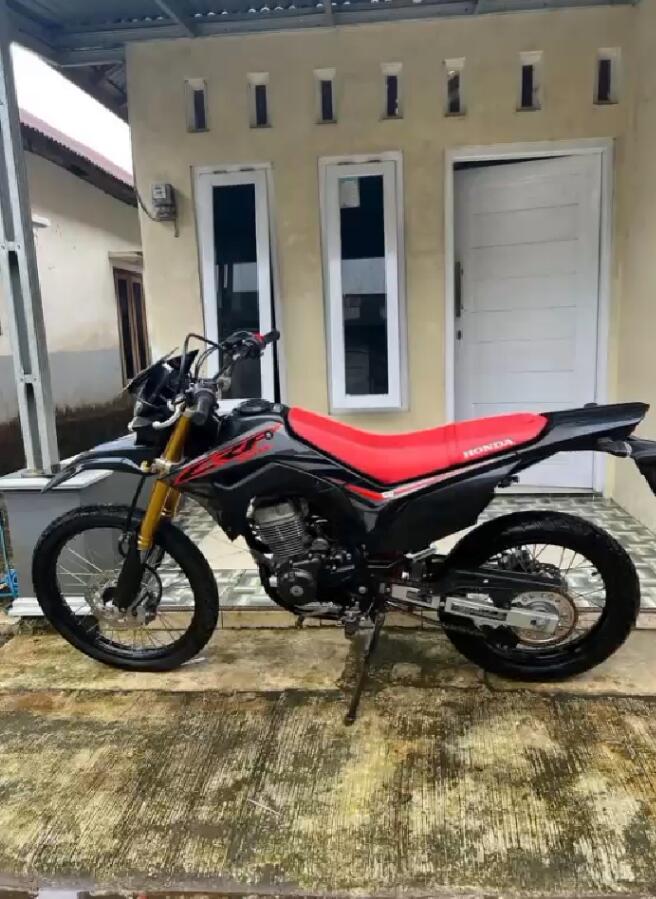
However, there was a classic hurdle: his hard-earned cash wasn't enough to buy the motorcycle outright. The dealer immediately offered a solution through various leasing options (credit lines). Standing there, watching the agent explain the down payments, monthly installments, and risks of asset repossession, my mind clicked. This is exactly how Crypto Derivatives Products work!
For anyone wondering: yes, I am still an ojol driver translating high-finance concepts from a local motorcycle yard. I write down the key takeaways on the spot, then refine them at home into these journals. Let’s break down the world of derivatives using the mechanics of this CRF deal.
What are Crypto Derivatives?
In the cryptocurrency ecosystem, derivatives are complex financial instruments that derive their value from an underlying digital asset (like Bitcoin or Ethereum). The most critical part? You do not actually own the asset itself. Instead, you are simply speculating on its future price movements to hedge risks or amplify gains.
The Dealership Logic: Explaining Derivatives on the Asphalt
- Futures Contracts (Indent System / Binding Price)
A Futures contract is a legally binding agreement to buy or sell an asset at a predetermined price on a specific future date.
- The CRF Analogy: Imagine my friend wants to buy this CRF three months from now when he gets his yearly bonus. The dealer agrees to lock the price today at Rp25 Million. We sign a contract.
- Three months later, if the market value of a 2021 CRF jumps to Rp28 Million due to high demand, my friend wins—he still buys it for Rp25 Million. But if the market crashes and the bike's value drops to Rp22 Million, he is still legally forced to pay the locked contract price of Rp25 Million.
- Options Contracts (Forfeited Booking Money System)
Options provide the buyer the right, but not the obligation, to execute a trade before a certain expiration date. It involves paying a small non-refundable fee up front (the premium), divided into Calls (right to buy) and Puts (right to sell).
- The CRF Analogy (Call Option): My friend tells the dealer, "Keep this CRF for me until next Friday. Here is a Rp500,000 booking fee."
- If my friend finds a much better deal elsewhere next week, he can simply walk away. He is not forced to buy the CRF. The only loss he suffers is the Rp500,000 booking fee that goes flatly to the dealer.
- Perpetual Swaps & Funding Rates
Perpetual Swaps are like Futures contracts but with no expiry date. You can hold the position forever. To keep the contract price tied tightly to the actual spot price of the real bike, a balancing mechanism called Funding Rates occurs periodically.
- The CRF Analogy: Instead of buying, my friend decides to rent the CRF indefinitely from a rental company to use it for heavy long-distance deliveries. There is no return date.
- If the ride-hailing market in Kendal is booming (gacor), the renters (buyers) pay a small daily bonus to the owners (sellers) because the asset is highly profitable. If the market goes dead quiet, the bike owners lower the rental fee or pay the renters a small rebate to encourage them to keep using the bike. This periodic exchange keeps the rental contract fair and tied to reality.
- Leverage & Liquidation Risk
Many derivative platforms offer Leverage, which allows traders to borrow money from the broker to open much larger positions using only a small amount of initial capital (margin).
- The CRF Analogy: This is exactly how the leasing option works. My friend only has Rp3 Million in cash. The leasing company covers the remaining Rp22 Million (Leveraging his capital roughly 8x) so he can take the CRF home today.
- If my friend works hard, hits his targets, and pays the installments on time, the leverage helps him earn a livelihood faster. But here is the catch—if he falls behind on his payments because he gets sick or lazy, the leasing company will send a debt collector to seize and repossess the motorcycle. His initial Rp3 Million deposit is completely wiped out. In crypto trading, this harsh enforcement is called Liquidation.
Structural Breakdown: The Used CRF Deal vs. Crypto Derivatives
Financial Feature
The Used CRF Dealership
Crypto Derivatives Market
The Derivative
Speculating on the bike's value without paying full cash upfront.
Contracts deriving value from underlying assets (BTC, ETH).
Futures
Locking an exact purchase price for a future date.
Mandatory agreement to buy/sell crypto at a fixed price later.
Options
A non-refundable booking fee to reserve a purchase right.
Paying a premium for the choice to buy/sell before expiry.
Leverage & Risk
Taking a big bike home using leasing debt; risk of repo/seizure.
Borrowing funds to trade larger positions; risk of instant liquidation.
Conclusion: Respect the Power of Debt
Looking at that Honda CRF this morning reminded me that leverage and financial derivatives are incredibly sharp tools. In the hands of a disciplined person, a leasing plan (leverage) can buy a machine that feeds a family. In the hands of someone careless, it leads to heavy debt and repossession.
Crypto derivatives work the exact same way. They offer beautiful avenues for advanced strategies, but they require total mastery of risk management.
How was your study today? It sounds nice, right? Make every place a school and everyone a teacher, because we don't know where we get useful knowledge from, including from a motorcycle taxi driver like me.





