
Hello fellow Street Warriors! I hope your engines are running smoothly and your vision for the future remains clear, no matter how heavy the road dust gets today.
Today, I want to show you something very close to my heart. Look at this beautiful canvas painting sitting on my floor. It depicts the Punokawan—the four legendary clown-servants from Javanese shadow puppetry: Semar, Gareng, Petruk, and Bagong. In our culture, they aren't just entertainers; they represent the voice of the common, hardworking grassroots people. They represent us, the street fighters.
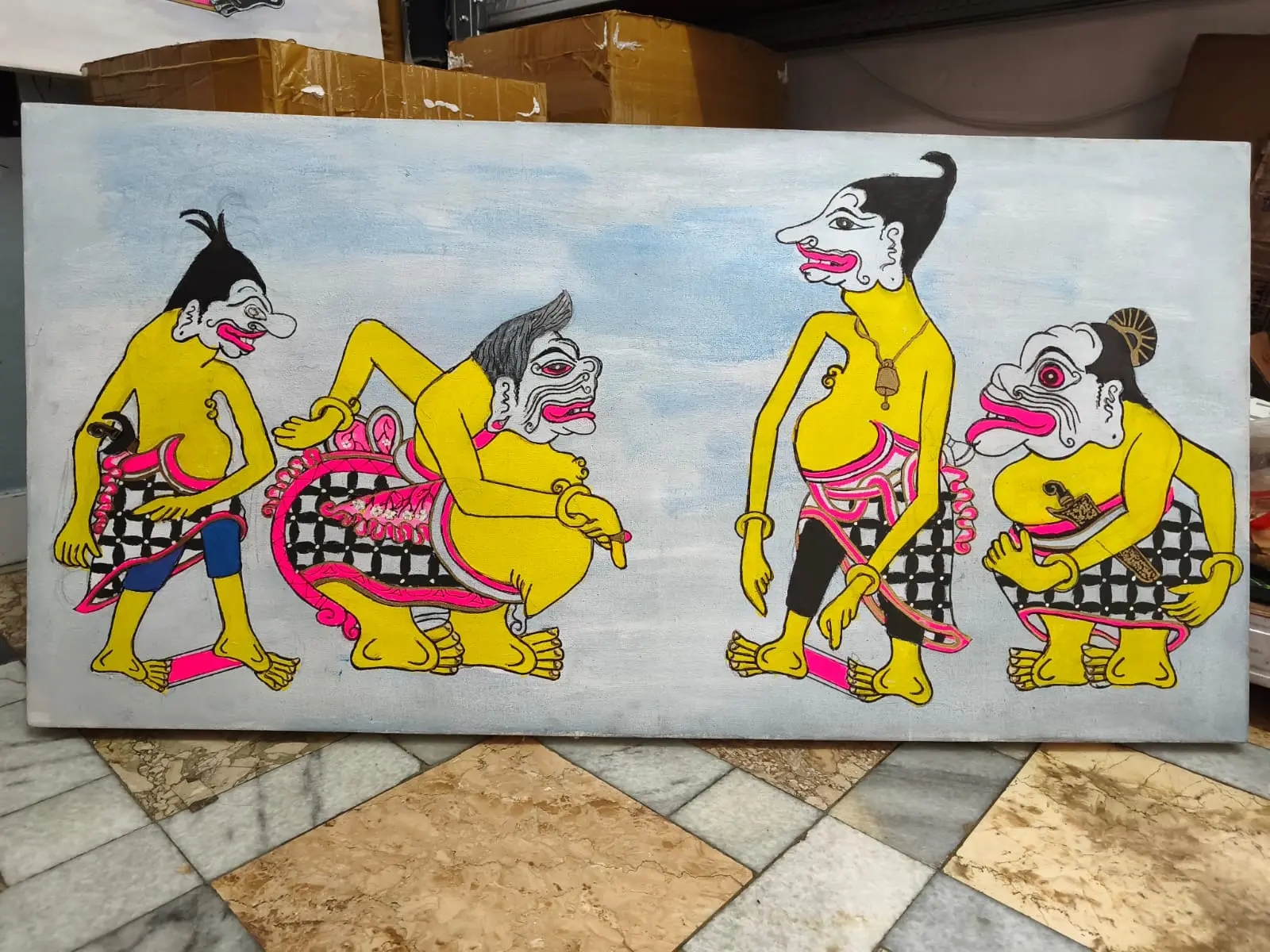
While studying my next module on BitDegree about the Tokenization of Real-World Assets (RWAs), I stared at this painting and realized something grand. Tokenization and decentralized credit aren't just toys for wealthy investors in Paris to buy fractions of luxury hotels. If guided by the right vision, it can become the ultimate shield to protect our local farmers, artists, and small businesses (UMKM) from exploitation.
Let’s break down the blueprints of RWAs and decentralized credit using the wisdom of the Punokawan and real-world Indonesian struggles!
What is Real-World Asset (RWA) Tokenization?
In the Web3 ecosystem, RWA Tokenization is the process of converting the ownership rights of a physical, tangible asset into digital tokens on a secure blockchain ledger. Instead of one tycoon owning a massive asset, the asset can be split into thousands of digital fractions. Anyone can buy, trade, and verify ownership of these fractions transparently without needing a giant corporate broker.
The basic steps are simple:
1. Asset Selection: Choosing a physical item (like a patch of land, traditional crafts, or a batch of agricultural commodities).
2. Legal Setup: Creating a legally binding framework—often using a Special Purpose Vehicle (SPV) or local PT structure—that ties the digital token to the physical asset.
3. Token Creation & Liquidity: Issuing fractional shares on the blockchain so they can be securely traded, verified, or used as leverage for capital.
Case Study 1: Protecting Hand-Drawn Batik (Batik Tulis) from Mass Production
(Bagong’s Spirit of Defiance)
In Indonesia, our traditional Batik Tulis takes months of painstaking manual labor by local artisans. Tragically, big capital owners frequently copy these authentic designs, mass-produce them using industrial printing machines, and sell them at a fraction of the price. The local artisan gets wiped out.
The Tokenization Solution:
Imagine if the local artisan tokenizes each unique Batik Tulis piece at birth. The physical fabric is embedded with a secure, scan-able Web3 cryptographic tag tied to an NFT (Digital Twin) on the blockchain.
· The Benefit: Buyers will happily pay a premium knowing 100% of the money goes directly to the true creator, bypassing exploitative middlemen.
Case Study 2: Eradicating Subsidy Theft & Unlocking Credit for Farmers

(Semar’s Wisdom Meets Apyx Infrastructure)
Our local farmers work from dawn till dusk, yet they constantly suffer because subsidized fertilizer (pupuk subsidi) provided by the government often gets diverted, hoarded, or manipulated by corrupt local syndicates.
Furthermore, when farmers or artisans need capital to buy seeds or tools, traditional banks turn them away because they don't have corporate payrolls or standard collateral. They are left at the mercy of predatory local moneylenders.
The Tokenization & Credit Solution via Apyx:
What if subsidized fertilizer allocations were tokenized as digital vouchers directly on a secure ledger? Every registered farmer receives "Fertilizer Tokens" sent straight to their phone's Web3 wallet.
But tokenization is only half the battle. This is exactly why decentralized digital credit platforms like Apyx matter.
By deploying decentralized credit protocols on Solana, Apyx provides the crucial infrastructure that traditional banks refuse to give to the grassroots.
· How it works: Once a farmer's crop yield or land potential is verified on-chain as an RWA token, they don't have to wait months for bank approval. They can tap into Apyx’s liquidity pools, using their tokenized real-world assets as collateral to unlock instant, low-cost digital credit (stablecoins like USDC/USDT).
· The Benefit: Corruption is blocked because the blockchain ledger is immutable. Concurrently, financial sovereignty is achieved because small-scale workers can access global capital markets without a middleman.
Structural Summary: Traditional Web2 vs. The Web3 RWA Credit Vision
Issue
Traditional System (Web2/Paper)
The Web3 Vision (RWA + Apyx Credit)
Batik Artistry
Easily copied by massive factories; original artists lose revenue.
Cryptographic Origin: Immutable proof of authenticity protects the artisan.
Fertilizer Subsidies
Prone to corruption, paper manipulation, and allocation theft.
Smart Contract Distribution: Tokens go directly to verified wallets; untamperable trail.
Access to Capital
High-value collateral required; high interest; weeks of bank bureaucracy.
Apyx Digital Credit: Instant liquidity using tokenized RWA as collateral, bypasses rigid bank procedures.
Conclusion: Bringing High-Tech Back to Earth
Real-World Asset tokenization and protocols like Apyx shouldn't just be about making Wall Street corporate bonds more efficient. True decentralization means using this technology to empower the underdogs—the Punokawan of the modern world. It is about protecting the sweat of our hand-drawn batik artists and securing the financial lifelines of our farmers through fair, open credit.
As I look at Semar, Gareng, Petruk, and Bagong on my canvas tonight, I realize my journey on BitDegree isn't just for my personal growth. It is about learning the tools necessary to one day build a fairer, more transparent economic engine for our streets.
Alright, Street Warriors! The canvas is painted, the notes are locked, and tomorrow a new journey begins. Keep your spirits high, drive safely on the asphalt, and let’s keep building our block height with honor! 🏍️💨
📌 Author’s Note: My Web3 Journal Part 2 was officially cited on MEXC News, and this grassroots series is curated and published by Block Magnates on Medium. If these roadside analogies helped your crypto literacy, please consider leaving a thumbs up!






