
Prologue: Graduation Bouquets, Confirmation Chats, and the Basecamp Classroom
Hello fellow Street Warriors! I hope your engines are running tight and your inner compass stays steady, whether you are filtering through the morning traffic of Kendal Regency or decoding the advanced cryptographic structures of the digital economy.
My shift this morning started with a very special and beautiful order. A customer requested me to pick up and deliver a fresh, vibrant bouquet of colorful chrysanthemums, roses, and asters. It was an official congratulatory gift for their nephew’s graduation day.
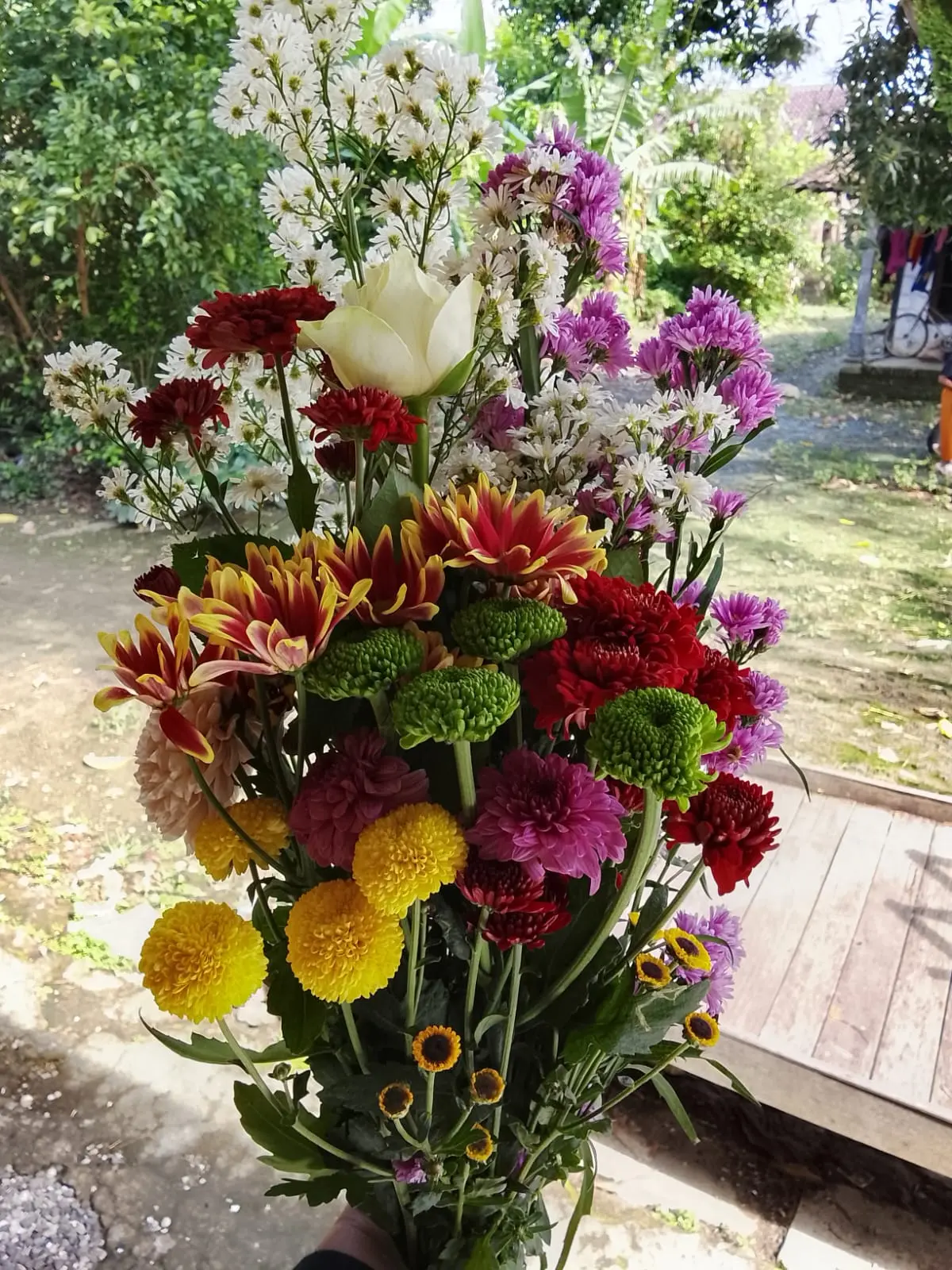
Out on the asphalt, delivering an emotional and fragile item like a graduation bouquet requires high attention to detail. Before I put my motorcycle into gear, I cannot just ride blindly. I must execute the official app protocol: sending a precise, polite Confirmation Message to the customer to verify the exact drop-off point, recipient details, and landmarks.
Once the beautiful flowers were safely received with smiles, I swiped "Order Completed" and rode back to our roadside basecamp (pangkalan). Sitting there on the wooden benches with a hot cup of black coffee, I opened my BitDegree dashboard. Today's module is incredibly fascinating because it explains Block Confirmations and Transaction Finality—and the mechanics under the hood perfectly mirror the exact confirmation steps I took on the road this morning. Let’s break it down using the "logic of the asphalt."
Part 1: What are Block Confirmations? (The Multi-Step Protocol)
In blockchain networks, when you execute a crypto transaction, it is not instantly carved into stone. It is first bundled into a block by miners or validators. Once that block is officially attached to the network ledger, your transaction receives its First Confirmation.
As more subsequent blocks are mined and stacked on top of it, the confirmation count grows. The higher the confirmation count, the deeper your transaction is buried in the history, making it mathematically and computationally expensive for bad actors to alter or reverse.
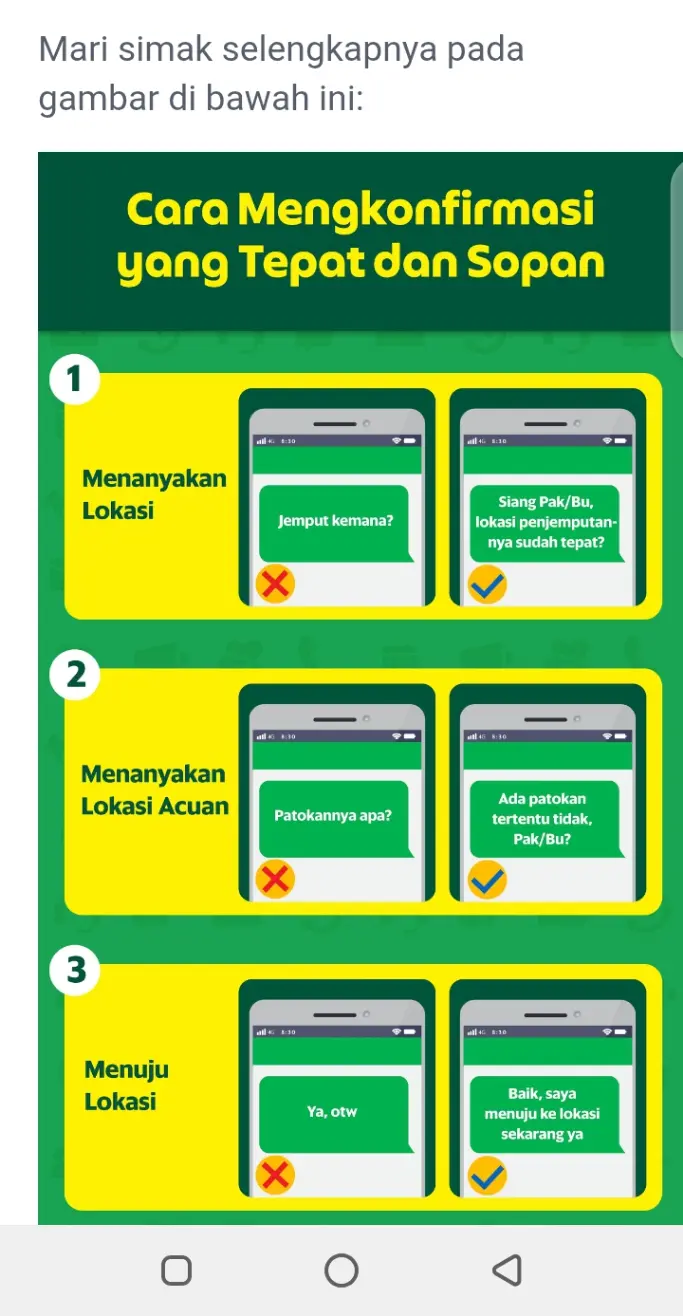
Grab Confirmation Guide infographic
The Ojol Analogy:
Look closely at the official app guide screenshot I saved above regarding "Cara Mengkonfirmasi yang Tepat dan Sopan" (The Proper and Polite Way to Confirm). The system enforces a step-by-step verification model to ensure a ride is legitimate, safe, and free from malicious spoofing:
1. Confirmation 1 : Sending a polite message to verify if the pickup coordinates are already accurate.
2. Confirmation 2 : Asking for specific landmarks or reference points so there is zero confusion.
3. Confirmation 3 : Confirming that the wheels are actively spinning toward the target.
When I hand over a delivery package and slide the "Order Completed" button on my screen, that acts exactly like the First Block Confirmation. The system registers that the destination has been reached. But the platform's algorithm doesn't stop there; in the background, it cross-references my exact GPS logs with the customer's phone coordinates and verifies the fare clearing process. Each layer of automated verification acts like Subsequent Block Confirmations, burying the transaction under a mountain of proof until it is deemed completely valid by the network.
Part 2: What is Transaction Finality? (The Point of No Return)
Transaction Finality represents the ultimate destination of a digital transfer—the exact mathematical point where a transaction becomes permanent, irreversible, and legally written into the digital universe. Once a transaction hits finality, no third party, corporate entity, hacker, or validator can undo it.
Different blockchain highways reach this absolute certainty through distinct consensus rules, which perfectly match the different ways we settle transactions on the street:
1. Probabilistic Finality (The Remote Village Route)
Utilized in Proof of Work (PoW) networks like Bitcoin. Transactions are not instantly final; instead, they become mathematically more secure as more blocks accumulate over time.
· The Ojol Analogy: This is exactly like delivering a high-priority package down a long concrete road heading deep into a remote rural village. In the first few kilometers, a sudden cancellation or route disruption is still possible. But the further I push my handlebars down that long asphalt road, the closer the trip gets to "probabilistic finality." Once I am deep inside the destination area, the fuel has been burned, the distance covered, and the route is too far advanced to ever be reversed.
2. Economic Finality (The Non-Cash Ledger Balance)
Utilized in Proof of Stake (PoS) networks like Ethereum. Finality is guaranteed by validators who lock up massive financial capital (staking). If a validator attempts to process a fraudulent transaction or rewrite history, the protocol instantly triggers a defense mechanism called slashing, completely destroying their locked deposit.
· The Ojol Analogy: This mirrors our Driver Credit Wallet Deposit and Non-Cash (Nontunai) Settlement System. Look at my delivery receipt screenshot below.
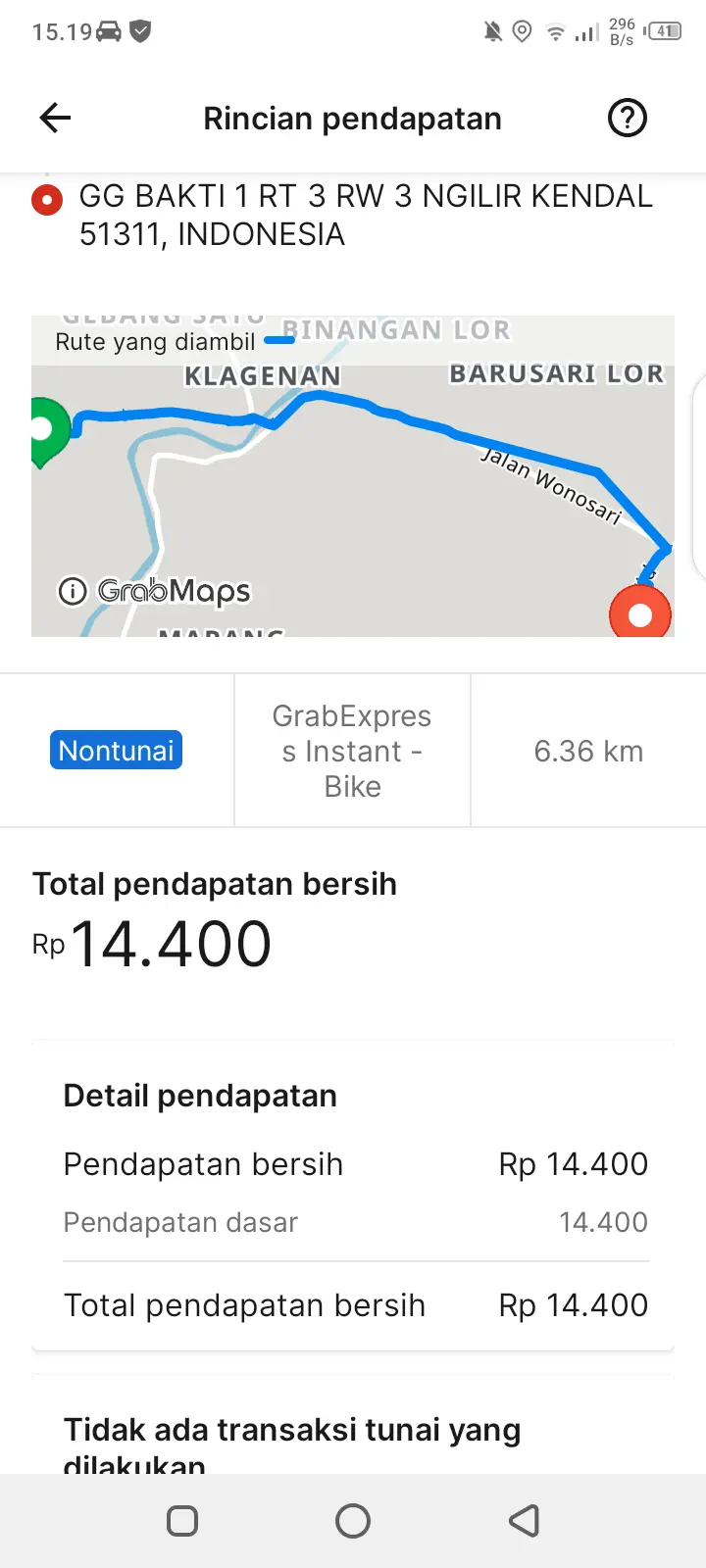
To complete this 6.36 km non-cash delivery to Ngilir for a net fare of Rp14.400, I had to rely on the platform’s economic finality. The system forces me to maintain a driver deposit balance as an upfront safety guarantee. If I try to cheat, the system instantly seizes my deposit. Because the economic cost of cheating is too high, the transaction clears smoothly, and that Rp14.400 is safely locked into my earnings balance where no one can revoke it.
3. Instant Finality (The Cash Handshake)
Seen in specific high-performance enterprise ledgers like Hyperledger, where blocks are legally finalized the exact millisecond a pre-approved cluster of nodes nods their heads.
· The Ojol Analogy: This is a classic Cash on Delivery (COD) payment where the customer hands a physical Rp20,000 banknote directly into my hand upon arrival. The moment my fingers close around that physical note, the transaction hits instant finality. No internet network delays, no server synchronization lag, and zero dependency on a corporate clearing system.
Technical Comparison Summary
Technical Feature
The Roadside Hustle (Ojol)
Decentralized Blockchain Web3
The Setup
Executing structured, polite confirmation chats to validate a ride.
Transactions waiting in the public pool to be packed by validators.
First Confirmation
Sliding the "Finish Trip" button at the designated drop-off home.
The transaction getting successfully written into the latest block.
Deep Confirmations
System algorithms continuously cross-checking GPS logs, routes, and wallets.
Subsequent blocks getting continuously mined and chained on top of your block.
Finality Point
The delivery fare safely settling into your cash-out balance, locked forever.
The cryptographic point of absolute irreversibility on the public ledger.
Conclusion: Trust is Earned Block by Block
Delivering that gorgeous graduation bouquet this morning taught me that beautiful results require a disciplined process. You cannot skip the confirmation steps on the road if you want to avoid fraud, and you cannot rush the validation blocks in Web3 if you want absolute financial security. Trust is not an instant event—it is a compounding structure built block by block.
My 95-day active learning streak on BitDegree is moving steadily toward my ultimate 45-part goal, matching my age. Every chapter I conquer, every analogical link I map out, and every exam milestone I pass acts as another permanent confirmation on my personal blockchain of self-improvement.
The afternoon sun is getting warm, my coffee cup is empty, and a new delivery request just popped up on my handlebars. Time to lock my helmet, turn on the engine, and hit the asphalt. Stay polite with your confirmations, stay disciplined with your security, and let's keep moving forward! See you on Part 17! 🏍️🛡️✨
📌 Author’s Note:
Thank you for reading my journey from the asphalt! Just a quick milestone: my Web3 Journal Part 2 was officially cited on MEXC News, and from Part 6 onwards, this grassroots series has been curated and published by Block Magnates and Coinmonks on Medium. If these roadside analogies helped your crypto literacy, please consider leaving a thumbs up or a nice tip below to keep this driver's engine running! 🏍️⛽ Every bit of appreciation counts!
#CryptoEducation #BlockConfirmations #TransactionFinality #Bitcoin #Ethereum #Motivation #OjolWeb3





