
Helium Network a decentralized LoRaWAN wireless network for the Internet of Things ( IoT ) now has 982,000 hotspots ( nodes ) participating on the network in 187 countries and 76,000 cities.
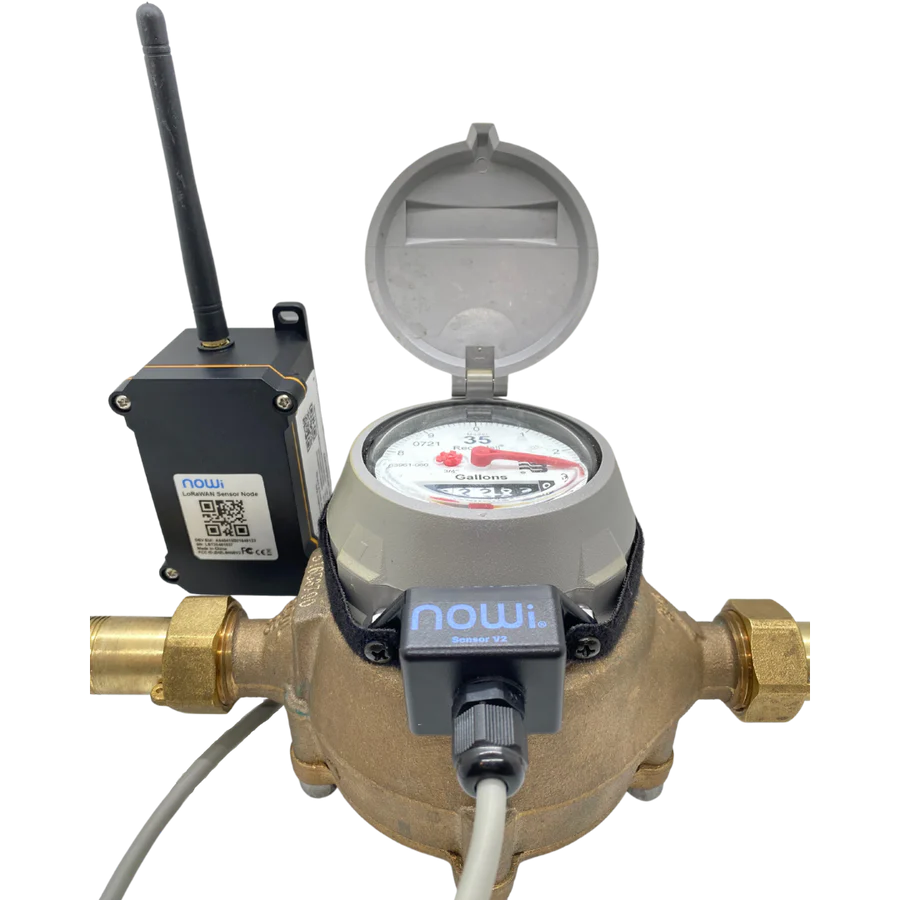
The Helium Network and NOWi have developed a real world use case that brings utility to the network and allows NOWi to transfer low volumes of data in a very cost effective manner.
Water is a precious resource and the US Environmental Protection Agency estimates that household leaks waste nearly 1 trillion gallons of water annually nationwide. Only 3% of water on earth is fresh water and only 0.5% is available for drinking so it’s in everyone’s best interest to be mindful of water conservation.
NOWi specializes in water monitoring and leak detection solutions that enable property owners to take control of their properties water usage and reduce their water bills. Solutions includes full building monitors and toilet monitors that can detect a leak anywhere within a building and in most cases localize exactly where the leak is coming from.
NOWi sensors send water usage data to the internet through the Helium network. In urban areas where coverage is present sensors can be installed without needing to deploy radios. In some cases where customers are deploying numerous sensors, or where coverage is weak, they can deploy Helium gateways to help extend coverage.
Cellular has disadvantages that would be prohibitive for this type of monitoring. The first is that it consumes a lot of power, so even with large batteries devices last only 1–2 years. The second is that when coverage doesn’t exist it’s very expensive to extend its coverage relative to Helium’s LoRaWAN network. Many times sensors are deployed in basements or pits where wireless signals are much weaker, meaning a cellular device would not be able to connect to the internet.
Why is the Helium Network and LoRaWAN technology the better choice for NOWi ?
In many cases the customer does not need to host their own gateway which make deployments cheaper and easier. Even when a customer does decide to deploy their own gateway devices can receive redundant coverage from any other gateways around a building. This can be particularly helpful in tall buildings since each level of the building blocks coverage of gateways deployed inside the building.
Because Helium uses LoRaWAN which does not consume much power and batteries can often last up to 7 years .
Helium and LoRaWAN technology is much more cost effective to deploy and maintain than cellular or WiFi.
Crypto skeptics are always quick to point out that cryptocurrencies are not really useful outside the blockchain universe. The cryptos that interest me the most are projects in the industry that have real-world uses and individuals like myself can be a participant in the network. The Helium Network is one such project.






