
Decentralization, Anonymity, Inclusivity, and Transparency - The Fundamentals of Crypto, are They Found in His Executive Order?
It seems I might be the only rational crypto user left on this planet. Either that, or my cautious, logical inner self, combined with my crypto user mindset, has ingrained in me the habit of "checking five times" before clicking any green button, preventing any immediate, knee-jerk response, but one has to ask themselves, is Trump's executive order really good for blockchain's future?
Depending on who you ask, opinions on this matter can vary greatly. One side seems to be largely influenced by headlines, while the other has actually read the full order and now has questions. These questions range from who might be part of Trump's crypto task force to what exactly his order intends to achieve, with some analysts suggesting that the order could potentially do more harm than good.
It would be wise to read the actual published crypto executive order in order to fully understand it, instead of jumping straight to the comment section to vent about what's wrong with society. Or, perhaps take the time to actually read the order Trump made before criticizing it based on preconceived notions—especially when the discussion involves a topic that blends political ideologies, crypto greed, and what should be straightforward blockchain language into unnecessary rhetoric and confusion.

Decoding Trump's Executive Crypto Order: Can We Navigate the Crossroads of Innovation and Regulation Under Donald Trump?
President Trump's recent executive order on crypto has ignited a firestorm of debate, with proponents lauding its potential to foster innovation and critics fearing a stifling regulatory overreach.
The Order's Essence: A Vision for Digital Leadership
The "Strengthening American Leadership in Digital Financial Technology" EO, issued on January 23, 2025, outlines a vision for the U.S. to lead the global digital economy. Its core pillars include:
Regulatory Clarity: Establishing clear guidelines for crypto businesses to operate within, reducing uncertainty and encouraging investment.
Innovation-Friendly Approach: Promoting a regulatory framework that encourages technological advancements and fosters a dynamic crypto ecosystem.
Investor Protection: Safeguarding investors from fraud and market manipulation, ensuring market integrity and building public trust.
Dollar Supremacy: Strengthening the role of the U.S. dollar in the digital asset ecosystem, promoting stability and global economic leadership.
Potential Upsides: A Catalyst for Growth and Innovation
Proponents of the EO argue that it could usher in a new era of growth and maturity for the crypto industry. Here's why:
Confidence Boost: Increased regulatory clarity could attract institutional investors who have been hesitant to enter the crypto market due to uncertainty. This influx of capital could fuel market growth and drive mainstream adoption.
Innovation Unleashed: A technology-neutral approach could foster a fertile ground for the development of groundbreaking blockchain applications across various sectors, leading to transformative solutions and economic opportunities.
Global Dominance: By fostering responsible innovation and international collaboration, the U.S. could solidify its position as a leader in the global digital economy, driving economic growth and technological advancement.
Financial Inclusion: Blockchain technology and cryptocurrencies have the potential to revolutionize financial services for underserved populations, promoting financial inclusion and economic empowerment.
Potential Downsides of Trump's Executive Order: Navigating the Risks
Critics of the EO voice concerns about potential overreach and unintended consequences.
Implementation Hurdles: Translating the EO's broad goals into concrete regulations could be complex and time-consuming, leading to uncertainty and potential delays in realizing its benefits.
Slows Innovation: Excessive regulation could create barriers to entry for startups and hinder the development of truly disruptive technologies, stifling innovation and limiting economic potential.
Prioritizes Centralization: Analysts fear that the focus on regulation and stablecoins could favor established financial institutions and undermine the decentralized ethos of crypto.
Security Risks: As the U.S. pushes for leadership in digital finance, there could be vulnerabilities created by hastily implemented technologies or infrastructure. These might be targeted by hackers, leading to security breaches or the loss of financial assets.
Unforeseen Consequences: The EO could inadvertently lead to the concentration of power in the hands of a few large players or create new vulnerabilities in the crypto ecosystem. Careful consideration and mitigation of potential unintended consequences are essential.
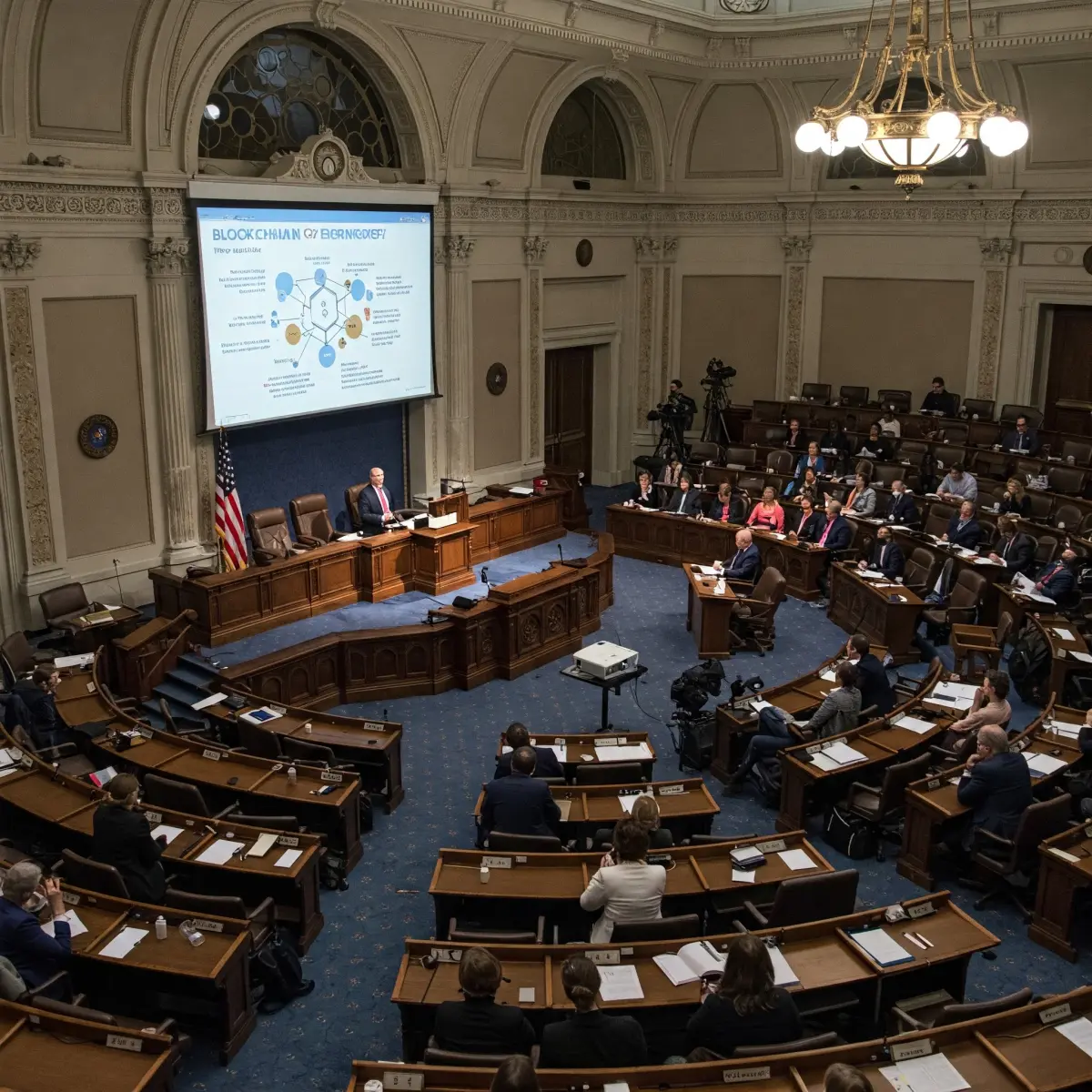
Beyond Bitcoin: Blockchain's Expanding Universe
While cryptocurrencies like Bitcoin often dominate the headlines, blockchain technology's potential extends far beyond the realm of digital currencies. The EO acknowledges this, aiming to foster innovation across various sectors. Let's explore some key areas where blockchain could revolutionize existing systems:
Supply Chain Management: Blockchain can enable secure and efficient tracking of goods throughout the supply chain, reducing costs, improving efficiency, and enhancing trust between businesses and consumers.
Healthcare: In healthcare, blockchain can be used to securely store and share patient medical records, streamlining access for healthcare providers and empowering patients with greater control over their data.
Voting: Blockchain-based voting systems have the potential to increase transparency, security, and accessibility in elections, preventing fraud and boosting public trust in democratic processes.
Digital Identity: Blockchain can be used to create secure and verifiable digital identities, giving individuals greater control over their personal information and simplifying online interactions.
These are just a few examples of blockchain's vast potential. As the technology matures and adoption grows, we can expect to see even more innovative applications emerge, transforming industries and improving lives. Hopefully Trump's executive order will take a vastly stronger stance on blockchain technology integration, but how far he will take that and to what level is unknown.
The Global Stage: A Coordinated Approach
The EO also emphasizes the importance of international collaboration in regulating digital assets. This is crucial because cryptocurrencies transcend national borders, and a fragmented regulatory landscape could hinder innovation and create opportunities for regulatory arbitrage.
We need to be ahead of the curve and beyond protocols that identify potential risks, but better yet, ending those risks. How? Hopefully with intelligence and innovative ideas, because just putting a stamp on paper means nothing until the stamp means something.
Working with international partners to develop harmonized standards can promote responsible innovation, protect investors, and ensure the stability of the global financial system. Killing the stream inward or outward could destroy American crypto markets, destroying diversity and freedom to choose.
Charting the Course Ahead: A Call for Collaboration
The EO marks a significant turning point for the crypto industry in the U.S. Its success will depend on ongoing dialogue and collaboration between policymakers, industry participants, and the public.
The journey ahead will always be filled with both opportunities and challenges produced by politicians.
By embracing innovation, addressing concerns, and fostering collaboration, we can harness the transformative power of blockchain technology to create a more inclusive, efficient, and secure digital future. Which is what we all want, and it starts with the possibility that this order could reshape our industry for the better, but let's practice caution, like trading Solana for a shitcoin, let's do the research first.

At just five days old at the time of writing, this order has yet to prove its full impact. It could open the floodgates for innovation, but given the government's track record, we must remain cautious. Blockchain, regardless of who occupies the White House, will always face vulnerabilities.
While Trump's stance on crypto may have evolved, I remain skeptical—perhaps even old-fashioned—about whether a leopard can truly change its spots.
Until I’m convinced that this executive order doesn’t come with hidden threats to our financial freedoms, I’ll reserve my celebration. Let's watch carefully before we dive in headfirst, because buying into hype is what rekts us all.






