
Image by Christine Sponchia from Pixabay
Image by Gerd Altmann
Image by WikimediImage from Pixabay
Satoshi Nakamoto source
Charles Darwin is considered the father of evolution. The theory of evolution or Darwinism was not developed solely by Darwin since Alfred Russel Wallace reached the same conclusions as Darwin in a parallel way and his support was key for Darwin to publish his book. Darwin made a 5-year trip around the world in which he made numerous observations and collected much information with which he was able to elaborate his theory. All this information was compiled in his book The Origin of Species.
Darwinism maintains that evolution does not depend on changes in the environment but on the chance of genetics. Evolution is possible thanks to a mutation, random mutations that occur in our genetic material. Neo-Darwinism perfected these mechanics by adding new disciplines to the analysis, such as paleontology and the evolution of communities.
Within this great genetic diversity that exists among living beings, the environment plays a very important role known as natural selection (the environment selects the best-adapted organisms based on that random variation). Within a population, those individuals with advantageous variations that give them a better adaptation to the environment will survive longer, reproduce more, and transmit changes to their offspring. Conversely, individuals with disadvantageous variations will be less likely to survive and thus reproduce. In this way, the species continuously and gradually change, with a notable struggle for survival.
I much prefer the theory of Dr. Lynn Margulis, based on the cooperation of a group of cells that buried themselves to protect themselves from the accumulation of a very poisonous gas, oxygen, which was accumulating at great speed in the atmosphere of the first moments of the planet. From this cooperation or symbiosis, according to Dr. Margulis, new cell groups emerged that changed the paradigm from the root, starting a new path of evolution.
Dr. Margulis says that the competition in which the strongest wins has received much better press than cooperation. But certain superficially weak organisms have survived "as part of collective entities," while the supposedly strong ones, not having learned the trick of cooperation, have disappeared and cut the evolutionary chain, so that the oxygen holocaust could have meant a quantum leap in evolution. Many bacteria died intoxicated by oxygen, others slipped underground or under the sea to protect themselves, and others adapted to be able to breathe it. Forest moss is a fascinating example of this theory. When food is plentiful on the forest floor, the mold acts as a collection of individual cells, each independent of its neighbors and engaged in its own tasks. But when food is scarce, these individuals "merge" into a collective entity, to become a cooperative being that moves through the forest floor, following chaotic ways to survive (technically fractals). According to chaos theory and fractal mathematics, the seemingly disorderly forms of nature contain a very powerful concept called self-similarity, with which any system in nature can be described.

Image by hilavoku from Pixabay
The image of the moss in the forest is fascinating, and I find it very similar to a group of PoW miners interconnected and shaping a natural and cooperative information transmission system, in order to achieve self-sustainability.
There are also some other theories of evolution such as the one that a god created the world in 7 days, or that, at some point, when all this was still in chaos, some Martians came and sowed humanoids that degenerated into what we call today human beings and civilization.
Let's not forget that Nietzsche once said that monkeys were too good for humans to descend from...
I do not intend to play the naturalist, but all this brief preamble allows me to make a brief analogy with the evolution of the ancient banking industry, which is making a slow but continuous transition towards a space totally unknown to humanity, called for the moment "crypto sphere".
Normally evolution takes place at such a slow rate that it is not noticeable on a human time scale. The species' fittest for survival dominates the landscape. But sometimes something happens that biologists call "disrupted equilibrium." The environment changes suddenly, and the species that had been dominant quickly disappear and are replaced by others. Evolution makes a quantum leap and starts a new spontaneous ordering.
It is interesting to analyze what happens between two periods separated by an interrupted equilibrium. In reality, the only thing that happens is that uncertainty reigns. The birth of a new order seems imminent.

Image by Jerzy Górecki from Pixabay
Banks were invented before money. The history of banking begins with the first merchant bank in Mesopotamia, which made grain loans to farmers and merchants who transported goods between cities from about 2000 B.C. in Phoenicia, Assyria, and Babylon.
However, the most important banks were the great temples, where the priests made fruitful the money they received in deposits according to the loans granted to individuals and cities. The idea of the temple was that its sacrosanct nature was a security against thieves.
In Rome, most banking activities were carried out by individuals and not by institutions. The name "bank" derives from the Italian word bank, "desk", used during the Renaissance by Florentine Jewish bankers who made their transactions on a table covered by a green tablecloth.
Later, during the hegemony of the Roman Empire, the business was perfected a little more since the banker, in addition to lending his own money, began to accept money from third parties that he later lent to those who needed it and for which he had to pay certain interest. They were the first bank deposits.
However, what we know as a "bank" today seems to have been born in the fifteenth century. The oldest bank in the world was founded in 1472 by the Magistracy of Siena, in Italy, and is currently in activity, with 3,000 branches and 33,000 employees.
During the fourteenth and fifteenth centuries, there is a radical change in the economic field. This change will take place thanks to the expansion of trade, both internal and external, to the increasing influence of the Italian trading companies and to the activities of the Hanseatic League. The pre-capitalist mentality of the great merchant bankers appears. All these factors will lead to a series of changes in banking and payment methods, credits, currency, and accounting. New banking techniques appear, some of them unknown or little developed until then, such as paper money, bills of exchange, checks, double-entry accounting, and insurance.
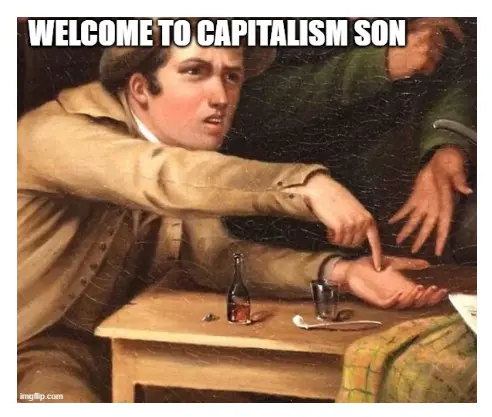
Primitive societies began exchanging goods thousands of years ago. In the absence of products that established a fixed value, the first forms of barter were produced. In the seventh century before Christ, the first coins were invented, created by the Greeks in present-day Turkey. Almost simultaneously, the first currencies also emerged in China and India. The most used materials were gold, silver, and bronze. Centuries later, precious metals gave way to other alloys that were much cheaper and easier to obtain, and when paper money finally arrived, the fiduciary system that we still suffer from today was born. The first banknotes emerged in Sweden, in the 17th century. This new form of money was based on trust since a number printed on a piece of paper marked its value. For several years this system would coexist with the gold standard. The gold standard was a monetary system by which bills could be exchanged for gold and gold for bills, at a fixed exchange rate. The system disappeared between the end of World War I and the Great Depression, being replaced by a purely fiduciary system.
In July 1944, in the middle of World War II, the famous Bretton Woods agreements were celebrated in New Hampshire, US. There were two proposals, one from John Maynard Keynes, and one from Harry Dexter White. The latter was the one that prevailed. Keynes proposed the establishment of a world monetary system based on a monetary unit called the Bancor. White proposed replacing the gold standard with a gold-linked dollar standard. The US has the power to provide liquidity by issuing dollars, based on debt, to safeguard the system. The IMF and the World Bank are created here.
After 27 years, this system saw its end on August 15, 1971, the day on which US President Richard Nixon declared the non-conversion of the dollar into gold.
Most of the mercantile operations of the Late Middle Ages were made orally. The basis of the businesses of the merchants was based on mutual trust since all the merchants knew each other. The evolution of financial techniques was achieved thanks to the multiplication of private agreements that were made before a notary.
Twentieth-century technology made banks transcend national borders and become some of the largest companies in the world by market capitalization. The online services that appear in the 21st century begin to thin the banking atmosphere, filling it with oxygen, in terms of Dr. Margulis. Today there is practically no need for a physical branch of a bank, and therefore its commissions disappear, which is what traditional banking has lived through, like a vampire sucking the blood of its clients.
In 1973, 239 banks from 15 countries got together to solve a common problem: how to communicate about cross-border payments. The banks formed a cooperative utility, the Society for Worldwide Interbank Financial Telecommunication (SWIFT), headquartered in Belgium. SWIFT went live with its messaging services in 1977, replacing the Telex technology that was then in widespread use, and rapidly became the reliable, trusted global partner for institutions all around the world. SWIFT is a cooperative of financial companies, mainly banks, to which it provides services. Something like a syndicate of banks that agreed to charge high commissions to transfer money, disguised as benefactors of humanity. It works like what is known in the crypto sphere as PoS, Proof of Stake, which means that the one who has the most, the more he/she will have.
In 2009, the first sign of the “interrupted equilibrium” occurs. A pseudonym made available a payment system called Bitcoin that does not require banks, paper money, trust, permission, or any of the scourges created by humanity to manage the value of products and services. This fact should be interpreted as a quantum leap in the evolution of international finance, not as a new asset to speculate on as is done with any other commodity. The spirit of Satoshi Nakamoto was to unravel the diabolical and sinister financial banking plot that currently manages the world's money flows at the discretion of a group of elite criminals.
Obviously, this was madness for the bankers of the second decade of the 21st century. First, they discredited it, then they made fun of it, then they attacked it, then they regulated it, and now, seeing that they cannot do anything to stop the development of this new cell born from the cooperation of other cells that have learned to defend themselves against oxygen, then, recently now, they are beginning to see how they can be associated with the business so as not to be completely left out of the market. Some management theorists will call this in business schools the "re-invention of banks", when in fact they should call it the "total and definitive defeat of the bank fiduciary system born in the Middle Ages and perfected and complicated during the 20th century".
Let us understand one thing well. For several years today, no one has used physical bills for practically any operation. But that in no way means that fiat money has disappeared, that is, the fiduciary system that consists of a government, its central bank, and the banks of the system creating money according to its convenience and putting it on the market so that the people can enjoy the inflation created. Instead of physical notes we now have numbers in an account that we see on a computer, but that is not electronic money or anything like that, but electrification of the fiduciary system born in the Middle Ages.
On the contrary, the payment system created by Satoshi Nakamoto, called Bitcoin, is an ecosystem that does not need governments, commercial banks, or central banks. It also does not require permission or trust. Just computer code. With this system, your money belongs to you, and it is not in a bank or its online payment system but is distributed in hundreds of thousands (soon millions) of computers around the world. Of course, the whales (which are the banks themselves) regulate the value of this asset at the moment, but no one can take your money away, because no one but you has access to it. Those who are horrified by the thought that Bitcoin is centralized in whales should also be horrified by the ruthless way in which banks regulate the value of fiat money. Banks put a value on your fiat money, issuing money at their discretion.
The fiduciary system is slowly evolving to a higher stage, which for the moment we call cryptocurrencies, but by no means can we be sure that this is the definitive step, since now, as never before, millions of developers around the planet are thinking new solutions every day. Unfortunately, scammers are also on the loose, but let's face it, the crypto sphere didn't invent scams, they are older than money.
As I said above, evolutionary processes are normally slow, and during their transition, uncertainty reigns. But not seeing that we are facing a fundamental change in our way of thinking about the transfer of value, confirms that we are completely blind.
Conclusion
In 2009 no one gave credit to Bitcoin. Satoshi Nakamoto, our homo Erectus created a payment system, based on trustless and permissionless. The dinosaurs of the time which was beginning to end saw a business opportunity and put it into the bag of capitalist speculation that grew during the 20th century. We're still in that bag, and I think we're going to be for quite some time. Every day new proposals arise for speculation, promising richness, esoteric NFTs, and unique Metaverses, only for the chosen ones.
Very few are still using Bitcoin for what it really is. But those of us who do use it as a means of payment have discovered a new decentralized world that humanity had never known before. Anarchy is not a terrorist army throwing Molotov cocktails at the police. Anarchy is a lifestyle based on non-dependence and a lack of hierarchies. Until now, we have never had this possibility. This is what I call "evolution".
Going from banking monkeys, to decentralized homo Erectus, took us roughly 1,000 years. How many more years will it be before the banks disappear for good? Please don't talk to me about “re-invention”, because now we have an upright man walking, not a monkey. I love animals, but I give them their place, and everyone should if they want to evolve.
BTW, I think there is a very good business opportunity for restaurant chains. The best-located bank branches will soon become restaurants. Don't say I didn't warn you.
Image by StockSnap from Pixabay
Thank you for reading! Decentralize yourselves as much as you can, and much more! Work for yourselves, not for others. When you work for someone else, they pay you what YOUR POSITION is worth, when you work for yourself, they pay you what YOU are worth. No one achieves financial independence by working as an employee. Live long and prosper!
Never forget:

As usual, none of the things written in this post are financial advice and are not intended to replace personal research. My sole intention in writing this post is informative. Several of the things discussed here could be wrong, so in no way can this post be construed as financial advice, and in no way should it replace your own research.
If you have any questions or comments, please feel free to leave them down below
You can also contact me at [email protected]
Twitter https://twitter.com/SirGerardThe1st
LinkedIn https://www.linkedin.com/in/gerardosaporosi/
Follow my blog Anarchy: the Final Solution: https://gerardosaporosi.substack.com/





