
The internet, one of the greatest inventions of humanity is increasingly part of our lives, whether it is to work, communicate, shop or study. Today, a large part of our activities depend on it and it would be very difficult to imagine our daily lives without her presence.
Undoubtedly, it is one of the main tools in the evolution of humanity, but did you know that it was not always this way, interactive and fast? Did you also know that the possibilities are still huge in relation to what is possible to build on the internet?
In the beginning it was quite different and what we see today is the evolved version of Web 1.0, which gained notoriety in the 1990s and only had company pages, without the participation of users.
It was believed that it would be accessible to everyone, would not have a single owner and would be a place for free exchange of knowledge. However, it is not quite how it works today. Despite all its wonders, the internet still needs and will be improved in many ways in the years to come.
Bitcoin plays a key role in this transformation.
Blockchain, the technology behind its operation, will provide ways to improve the security of information transmitted over the network and give people privacy about their data, in addition to promoting numerous opportunities for interaction between users, in a decentralized way.
Our data is exposed daily when interacting with applications created by large companies, which are the only ones to extract value from this information and whose interests and incentives often conflict with ours.
We will analyze some aspects of this evolution of the internet and what will come next to improve these and many other issues.
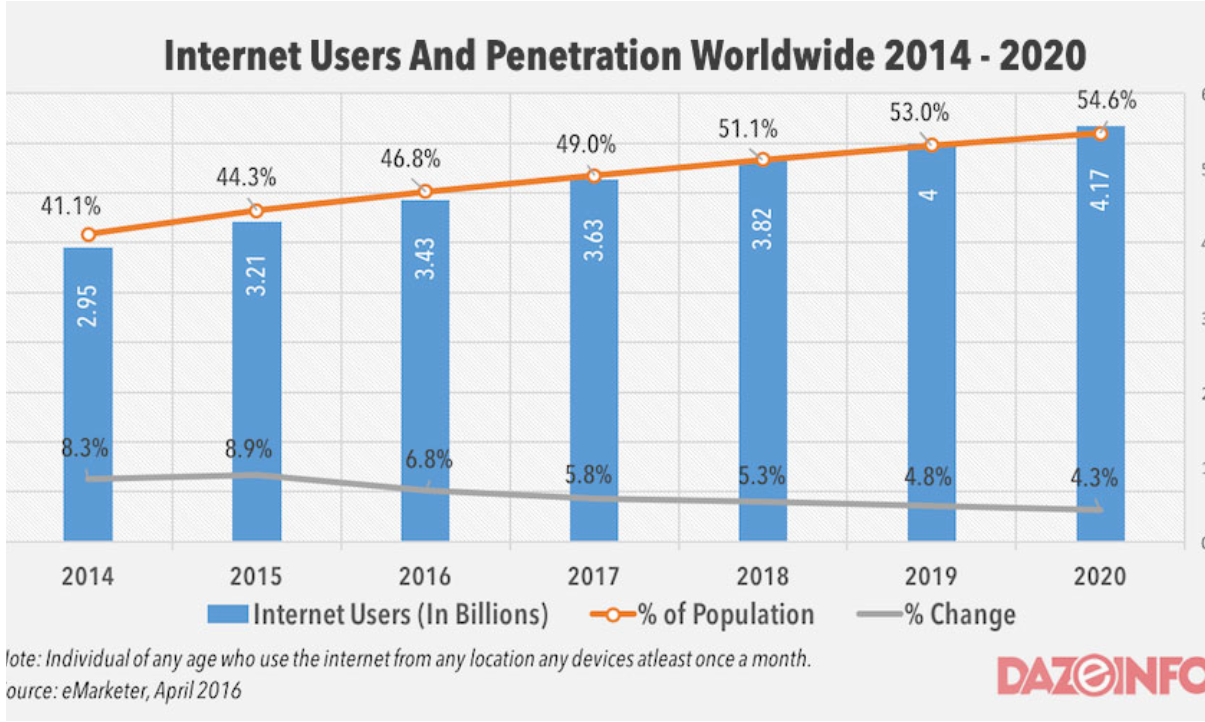
In recent years, the number of Internet users has increased from 2.95 billion people in 2014 to 4.17 billion today.
Most of these users are vulnerable to the exposure and traceability of private information, such as what type of products they consume, what they consult on the internet and also numbers of personal documents.
Such data is monopolized and stored on servers of large companies, which operate centrally and then use them as they see fit.
Web 1.0
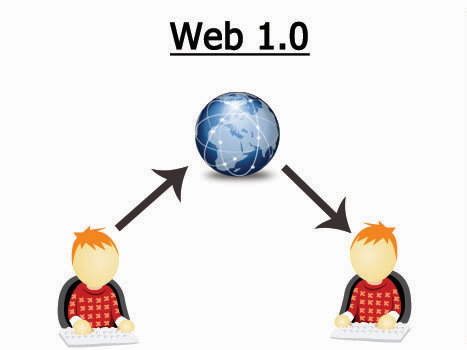
The first version of the web was the first stage of the internet (1990-2000), where the user's role was limited to reading information provided by content producers.
It was here that the first browsers and websites appeared, which were static and without interactive content.
In this phase, the “World Wide Web” only had a company page and there was no option for users or consumers to communicate with the content producers.
Web 2.0
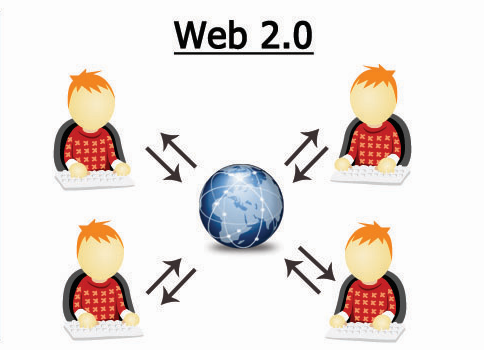
Web 2.0, also known as the social web or the web of reading and writing, is the era between 2000 and 2010 and continues until now.
It is built around users, that is, it facilitates interaction and communication between them in a dynamic and fast way, thanks to data packages and Wi-Fi. Therefore, in this era, everyone can produce, distribute and share content over the web. .
Some of the famous Web 2.0 applications are Facebook, Amazon, Wikipedia, YouTube, Flickr, Twitter etc. Technologies such as HTML5, CSS3 and Javascript frameworks, such as ReactJs, allow startups to innovate, enabling users to contribute more to this version of the web.
Web 3.0
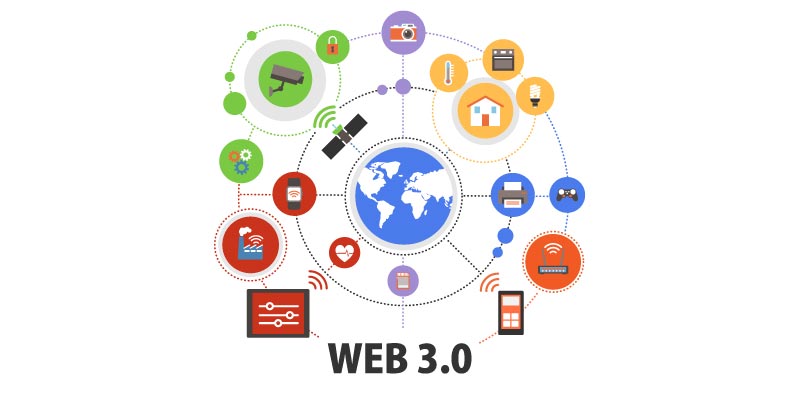
The third generation of the internet is the current phase, the development of which is beginning to strengthen.
It aims to resolve the limitations of previous versions and much more than that: providing ways of interacting and using information, which increases possibilities, improves privacy and generates countless opportunities.
It will work in a more structured way, facilitating the process of extracting information from different sources and in a truly decentralized and P2P way, when there is no control of any large company or central server intermediating transactions or other types of interaction between users, decentralizing storage of data.
Web 3.0, also known as the Semantic Web, is the next stage of the web, where there will be interoperability, data privacy, artificial intelligence and machine learning
It will be possible to generate and distribute, intelligently, useful content adapted to a user's particular need.
Bitcoin is one of the symbols of the effective emergence of the new version of the internet, as it allowed, for the first time, the sending of value over the internet without the need for any central figure that checks valid transactions, being a digital and scarce alternative to the current monetary system .
In addition, blockchain will be a key piece in building this new generation of the web, enabling a new relationship between user and internet.
Thanks to the decentralized and distributed nature of the blockchain, Web 3.0 allows for a freer and, at the same time, safer version of the internet, where users can own their own data and use it as they see fit.
With solutions such as self-sovereign identity, people will have access to your data again, which will be encrypted, being able to choose with whom or when to share it.
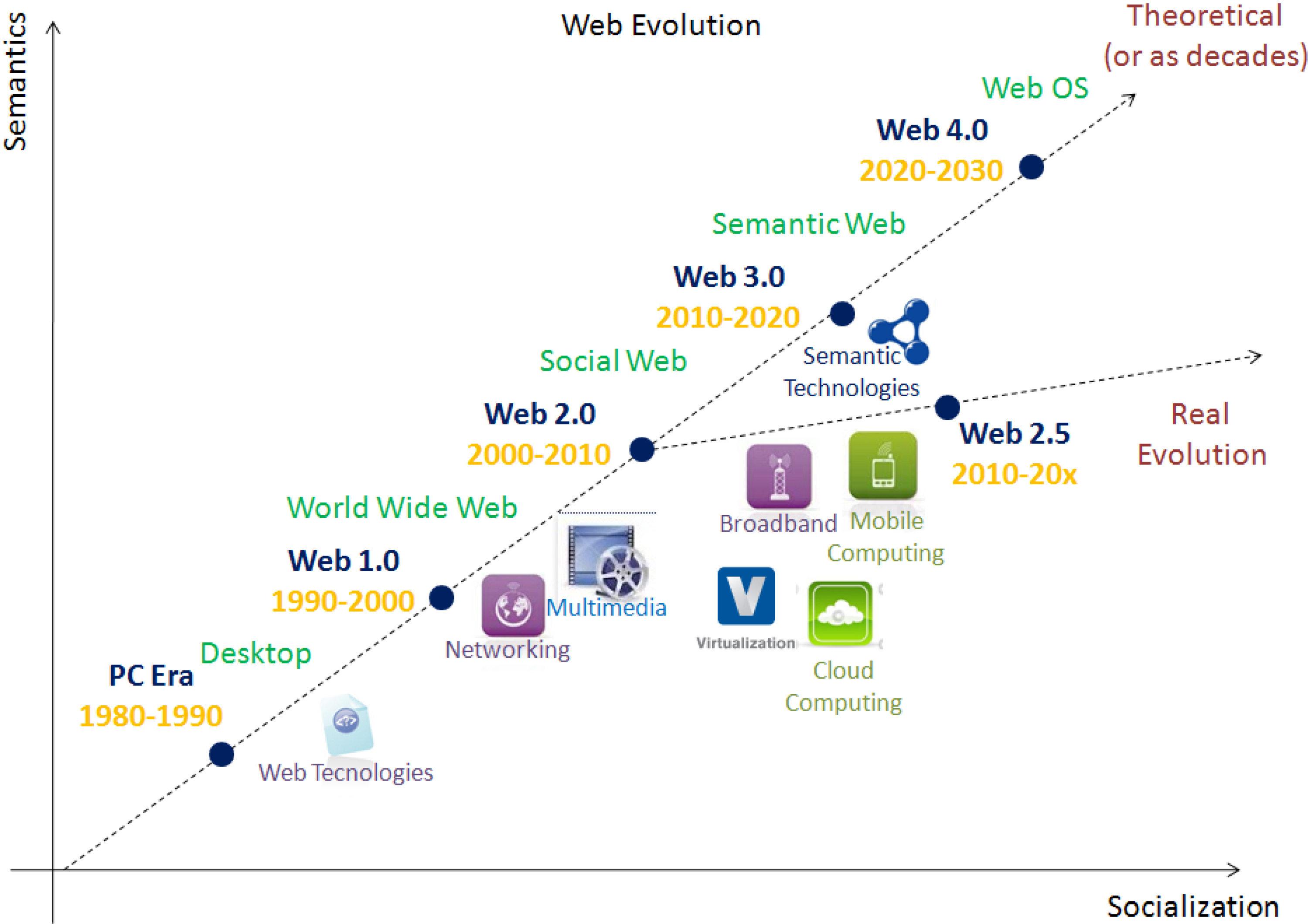
The role of blockchain in building Web 3.0
The new user / internet relationship will be enabled by the blockchain. However, like all new technology, it is constantly undergoing improvements and will still evolve a lot.
Ethereum is certainly a great icon in this segment, as it allows the creation of decentralized applications that we would never have imagined. Behind it, many brilliant minds are working on its development and many have also contributed to its existence.
Among them, Gavin Wood, scientist and great responsible for the creation of Solidity, the programming language used for the creation of decentralized applications (dapps) in the Ethereum network.
He is the main creator of Polkadot, a project that aims to solve some limitations of the Ethereum network, such as scalability and interoperability, and provide a safe and more effective environment for the development of other blockchains that will be part of the construction of Web 3.0.
What is Polkadot?
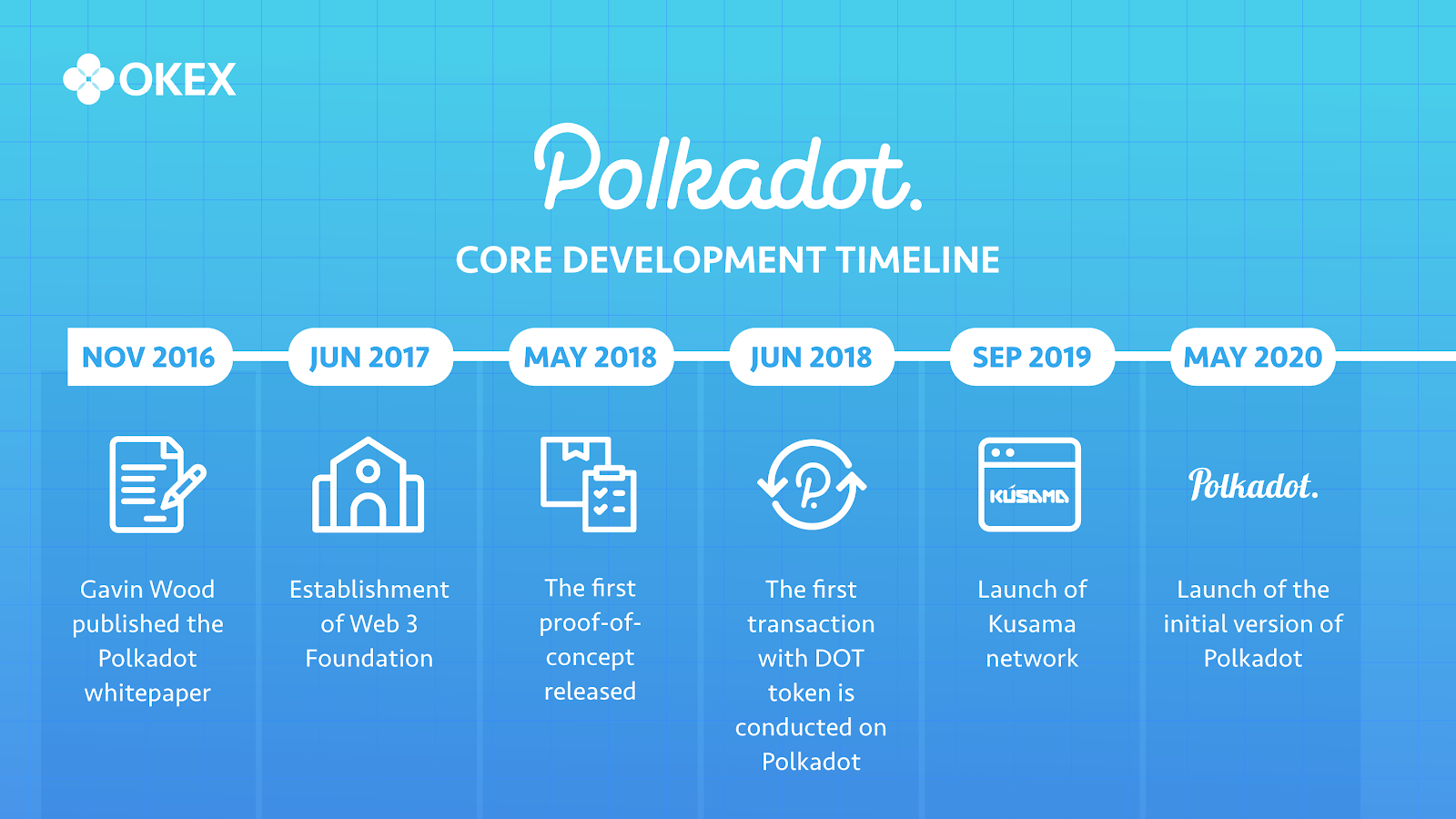
It is a project founded by the WEB3 Foundation and which aims to be a key part in the construction of the new generation of Web 3.0, facilitating interoperability between blockchains.
It connects several blockchains, public and private, in a unified network, and allows communication between them, enabling its users to build their own blockchains, in addition to secure and decentralized applications.
Each chain built on the Polkadot network uses Substrate, which is a software development framework, maintained by Parity Technologies and used mainly by Polkadot developers who want to create parachains quickly.
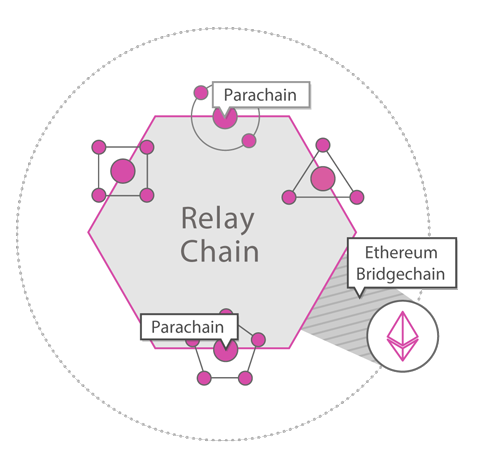
Scalability problems of networks like Ethereum are well known and Polkadot is part of the category of projects that aims to promote a network with better interoperability, more scalable and with shareable security, operating in a multichain format, where it is possible to connect different blockchains to your Relay Chain (main chain), allowing data transfers between them.
The project has three main objectives:
- facilitate communication between public and private blockchains;
- provide a highly scalable environment;
- promote network updates without the need for forks.
All of this through a governance model supported by the community.
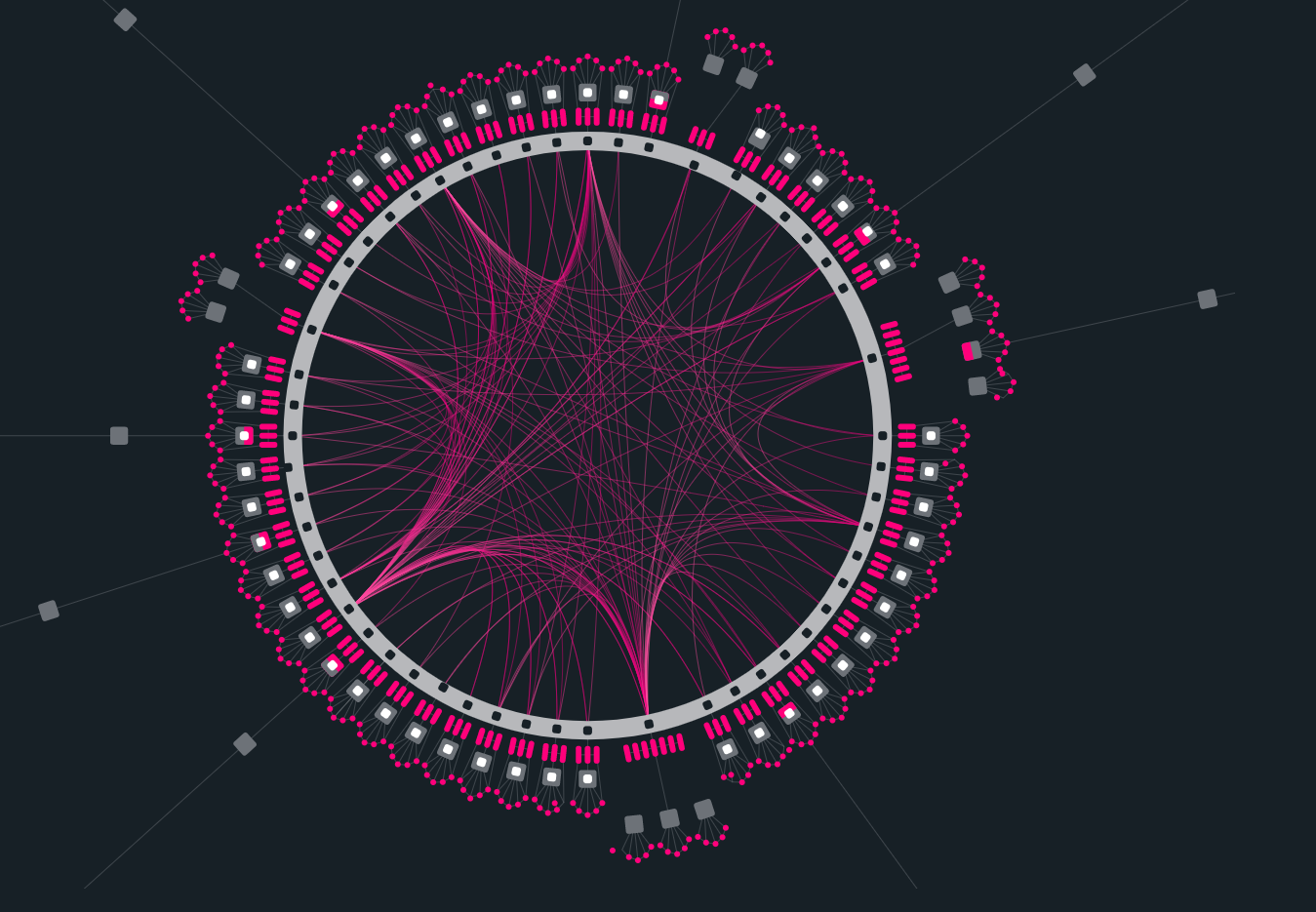
How does Polkadot work?
It was designed to operate two types of blockchains:
Relay Chain
It is the main network, where transactions are finalized and maintained permanently.
To achieve greater speed, the Relay Chain separates the addition of new transactions from the act of validating them. This model allows Polkadot to process more than 1,000 transactions per second, according to tests carried out in 2020.
The network uses a variation of the Proof of Stake (PoS) consensus algorithm called Nominated Proof of Stake (NPoS).
Parachains
They are personalized blockchains for various types of uses and that work in parallel on the network, where transactions have the same security as the main blockchain.
By processing their own transactions, the network can be scaled based on the simultaneous and independent processing of transactions by parachain.
There are also bridges, which act as a bridge that allows the Polkadot network to connect and interact with other blockchains, such as Bitcoin, Ethereum, EOS and Cosmos, where tokens can be exchanged without a central exchange.
Founders and team
Polkadot was founded in 2016 by Gavin Wood - chief technology officer and co-founder of the Ethereum project - and co-founders Peter Czaban and Robert Habermeier.
In addition to designing the Solidity programming language, Gavin Wood was the first CTO of the Ethereum Foundation.
He holds a Computer Science degree from the University of York, was a research scientist at Microsoft and has given presentations to countless audiences around the world, from lectures at regional technology conferences to reflections on the future of legal systems at Harvard.
The project has a global team with the best systems engineers, cryptographers, solution architects and researchers. Many have contributed to the mold of the current blockchain industry and intend to continue participating in the development of the next generation of blockchains.

DOT Token
DOT is the network's native token and plays a key role in maintaining and operating the Polkadot network.
Like other PoS consensus models, the native token is used as an economic incentive, leading validators to act honestly because they have a financial stake in the authenticity of the verification process.
It serves three main purposes:
- governance: used for voting and protocol updates;
- staking: economic incentive to strengthen network security. Depending on the situation, it is possible for users to earn 12% annual interest with DOT staking;
- union: linking in the network to create parachains.
The system allows anyone to bet DOT, locking the cryptocurrency under a special contract, and perform one or more of the following functions required for its operation, being eligible to receive DOT rewards:
- validators: validate data in parachain blocks. They also participate in the consensus and vote on the proposed changes to the network;
- nominators: help to strengthen the security of the Relay Chain, selecting reliable validators through votes;
- collectors: gather the transactions of the parachains and produce a proof, which is sent to the appropriate validator and in charge of finalizing a block. They also act as an additional layer of security;
- fishermen: monitor and report malicious behavior on the net about bad validators. They are motivated, in search of rewards, by proving that a party acted maliciously, outside the set of rules.
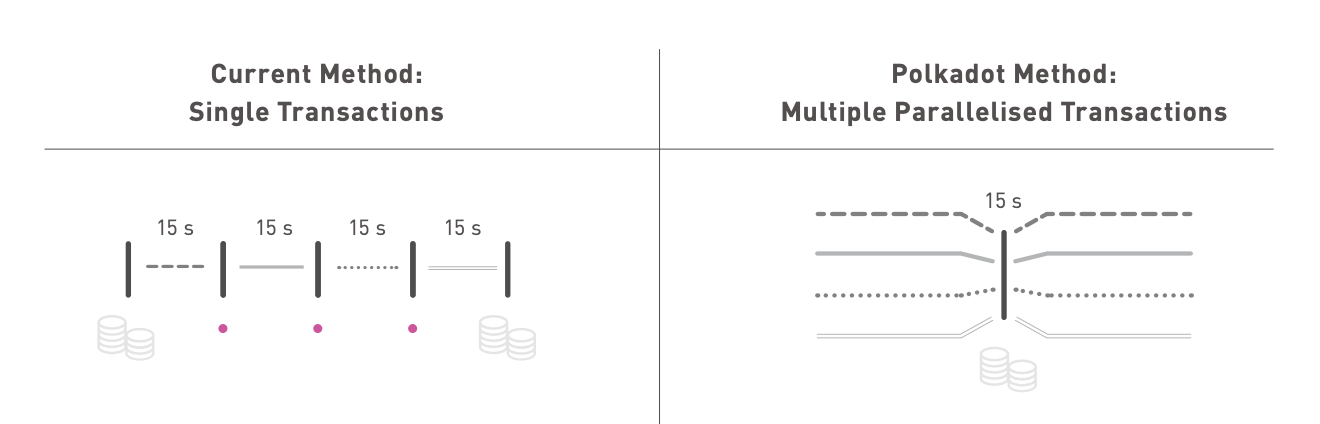
In the Polkadot format, the execution of transactions in parallel is possible, allowing the joint operation of dozens of blockchains, connected through the relay chain.
Thus, the Polkadot team claims that transactions can be maintained securely and accurately using only the computing resources needed to run the core network.
It also allows users to conduct transactions more privately and efficiently, processing a larger number of transactions, with about a hundred times more scalability than current options.
Why does DOT have value?
Scalability
Blockchains alone process only a limited amount of traffic. Polkadot is a fragmented multichain network, that is, it can process many transactions in several blockchains in parallel, eliminating the congestion that occurred in networks that processed the transactions one by one.
This parallel processing power significantly improves scalability and creates better conditions for increased adoption and future growth in the blockchain industry.
Updates
Like all software, blockchains need updates to remain relevant and improve over time.
However, upgrading conventional networks requires so-called “hard forks”, which create two separate transaction histories, which can divide a community into two and often take months to be presented.
Polkadot allows updates without forks, allowing blockchains to evolve and adapt easily as the best technology becomes available.
Polkadot makes it possible to build applications that can transfer data and tokens between public and private blockchains, offering interoperability and communication between chains.
First example: a college's authorized record chain could send proof to a smart diploma verification contract on a public network.
Second example: the financial services supply chain can communicate with another that provides access to real-world data (oracles), such as stock market price feeds for token stock trading.
Governance
Polkadot employs an “on-chain” governance model, fully controlled by relay chain validators, who bet on the DOT token and can control everything from protocol updates to bug fixes.
Three types of Polkadot users can influence software development:
- DOT holders: anyone who purchases DOT tokens can use them to propose changes to the network and approve or reject the main proposed changes.
- the Board: elected by the DOT holders, the board members are responsible for proposing changes and determining which changes proposed by the DOT holders will be effectively implemented. Council members' proposals require fewer votes to pass than those of ordinary DOT holders;
- the Technical Committee: composed of teams that are actively developing Polkadot, this group can make special proposals in cases of emergency. The members of the technical committee are chosen by the members of the board.
Web Fundation
It is a non-profit organization that created Polkadot, the main protocol developed by the foundation.
It was created to cultivate and encourage decentralized technologies and applications, contributing to the development of the Web 3.0 ecosystem.
The foundation received 30% of the funds from the token offerings and oversees the allocation of these funds to promote Polkadot's development.
Kusama

It is a network with the same characteristics as Polkadot, a place where tests and application experiments are carried out that will be implemented in the Polkadot network when they are ready (it is not a testnet).
It is a network with the same characteristics as Polkadot, a place where tests and application experiments are carried out that will be implemented in the Polkadot network when they are ready (it is not a testnet).
Polkadot project partners
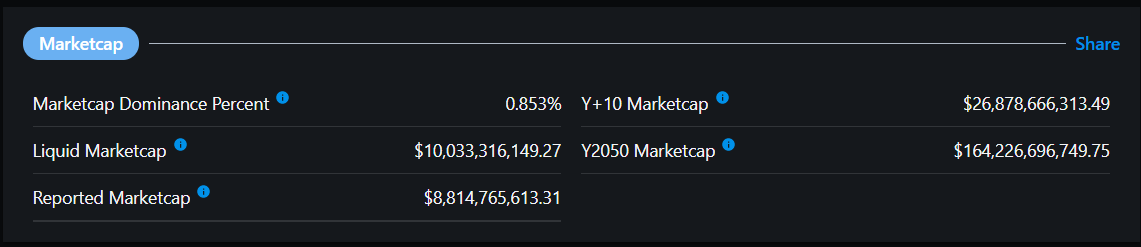
Polkadot has a market capitalization of US $ 15.12 billion and is ranked 4th in the total ranking.
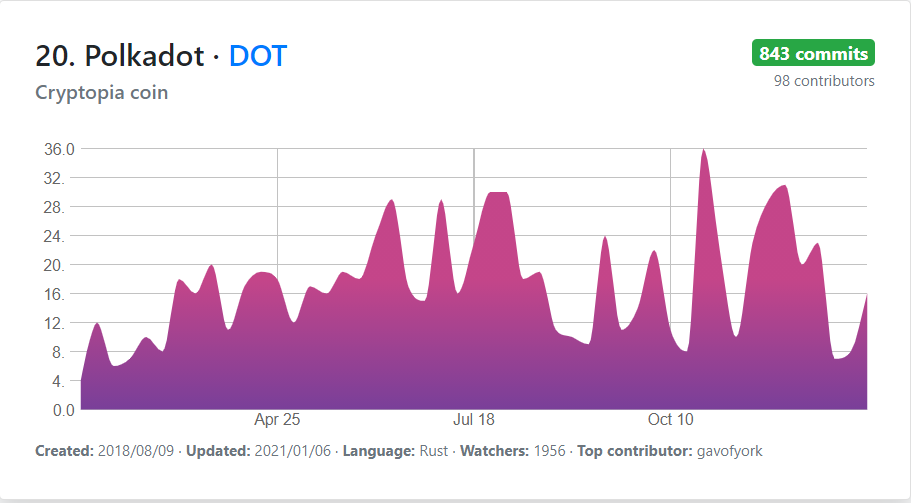
On the Cryptomiso website, it is possible to see that it is in the 20th position among the projects with more developer activity, with 843 contributions from 98 contributors.
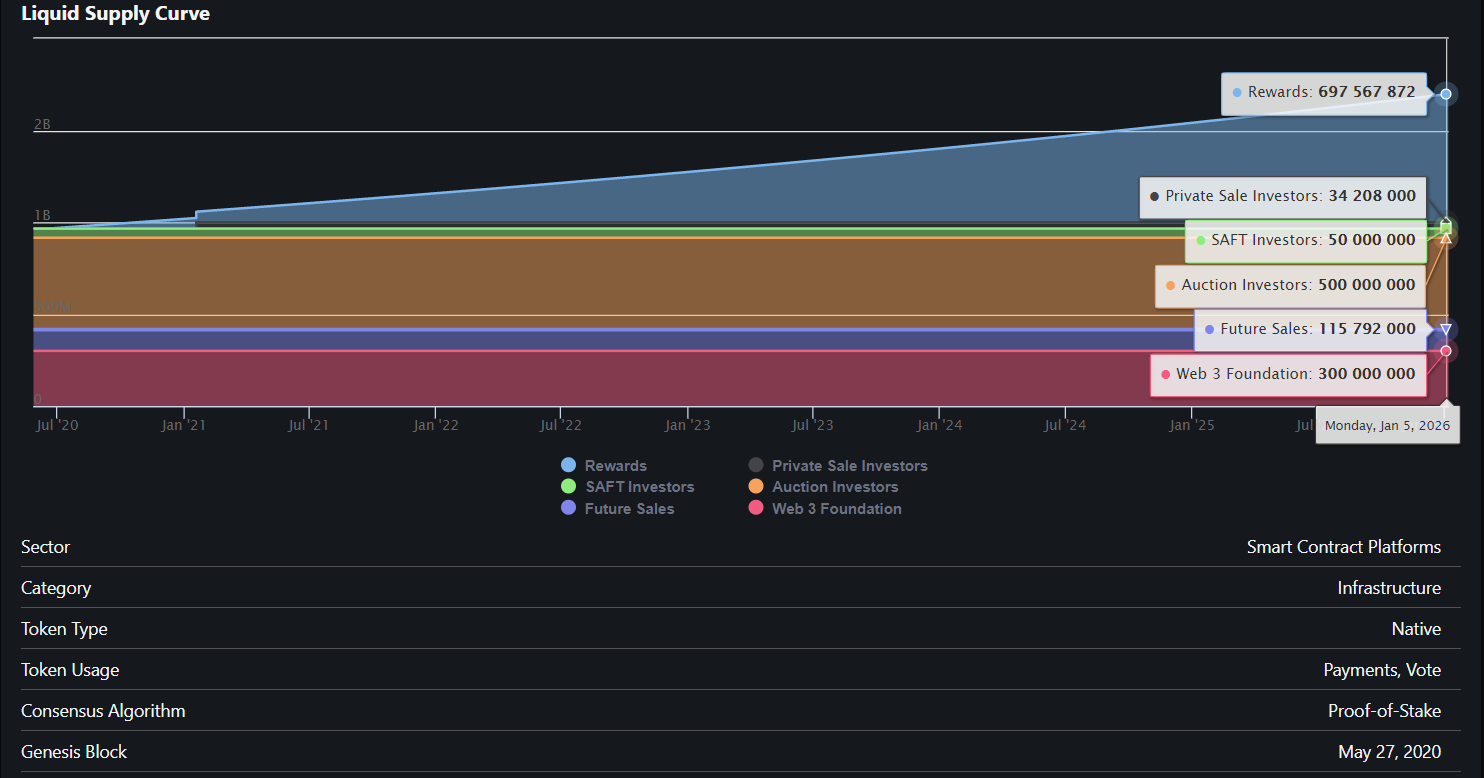
Supply data
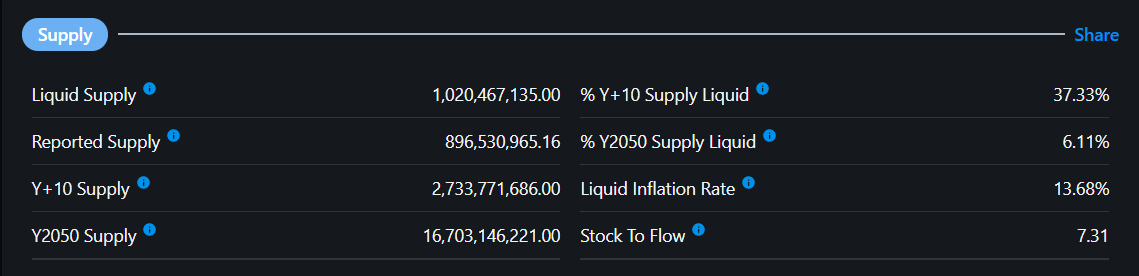
Market capitalization information
Polkadot is one of the great projects with enormous potential in the crypto world. With renowned professionals and a history of great contributions to Web 3.0, it has everything to grow in usability and adoption.
The future for the internet is very promising and we are part of the beginning of a freer, safer internet with countless possibilities.
It will be very interesting to follow what technologies, such as Polkadot's, will offer for the development of the next generations of blockchains.
Do your analysis to better understand the projects and make the best decision. There are some with good potential and which, in the long run, can be used a lot. It is important to pay attention and position yourself in the ones you think are best to take advantage of possible price increases.
Users looking to stay connected in the current development status of the project can follow the official Polkadot project roadmap for updated details.






