
In Crypto World there is a fascinating innovation that might reshape how we think about investments. It’s called synthetic crypto assets. Imagine being able to trade and invest in assets like gold, stocks, or even traditional currencies without ever needing to physically own them. These digital marvels offer a gateway to global markets and financial instruments, all from the comfort of your device.
In this article we’ll explore the exciting world of synthetic crypto assets, uncover their origins and find out how they work, and what unique opportunities they present in the decentralized finance space.
How does it work?
Synthetic crypto assets are like digital copies of real-world assets but on the blockchain. They don't physically exist but mimic the value of things like currencies, commodities, or even stocks. This means any user can trade them without actually owning the original asset.
For example, let's say someone is interested in trading gold but doesn't want the hassle of storing it securely. Instead of buying physical gold, he or she can invest in a synthetic gold token. This token represents the value of gold and lets everyone trade its price movements just like owning the real thing.
They're created using smart contracts, which are like digital agreements that track the real-time value of the asset they represent. These contracts automatically adjust the price of the synthetic asset based on changes in the real asset's value. Synthetic crypto assets are also called decentralized financial derivatives. They are backed by collateral, which is specified in the smart contract. This setup allows them to function similarly to traditional derivatives but in a decentralized and transparent manner.
Synthetic crypto assets purpose
By acquiring a single underlying asset, a user becomes its sole owner. Trading and resale involve adherence to exchange rules, regulatory requirements, and other ancillary factors.
In contrast, acquiring a synthetic crypto asset provides users with multiple trading instruments since they only hold "projections" – tokens. This preserves the value of the underlying asset and all trading functions. Synthetic crypto assets also offer another significant advantage: they allow owners to remain within the digital currency space while expanding trading opportunities through decentralization.
Advantages of synthetic crypto assets
As mentioned, synthetic crypto assets are tokenized versions of derivatives, borrowing three key operational elements from the cryptocurrency world:
- Global liquidity
- Implementation freedom
- Overcoming "centralized party" restrictions
The main advantages of this technology include:
- Accessibility. The development of synthetic crypto asset technology grants investors unrestricted access to international and previously inaccessible markets, enabling faster and more efficient trading without regulatory constraints.
- Cost efficiency. Synthetic crypto assets simplify the investment process by reducing transaction costs and management overhead.
- Diversification. This new form of crypto assets allows users to diversify their portfolios without the need to physically purchase additional assets, presenting a convenient option in contemporary financial conditions.
- Innovative strategies. Synthetic crypto assets enable entrepreneurs to implement bold and complex investment strategies.
Main risks and disadvantages
Some experts and cryptocurrency analysts are skeptical about this new technology due to several contentious issues:
- Regulatory uncertainty. Tokenized derivative technology currently lacks clear regulatory frameworks. It remains uncertain how they can be utilized without falling under regulatory constraints.
- Market instability. The market for underlying assets also lacks stability or low volatility. Any price fluctuations in traditional markets or sudden jumps can lead to significant losses.
- Technical risks. The technology relies on smart contracts, which are periodically scrutinized for security vulnerabilities. The risk of hacking or exploitation remains considerable.
- Counterparty risk. The reliability of the issuer of synthetic assets and the platform are crucial.
Types of synthetic crypto assets
Based on the type of underlying asset that forms the basis of the tokenized derivative, the following types are distinguished:
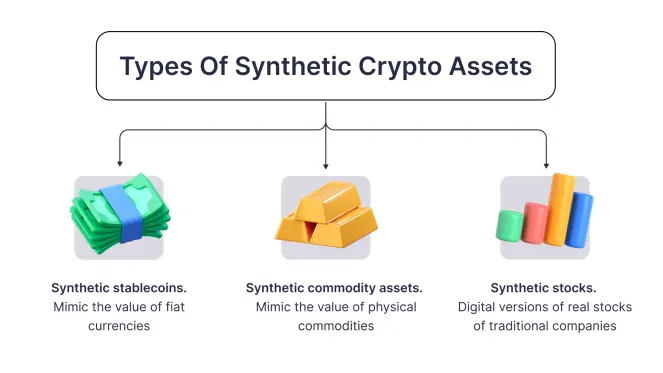
These synthetic crypto assets enable the use of existing financial instruments without the need to create entirely new analogs for the digital environment.
Conclusion
New technologies like synthetic crypto assets sustain user interest in the DeFi world, creating a secure and convenient space for investors. Improvements in regulatory mechanisms and technological solutions to reduce risks and enhance security are crucial for attracting more users. They let us participate in the value of real-world assets without the need for physical ownership, opening up new possibilities in decentralized finance (DeFi).
Today, synthetic crypto assets offer entrepreneurs a wide range of opportunities by allowing them to tokenize any real asset on the blockchain. This promising direction in the digital economy is already handling frequently traded commodities, cultural items, and legal elements.
If you want to learn more interesting facts about crypto then check out our blog! You might like our articles “Comparing the Current Crypto Bull Run to Historical Trends” and “Exploring Play2Earn in 2024”.






