
Macropus rufogriseus, also known as a red-necked wallaby or Bennet's wallaby, is a medium-sized marsupial belonging to the macropod family (the same as kangaroos), originating in Australia but now present, thanks to man, in several others nations including neighboring New Zealand, but also the furthest United Kingdom. Red-necked wallabies and Bennet's wallabies represent two subspecies that differ only in size: the first, more like a kangaroo, is larger than the second; bennet wallabies, in fact, as often happens to animals that live exclusively on islands with a limited surface, are subject to the phenomenon of insular dwarfism, a process that leads to the progressive decrease in body size for these species. From the evolutionary point of view, this phenomenon probably translates into an advantage as regards the supply of resources: smaller dimensions imply, in fact, less need for food. From a genetic point of view, on the other hand, this is still possible from repeated episodes of inbreeding, which lead to a more decisive and effective selection of favorable characters.
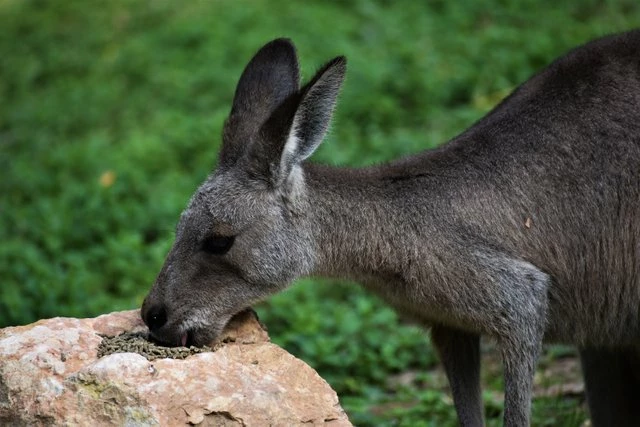
Wallabies are mammals, and in particular marsupials; they have dimensions that can vary from the meter to the seventy centimeters, and an average weight of 16 kilograms. The tail can reach 70 centimeters in length, representing an extremely important appendix, capable of performing various functions. It feeds mainly on grass and aromatic plants, and for this reason it prefers mixed vegetation areas, where are avaible both prairies, for the search for food, and scrubs for shelter. Gestation lasts about a month, after which the females give birth to very little developed pups, which find shelter in the kangaroo pouch until they are fully developed.From a social point of view, wallabies do not follow very precise patterns, and both small colonies and solitary individuals have been observed; in general, however, the only stable groups are formed by mothers and their young, until they reach sexual maturity.
They are shy animals, but also very curious; this propensity for discovery often leads them to get closer to humans, towards which he shows a high tolerance and a good capacity for integration. Furthermore, wallabies seem to be extremely tolerant animals from an environmental point of view; they are successfully reproduced in different wildlife parks, and reintroduction attempts in the wild have shown sometimes unexpected results, with the rapid growth of the colonies. Even the populations currently present in the United Kingdom were founded by individuals set free or escaped from zoos, and here they had the opportunity to grow without major problems.
The classic predators of wallabies are the different terrestrial carnivores related to the areas they belong to.
Curiosity
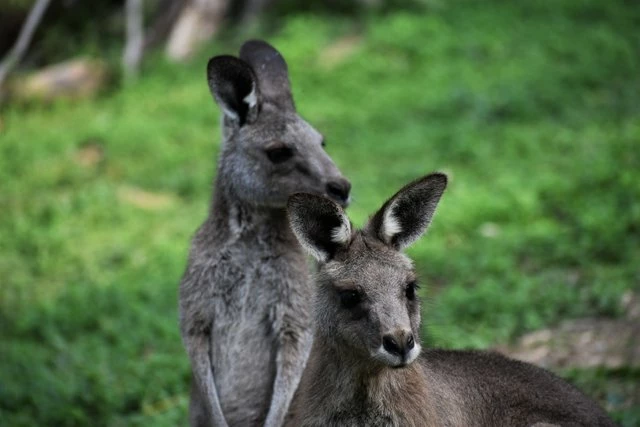
The wallaby females, like those of the other marsupials, hide four nipples in their pouch and are able to produce, with each of them, a different type of milk, suitable for puppies of different ages. In fact, they give birth to only one puppy at a time and return to heat immediately after giving birth, and it is not uncommon to find mothers who also take care of three puppies of different ages at the same time. Recently has been observed the ability of females to "freeze" a newly fertilized embryo, waiting for it to be released inside the pouch.
IUCN Red List

References
- Animalia.bio. Red-Necked Wallaby.
All shots are my property
This post has been also published on Steem's Blockchain.






