
It wasn’t long after these discoveries that he began his school of bookmaking. At one end of the long cabin he made a slanted table with tall stools, a scriptorium where three could sit together and copy out the contents of a wax tablet set between them. Another table was set up nearby where Paul could fashion leather and wood, the heavy covers of a book, while two others could stitch and glue and bind the pages together and silver the corners and the clasps that held the work together.
Early each morning he’d copy several pages of his history onto wax tablets and bring them down the hill to be transcribed again to paper in lemon juice with quills made of feathers. Though the skins and fruit of the lemons these days were a waxy white, he found the juice still held its old property of being an almost invisible ink when first used, then turn a light but legible brown when the page was slightly heated. He knew this was a trick of oxidation and reveled in the thought that these seemingly innocent bibles, passed out and placed upon altars, would one day turn brown and like another miracle reveal to the world its own sad history.
Such was the plan and he set his followers to work several hours each morning at this new task. After a week and some wasted sheets, he found that Simon and Mary and Eve were the best scribes. He would have each of them make one complete copy of his history. He explained to them that it was a record of his own life and that people might value this record in the distant future when such knowledge would otherwise be lost. They seemed to acquiesce to this without a question, so caught up were they in the simple mechanics of their work.
So far he’d only taught them the sounds of the letters. What he concentrated on was to make their handwriting neat and straight, using rulers as invisible lines to follow. Holding these pages up to the light he was happy with the results. Each person had their own distinctive style but the matter was clear, though perfectly invisible when the pages were bound together.
One day, several weeks into this project, Jonathan noticed that Simon was moving his lips and actually mouthing out some of the words, trying to decipher the sentences he was copying. As Jonathan couldn’t forbid this he gave them more instruction and in another week they were all incipient readers, delighted with their newly acquired skill.
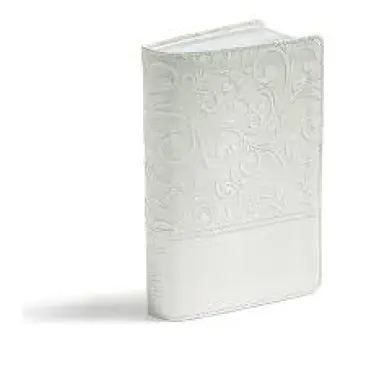
By the end of the summer the first three of his invisible ink histories were done, stitched and finely bound. The covers were embellished with silver leaf which in turn was stamped with delicate flowers and symbols. Peter was groomed in this jeweler-like artistry, while Sarah, with infinite care, sewed the pages together. The finished work was as sturdy as it was beautiful.
Though each book had clasps of leather and metal that snapped shut, Jonathan made Paul carve three equally embellished presentation boxes. The result was a gift that could hardly be refused, so much craft and thinking had gone into it. In a world where ornament had long been outlawed, Jonathan thought, such a present should be welcome. The desire in people to have some symbol of what they worshiped could not be killed.
We are sentient beings and our sense of sight and touch predominate in our thoughts and emotions. These objects would provide a focus, an outlet for emotions strongly felt. We call it adoration. As soon as the three gifts were finished Jonathan was eager to set out with them and test the truth of his reasonings.
All this while Jonathan had privately pondered the question of whether or not to take any of his followers on the long journey to the capitals where he would present these works. In the end he decided on taking Simon and Mary. Though he preferred traveling alone, he knew his presentation would appear in a better light coming from a school of people rather than an individual. He also thought of the wealth of knowledge his pupils would gain by such a voyage and this settled him in his choice.
He announced the decision one evening and not to disconcert the others he gave them the option of staying on to improve the village or residing in town until his return. All of them voted to stay at the sanctuary, if this was acceptable to the head priest in town. They’d even ask him to come there and oversee their work in Jonathan's absence. Jonathan was pleased with this idea and told them they would all travel with him sooner or later, that is, if his first mission met with a favorable reception.
"In fact" he went on, a little inflated with these prospects, "you might someday be the core of a unique bible school and fill the world with your crafted works, while pilgrims trudge the continents to visit you in this holy factory of the wilderness. You must make your lives and works exemplary. A few short moons will tell us how we stand in the estimation of the Church."
Though impatient to go, he spent another two weeks directing his scribes to make a second set of books, while three portable stands could be carved by Paul. He also spent this time on a list of chores his four disciples could innocently pursue in his absence. He told them not to mention the process of copying to the old priest, as he wanted to verify its propriety with the Church in the Capitol. They could show the old man all the other arts they’d learned of binding and decorating the books and finish the three that were in loose sheets. He concealed all his wax tablets and writing implements and assigned tasks that would fill months. Then he set off with the pack train and his fellow travellers and also Peter, who would return with more supplies and the old priest.
When Jonathan and his disciples arrived at the temple a presentation ceremony took place with the townsfolk as witnesses. On a beautifully carved stand that Paul had designed, the first of the bibles was set up. It was displayed that evening in the central square for all to admire. In single file the entire populace passed by to touch the smooth leather with their hands, as if it could impart some holiness or blessing. The next day another banquet was announced to send off the pilgrims.
On the following day at the feast, Jonathan convinced the old priest to oversee his colony until his return. The other priests were eager to concur, hoping to solidify their own importance while he was gone. A boat was readied to carry Jonathan and his two disciples to the territorial capitol of White Perth. The boat had been freshly painted and the best clothes and provisions were gathered up and three able fishermen were delegated to convey these passengers down the coast, on the four day journey to their destination.
The news of this pilgrimage preceded them by about a month, through the supply ship returning from their district. Because of this forewarning they were honorably received. The Bishop of the city of ten thousand souls was a good friend of the old priest and had these visitors wait at the docks until he could greet them in full regalia, with a long line of temple functionaries behind him. The gift was well presented and well received. Jonathan treated the table of priests of this city with the tale of his vision in the wilderness, along with other tales of his wanderings around the globe.
For one week he and his two disciples were treated royally and taken on tours of the town each day. Indeed, the ruling clique of this remote capitol had long been frustrated with their isolation and insignificance in the forward march of the Church, and they hoped that this piece of luck would give them the notice that they craved. They readied their finest cruiser to convey Jonathan and his youths to the distant capital of White Syd. After the most superficial examination of the book and the installation of it in a public gallery of the temple, they presented Jonathan with a charter describing their appreciation of the gift.
His staff and his dignity and his story had worked their spell. He presented the Church with what looked liked another step in its glorious procession, a valuable artifact and symbol for their faith. With this success he now altered his plans and sent back a message to his town, asking the priests there give word to his disciples on their next supply train to inform Paul to travel with the other set of bibles and with all haste, all the way to White Syd, where they’d wait for him, before setting out on the long trip to America.
The Bishop concurred with these plans and sent along the proper commissions that would rush Paul behind them. He was eager to see what reception Jonathan would receive at the capitol and made sure to send along two of his own secretaries with them, part spies and part players in the unfolding drama.
This ship had an engine and was one of the small fleet still maintained for the most urgent business. The trip took nine days through stormy seas, but the crew of the vessel carried them safely to their destination, a fair city of some fifty thousand, bigger and whiter than anything Simon or Mary had ever imagined.
On his arrival Jonathan found that the two secretaries sent with him acted as his agents and ran off to meet with officials, while he stayed on board waiting for instructions. It wasn’t a summons but a welcoming committee that came to the docks, a good omen, and Jonathan and his disciples were shown quarters in a wing of the main temple. The next day he was asked to send his bible with the two spokesmen to a review board. The college of priests in this capitol considered themselves too professional to be taken in by dupes or charlatans.
A few hours later a messenger was sent to inform Jonathan that the Bishop of White Syd would receive him for a private interview the following day. Jonathan and his young wards were still confined to their three adjoining chambers. Fine meals were brought to them and they paced the floors and talked a great deal of the city, often looking out the windows onto the busy streets below.
Next morning Jonathan was led down the corridors to a private room where he met the young Bishop of this place and a single secretary. They had his commissions and his book lying closed on the table before them. The Bishop chatted in a friendly manner and was impressed by his rare staff and asked a few questions about his inspiration and his sanctuary. Before long Jonathan knew they’d accepted his pretensions. A presentation ceremony was planned for the following day.
At the end of this meeting the Bishop reminded him that this was only a conditional acceptance of the gift, but that it seemed worthwhile for the city to undertake the charge of conveying his group to White York and await the final decision of the council there, whose word was law.
So, with a small gathering of priests, they received the gift from his hands and placed it on its stand in one of the darker aisles of their hall. Without fanfare or excursions Jonathan was again cooped up with Simon and Mary in their chambers, for several weeks, until Paul arrived, breathless and full of excitement and talk with three more finished bibles and stands in his luggage, enough to carry them to the capitol of the world.






