
The man pillar
We were so worn down that we spent the rest of the day trying to recuperate. We built a roaring fire, breaking up the benches there and spent the afternoon gorging ourselves on our thawed supplies, all the while rubbing our half-frozen limbs. Between mouthfuls our fat interpreter asked the peasants more questions and toss them a morsel for each reply. They were still huddled a few feet from us, staring at us as we sat around the stove, enjoying our food. After several hours I prevailed upon our chief to let them sit closer and share more of our bread. If they trusted us, I pleaded, they might help us.
But we didn’t trust them, and rightly so. We kept them in our sights and we made them sleep that night next to us on the church floor. Before nightfall three of us made a search of the standing cabins. The doors had to be kicked in but there was little inside. Except for the crude furniture and a few rags and implements, everything had been taken. There was no food, no pigs or poultry, but from some spilled grain we could see that food had been taken.
We returned to the church with a few shovels and sickles to use as weapons, and more questions. We found out that the priest had commanded the able-bodied villagers to carry all the food away and hide it, while he himself set off in a different direction. We didn't know whether to believe this story or not and so we barred the doors tightly before falling asleep on the church floor with our weapons beside us.
For the first night in three we slept soundly, too much so, because in the middle of the night we were startled awake by the cries of the old folks settled near the door. We woke up to the sight of that end of the room on fire. We raced to the door but took several minutes to open it because of our own barricade. We were choking from the smoke but all of us got out in time. The other cabins, every one of them, were also going up in flames and lit up the night in a ghastly circle around us.
I expected a fight and had my knife in hand, but there was no one in sight and so we turned with all our wits to quench the fire, using snow and the blankets we’d draped around us. We made the peasants help us, with kicks and blows, and managed to douse the flames before the church was consumed. But the whole front wall had collapsed, along with a part of the roof. We spent the few hours before dawn huddled with the peasants in smoldering ruins.
That morning we gathered up what was left of our food and equipment, some of which had been damaged by the fire, and prepared to head back immediately. But while we were doing this the old peasant went over to our interpreter and told him he could lead us to where the priest was hiding in a cave only an hour to the north. He was angry that the priest had come back and burned the village, without a care for those who had been left behind. Our chief was eager to go, for never in his life had he been so outwitted and cheated.
I was for retreating, even though we had only a day's worth of food left and just two tents. The others were doubtful. We were all in sad shape. But two of them finally voted to make one quick sally against our enemy, for revenge and for any food we might find there. The weather was clear but the temperature had fallen to an extreme degree.
I again had our informant questioned as to how many others might be with the priest. It was hardly probable that the fires last night were the work of one man and after all we’d been through, I really feared another trap. The old man admitted that there might be one other person with him, a stranger who’d arrived the day before, but that was all, the others were sent a full day's march to the east, to another village and they couldn’t possibly come back so soon.
One of our group, the youngest of us, had received a severe burn on his back when part of the roof collapsed on him. He was now lying in the snow and groaning in pain. We decided that we’d leave him here with the peasants and all our gear, taking only our weapons and our guide. We promised that we’d be back in two hours.
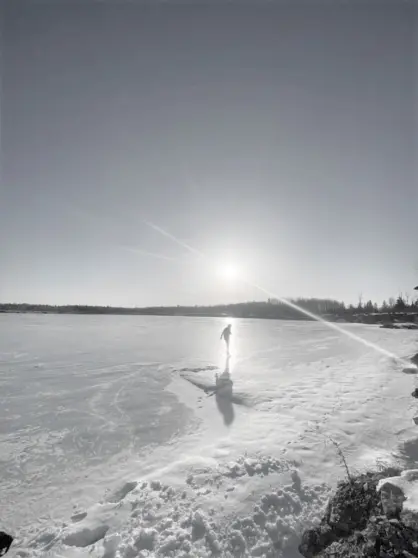
We travelled further down the river at least an hour, seeing nothing but a flat expanse of snow and ice. We began complaining to our guide but he promised us repeatedly that there was a bluff just ahead, where the priest was hiding. We walked a little further without any bluff in sight. Our interpreter was furious and about to strangle the old man when he dashed ahead of us and pointed excitedly. Sure enough there was some dark object not far ahead, but it looked like some sort of pole against the horizon. A light snow was just beginning to fall.
We came up to this dark pillar running and found to our horror that it was a man. He was almost naked, wearing only a thin robe that was richly ornamented in the old style. On his head sat the tall headgear of a bishop. He was facing us and had on his frozen face a strange smile. His beard and the long locks of hair that escaped from his hat were covered with ice. His eyes were open.
What seemed an almost impossible feat, this man must have died standing up and was now frozen stiff by the cold. Both his arms were folded against his chest, and beneath them we could see the large, black book that we wanted. As we beheld the grim figure our interpreter asked our guide the meaning of this. The man spoke a few words and our corpulent friend grew livid with rage and then struck a blow to his head that knocked him out. Then he turned to tell us that the insolent wretch had said that the eyes of death were upon us.
I could see, at least, that a great deal of confusion was upon us and that we had better act quickly and rationally. I began looking around and discovered the faint tracks of footprints in the snow behind the dead priest. I told everyone that this corpse must have been carried here and abandoned, probably when the bearers saw us coming.
"Vermin," said our translator, "these beggars are all liars and will kill us if we don't get out of this land."
I immediately agreed with him. But our captain spoke up next. "The book, the book is here. We’ll take it and go."
The four of us now grabbed the dead bishop and began prying at his frozen arms to remove the treasure. We pulled and pried and hammered with our staffs and even chipped away with our sickles, but the body was so stiff with ice that we made no progress. The snow was falling thickly and I warned that if we didn't leave now we might not find the village again, seeing as our guide was not functional.
Our leader wouldn’t depart without the book. So we decided to drag the corpse back to the village, across the frozen ground. I insisted we take the guide too. The others wanted to leave him there and would have, until I came up with the plan of strapping him on top of the dead man's body with my belt. I suggested that the heat of his body would melt the book free by the time we got back. We tied two other belts around the dead priest's torso and pulled the load easily across the hard snow.
New snow was now falling in a thick blanket. Along the way the old guide woke up and began screaming when he saw where he was. But our translator running along beside gave him another clout and quickly put a stop to that.
We made it back to the village at a jogging pace and would have never found it, so thick was the snow, except that it happened to lay right in our path. As we came up we heard the cries of our poor, burned companion. We ran to the ruins of the church only to find our dear friend lying there in the corner of the room, stripped almost naked and shivering to death.
The others were gone. He whispered to us that several men had come back, taken everything, including his clothes, and led the others away. The snow was so thick that there was no chance of pursuing them. Had they left just minutes before their escape would have been hidden as if in the blackest of nights. But in fact they were covered by the whitest of snows. Our problem was that they’d taken all of our gear with them.
Then we discovered that the fire in the stove had been put out with a few handfuls of snow. I checked it and not a single ember remained. The snowfall had also extinguished what was left of the fires from the night before. I ran to the charred remains of the cabins, and dug through the snow here and there , but everything was cold. A shiver ran down my spine.
Now our dilemma was clear to everyone. Our interpreter flew off in a rage, kicking the poor guide who’d just woken up again, in his side. He untied him and began cursing the inhabitants of this region in several languages, all the while stripping off the clothes of the guide and throwing them at our naked companion. But it was too late in either case. Both were unconscious.
Our translator now produced his knife and talked of spilling the naked wretch's guts to warm his hands. We stopped him from this and dragged the body outside. Then we dressed our own fellow and rubbed his blackened limbs, but to little avail. He moaned now and then and seemed to doze off every few minutes and then wake up with a start and cry out some more. What we needed was a warm shelter.
We began collecting the wood we could find to build some kind of hovel before night fell in the one intact corner of the church. Soon we had a small lean-to we could all fit in, carpeted with fragments of burnt rags. In the last few hours of daylight we searched the grounds once more and found, to everyone's surprise, some frozen potatoes and a corked bottle full of fermented spirits, which we promptly drank.
last post ...
next post ...






