
Jonathan
"I, Jonathan Winslow, the most reprobate of sinners, unholy, unclean, renegade do hereby admit by this act of writing, this desecration of the white page, that I am guilty of a capital offence and deserve to be put to death by fire. I hereby offer myself to any party in authority who cares to undertake my punishment."
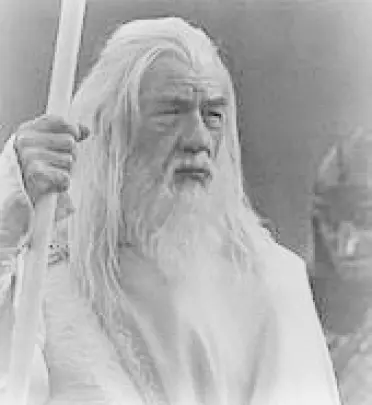
This succinct note was penned by a tall, gaunt, bent-over, scarecrow of a figure, careworn and timeworn, a man in his mid-fifties. Down his shoulder blades ran long white hair. He wore a bleached, hooded, robe down to his sandals. Standing there with his staff in hand he might easily have been mistaken for a pilgrim of old, a barefoot wanderer of the deserts. And yet he retained some traces of dignity and handsomeness in his face, if one stooped to see them.
His hand was shaking with excitement as he wrote. His whole frame shuddered. The first few letters were awkward but he marvelled at how easily he regained the knack. It must have been thirty years since he’d held a pen. But it was one of those things, once you learn it... In fact, he was so excited about the discovery of the pen and paper that he paused and tried to reckon the date and formalize the document he’d just created. "That’s an old dog of a habit" he thought "and not yet dead, though it will be, with me, very soon."
But the date perplexed him. "Was it twenty-nine or thirty years since the abolishment of time?" He cursed himself for this lapse of memory. "No matter, it shall serve its purpose full well without a date. It could be one big inkblot for that matter. What a fool, petty bureaucrat am I to dress it up this much even, my own death warrant. But it will serve. It will serve as is."
Next he took a length of string and poked it through the top of his note, tying a loop so it could hang around his neck, visible to all the world.
It was still morning. He searched the dim cellar no further. He thought for a moment that he might take up some painted scrap lying about as further evidence against him, but he was in a hurry. When he thought of the two-day journey ahead, and his old, weary legs, he decided to travel as light as possible. So he emptied the contents of his bag right there, except for a little food and water. Then he climbed up the flimsy steps and through the hatch, emerging into the brightness of day. He took one last look at the ruins of the cottage, picked up his staff, and set off across the barren hills to the west, straight towards the sea, on what he hoped would be his final voyage.
One hill after another the lone traveller made his way. It was a hazy summer day. The sky was white with the high-altitude clouds that never dissipated. In the growing heat of the hour his initial enthusiasm slaked considerably, but he kept up the pace, mumbling repeatedly, "this will be my last trek, then I shall rest."
In mid-afternoon he paused under the shade of a solitary oak tree. He munched on some dried fruits and nuts and took a few sparing sips from his flask. The only other thing that he had with him was his wooden staff, which, like himself, was leaning against the tree. It was a very special stick, as tall as himself and tipped with the fine, silver head of an eagle. Below that were three wide silver bands, insignia of high rank, and spiraling rows of standing feathers incised neatly to the bottom. By these symbols he held an authority over others that provided him with all his simple needs.
He set out again and hoped to reach the coast before nightfall. There he would find sanctuary, a straw bed and perhaps a warm meal. Hovels were scattered about in these parts, the coast of what had once been western Australia, but now without a name or at least any he’d heard of, and the laws were slack here, because of the isolation.
That's why he’d come the long way to this region. He relished the primitive hospitality that he often met with, of fishermen who still plied their age-old trade, untouched by the perversity of the towns further down the strand.
He even concealed the note under his shirt when he first smelled the salt in the air, not wishing to cause any commotion amongst the poor folks he might meet with. There’d been enough trouble in the turbulent years behind. He heartily despised it in any form. His own personal sanctity and rank was acquired by his power to pacify and reconcile other people’s minds. Let the authorities publicly burn him tomorrow, he was going to have a quiet and restful evening tonight.
Sure enough, within an hour of reaching the coast and heading south he saw a campfire and a cottage ahead. It was a wooden shack. An old, bearded fisherman and his son sat on a log in front of it. Few words were passed. They shared a plentiful meal of fish and he was told, solemnly by firelight, of the seven sons and daughters the old man once boasted, now all lost, except one, like some ancient Jew recounting the horrors of the Diaspora. The traveller left them with a heartfelt blessing the next morning and set out on his way.
The sky was overcast as usual on this day, but the air was crisp and conducive to thoughtfulness for one walking alone along the shore. Memories from the distant past floated through the mind of Jonathan, faces and scenes from his student days and first career, his old office and the titles and colors of the books that lined its walls. Because this day would be his last he entertained these recollections with a debonair abandon, a thing he almost never permitted himself because of the remorse that was sure to follow. "Why not feast and regale my memory with what I was before I toss myself into the flames? Is not every sentenced man allowed his last dinner?"
After doting on his books for a while he started shouting out, as he walked along, the names of the authors and historians he most admired: "Thucydides," "Plato," "Polybius,” “Livy," on and on, in a fair, chronological order, exhausting twenty or so names before he exhausted himself. For he had been a history teacher long ago with a promising future cut short. The fit subsided as he reached the ruins of a lighthouse which he recognized as a sign that the town was only a few miles further. This put him in mind of his present business.
He already had the note, his death warrant, dangling in plain view on his chest. His plan was to walk straight through town to the central temple. There he would present himself to the head priest to be punished, even if the daily prayers were in progress. It would liven up their day to have an 'auto da fe' he thought. Such shows were becoming very scarce lately due to the lack of people of any sort left to persecute.
As he reached the edge of this town of about a thousand souls he began a steady, dignified step, with his staff raised up to avoid tripping, looking straight ahead, yet keenly listening for any stir or comment from the few people in the streets around him.
But it was not the habit of citizens these days to notice much of anything. The few women and men not employed in one of the central workhouses stayed indoors at their trades until necessity forced them out on some errand. Then, in as self-effacing a manner as possible, hooded and veiled, they would hurry off down narrow streets straight to their destinations, glad not to be noticed by the civil authorities, whose job it was to seek out and punish idleness.
Such a chastened, puritan atmosphere was not exactly conducive to the afternoon gala Jonathan Winslow intended. As he walked the nearly empty lanes the first few souls he passed didn't even notice him. So he decided to announce himself by calling out "unclean," "unclean," like a leper of old, hoping to attract a magistrate who would arrest him. Now the people did make way for him, running away, slipping through doorways or at least hiding their faces and mumbling prayers as he went by.
Finally, when the temple and the central square were in sight, a fat, balding fellow, unhooded and wearing the wide belt of an official, hurried towards. But at ten paces this fellow perceived two contradictory things; the bright, silver eagle on the staff which denoted an authority far greater than his own, and then the strange paper, marked with dark characters on the stranger's chest. It stopped him in his steps. After a moment of confusion, as Jonathan still approached him, he fell to his knees and shielded his eyes with his fat arm, crying out loudly for God's forgiveness upon his polluted sight.
Jonathan proceeded straight up to this wailing and cowering fellow, put his hand on his bald head and with the voice of a practiced leader said softly, "calm yourself my good man, no sin is upon you. Just fetch a few blind servitors to attend me through the gates to your temple. I desire to be judged by your priests and I promise to say prayers for you this very day in heaven."
The man hurried away as instructed and came back after several minutes with two blind guards, pulling them by their belts as fast as they could shuffle. This time he kept his eyes averted as he neared Jonathan. With a guard positioned at each arm and the functionary in front, they proceeded slowly to the temple gate. Inside the courtyard the priests were gathering. They’d been vaguely warned to shield their eyes and prepare for the approach of a holy man with dark characters upon him. They had but a few moments to huddle and debate the confusing matter. The head priest was engaged in private prayers and couldn’t be disturbed immediately. But the others were afraid to let any possible evil within the walls. So they closed the huge, white doors and gathered to confront the situation from the parapet above.
When they collected there and timidly peeked over the edge, they saw the stranger and his entourage of three waiting patiently almost directly below them. With hand-shielded eyes their spokesman addressed him from some fifteen feet above:
"O holy man, what is thy purpose in coming here, and thy meaning?"
"I have come here in conscious sin and beg the grace of purifying fires, to end my earthly sojourn" Jonathan replied.
At this moment the old priest in charge of the town was being helped by his attendants up the stairs to the rampart. He was very frail and somewhat short-sighted. He’d been dimly told of the situation in a few words but he didn’t comprehend even that little. He peered over the edge and saw Jonathan with his silver staff, gleaming in the daylight, looking up at him, so he called out: "You do us great honor by your visit, stranger. We shall be most grateful to receive you within these walls and entertain you at our humble table."
"Pollution covers me. I am accursed. I desire to be burned" replied Jonathan loudly.
"Do not worry. You are our honored guest," said the priest. "I will dispatch servitors to cleanse you right away. We have excellent lickers here." Then he turned to his men, "let this be quickly done. Open the gate."
Although the other priests knew that their leader had mistaken the situation by not perceiving the note and by assuming that the stranger was merely talking in an archaic, self-deprecating manner before a host of lower ranks, they still found it expedient to go along with him. They all dreaded the thought of Jonathan's request, not that they disliked public burnings, but they dared not touch a man of his high status, not knowing what repercussions might come of it. So without informing the old priest, they quickly instructed a trusted secretary to sneak out and mingle with the lickers and to pluck off and eat the offending note without delay.
This was accordingly done. As Jonathan was standing there befuddled, trying to frame a new protest to this unexpected hospitality, the man slipped out the gate and came up in the same bowed fashion as the two servants who were already crowding around Jonathan's legs and dusting off his lower robes. With one smooth motion the man tore the note from the string, crumpled it into his mouth and bolted away down the street.
When Jonathan perceived this he yelled out "stop, thief!" He would have pursued the man, but the blind guards were still holding his arms and the servants around his legs hindered any movement. The fat bureaucrat who had been standing beside him all this time was so disconcerted by these events that he too ran off in the same direction as the secretary.
Just then, the gates opened wide and the old priest limped toward Jonathan with outstretched arms, smiling. Jonathan had an extremely sour look on his face. He was thinking of the irony of the situation. He had come here to be executed and instead they were trying to fete him.
"Forgive us, forgive us,” the old man said "if we displease you in any way. We are a backward people, simple in the rules of ceremony. Please, come and enter our temple and bless us."
Jonathan was not slow in gleaning that his plans were now dashed to pieces. He realized that his stature in this dusty town was too elevated to be impeached. "If only I hadn’t brought my staff," he thought. But then he tried again: "Your man here who has just run off has taken something from my necklace and your official, who can attest to it, has run off with him."
The old priest looked concerned. "I'm very sorry Sir. We will look into the matter right away. If you stay with us the night I'm sure we can set it right by morning. Please, do not perturb yourself. Come join us and bless us in our service."
To this Jonathan relented, offering his hand to the old man and his staff to be carried in by an attendant. He was led into the main hall where a table for twenty was being set out with all the pomp that the town afforded.
After a brief tour of the temple, Jonathan, the old priest and his whole staff of priests sat down to a long and leisurely dinner. Many delicacies were brought out as it was a rare occasion when they received a high-ranking guest. There were platters of lamb and fowl finely garnished and plentiful servings of white wine, for which the priests were as beholden to their guest as he should have been towards them. The head priest, sitting next to Jonathan, told him of the town's history and economy, and its place within the church hierarchy of this region. After several promptings and soothed by the wine, Jonathan condescended to tell the table a little of his own travels, of the capitals and great temples he’d seen, of their populations and dimensions, the city matters that forever awe provincials.
Towards dusk they rose to take their parts in the evening service. This was a simple event which the whole town attended. Long rows of benches were set up in the town square. From a raised platform a sermon was delivered and prayers conducted to a sea of faces illuminated in the twilight by a thousand candles. This was the new, world religion, all-encompassing and all-demanding and without a name. It needed none, because there was nothing else.






