
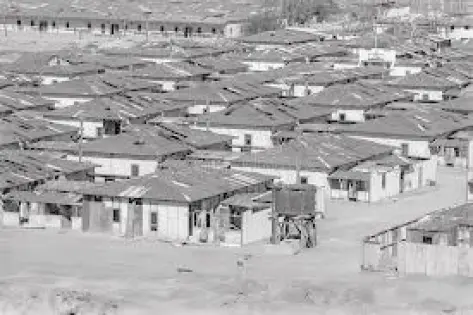
The deserted town
As Jonathan decided that this would be another holiday, he spent a portion of it cooking and serving them meals and trying to entertain them in between. They weren’t much used to leisure and had no idle pastimes, so he taught them the game of checkers. He marked out a board on the table and cut up several waxy-white carrots for pieces, dipping half of them in white paint to distinguish them; one of the few uses he found for the stuff as he told them: "to discriminate objects, not to smother everything."
They toyed with the game a little while, not much interested, except Simon, and so Jonathan told them he would show them a far better game called ‘chess’ in a few days, as soon as Paul could carve out the pieces. After an early dinner he set up a little library in their common room and read passages out loud from several books, often breaking off at the most interesting parts and skipping to some new excerpt to pique their curiosity and make them all the more eager to read for themselves.
By now they were perfectly at ease with handling and looking upon the black letters of these books. The three who had travelled with him were so enthused that they quickly won over the sympathies of their companions without Jonathan having to say a word. But the fact was that although they’d been told many times to detest whatever was dark the prejudice didn’t sink in, because no objects had been presented to them in that state. The Church wasted its breath in this cause. Innocent minds couldn’t be taught to hate an indistinct notion for no distinct reason. Only their curiosity was roused and when the object was finally shown to them by Jonathan they saw that it was pretty.
The following months Jonathan worked hard to put every detail of his community in good order. They built fences and sheds, diverted a part of the creek to irrigate their field and further down built a dam that made a pool large enough to bathe in.
Their harvest was good and the traps were yielding a steady supply of meat. They built a smokehouse and Jonathan showed them how to preserve foods. By winter they’d laid up a good supply. Sarah and Eve were by this time pregnant and so Paul carved out two rocking cradles, along with rattles and other toys, while Mary sewed tiny, colorful clothes for these unseen hopes.
That winter they spent most of their time indoors. Jonathan continued his morning lectures and in the afternoons he worked on a book with illustrations, on survival. Simon kept the calendar and the journal recording what they did, the weather, including even lecture notes. Eve transcribed the Shakespeare, Paul carved, and Peter, Sarah and Mary dabbled in many projects, as their fancy dictated.
They all developed a habit of reading. As there was no dictionary they’d interrupt Jonathan for each strange new word. He didn't mind this. He spent all his time in the workshop with them, retiring to his cabin only to sleep. He’d now brought down all his papers and books. But he didn’t continue his history. He’d sometimes shuffle through the papers and change words here and there. But he didn’t lengthen it. He was rethinking its purpose and his mind was bent on new developments rather than old.
Spring came and with it Spring planting. This year the garden was made twice as large as the last. Jonathan announced his plan of leaving them for awhile and they were surprised to hear that he’d be taking no one and no new bibles with him.
"The women need their husbands here," he said, "and I fear there may be some changes out there and perhaps danger. I’ll see what’s going on in town and come back with the news."
In the early summer the two young wives gave birth to two healthy babies, a boy and a girl, within a week of each other. Simon convinced Eve to name their boy Robin, shortened from Robinson, the hero of his favorite story. The girl was named Naomi, a name chosen from the one bible Jonathan had brought back and which he sometimes read to them, as it seemed to make a great impression.
Before he left Jonathan went up to the spring each evening with a hammer and chisel. Over many days he carved out a cross on the rock face behind the pool and inscribed under it the name of the old priest, ‘Terence’, along with the dates of his birth and death, as near as he could guess. He remembered his promise and fulfilled the vow before a trip from which he might never return.
This time he equipped himself in the same way he’d done thirty years earlier in the prime of his woodsman days. Though in his late fifties he still felt a vigor in his veins. Indeed, he felt stronger now than when he’d founded his colony three years earlier. He carried his hunting knife as always, strapped tightly to his wide belt. Concealed under his shirt was an ammunition belt fully stocked and his one pistol in a holster. He took along a single burro to carry some camping gear and several days food. He also took along field glasses, a compass, his commissions and his staff.
With the last of the white paint he dipped and whitened every object in his baggage. His followers didn’t use it anymore. They’d never brought enough to cover much and soon gave up trying. The women had even made shawls and skirts from the patterned sheets Mary had brought back, delighting in their colors. The men now wore pants of gray canvass. No part of them was white except for the ointment they still used and they didn't mind this change of custom.
On the eve of his departure, after seeing that everything was in good order, Jonathan had to broach an uneasy topic at the dinner table.
"I plan to be absent for several months," he began, "and if I don’t return by winter, it will be up to you to elect someone to go to town and find out what news there is of me. Until I come back I expect you to continue on with all our plans of improvement. You’ll have to use your best judgement and vote together and do what you can."
Confused by this announcement the others broke in with all sorts of questions, especially why he had to go at all. He realized that they weren’t quite ready to go on independently of him. Their practice in this lifestyle was still too new.
"I'll take every precaution to remain safe," he told them. "Just remember to do the same for yourselves. You have three rifles here and if any strangers approach remember to keep them at a distance until you find out their intentions."
He ended by telling them "the sky can’t change these days without the world changing also. It has changed a great deal, as you all know and I intend to go out and see the new things it’s brought with it."
The sky had changed a great deal. Throughout the preceding year there were not ten days in which the clouds dispersed somewhat, letting in minutes and sometimes hours of sunlight. Now the cloud cover broke at least once a week, revealing great patches of blue. The foliage too responded all the better to this change. Even the rains were different with shorter but heavier downpours. This swelled their little creek, and patches of green grass began to grow. Jonathan had some carefully transplanted in a fenced plot so that the animals couldn’t eat it. "This is a sure sign" he said, "the earth is returning to its natural state."
He set out one morning after embracing each of his disciples. He didn't want such an emotional parting, but it happened all the same. He set his course as before, for the coast and the fisherman, with the hope of finding out news of the town before he entered it.
When he reached the coast that evening he found the fisherman's hut deserted and no signs of life there for some time. "Perhaps the old man died," Jonathan thought, "and his son wandered off. Or maybe they drowned in the sea." The boat he’d seen there before was gone.
"This gives me no forewarning," he thought on. "Now I'll have to sneak around the hills and see what I can with my glasses." And that’s exactly what he did.
By noon the next day he was behind the nearest hill tying his burro to a tree. He climbed the hill carrying only what he had on his belts, along with his field glasses and staff. When he reached the crest the town spread below him, easy to spy upon.
The most unexpected sight awaited. As he focused his glasses and surveyed the houses, the temple square, the harbor and segments of streets, he perceived no one. The town appeared to be deserted. The midday sun beat down upon the white bricks and tiles and danced in waves of heat, distorting every line, but no other motion was visible.
There were no people or wagons crossing the broad square, no priests loitering about the temple gates. No noise echoed from the streets to reach his ears. From where he was he could see that the sheep which used to dot the pastures to the south were missing. The harbor seemed abandoned, though several small boats still bobbed in its waves. The solitary smokestack in the distance, near the glasshouses, was dormant.
He rose and without further thought proceeded down the hill, staff in hand. The place was indeed deserted, or almost. A white cat darted in front of him across the first street he set foot on. He stopped here and rapped loudly on a door. After a moment he pushed the door open and explored two empty rooms. From what he could piece together only the clothes and some bedding and utensils were missing, about as much as a family could carry.
"They’d better not be killing them" was his first thought, dreading the idea of some new type of holocaust. He bolted out the door and towards the temple, yelling as he went for anyone there to come out and show themselves. But no one appeared.
The temple he found equally deserted, going through the rooms to no avail. Not much had been removed, including his own bible and he laughed a moment later at his own vanity when he realized how this fact bothered him at first glance. Then he went to the basements and found them as full as before. This sight cheered him. He could use some of these supplies at the colony, he thought, enough to suffice its needs for years. He decided then and there to head back to the sanctuary and collect his pack train and two of the boys to begin conveying boxes across the hills.
Then another idea struck him. He hurried out towards the harbor where the workshops were. Here he found all sorts of tools and materials and even wagons. Only animals were missing, but he could use his own burros to drag large loads inland. From here he ran to the glasshouses and found them full of life. This suggested the townspeople couldn’t be more than a month absent, as the watering systems required weekly maintenance. What he wouldn't give for just the smallest of these units in his own colony. “They’d never need to worry about food again, or any weather.” He began examining the structure of one to see how it might be dismantled.






