
Previous Chapter ...
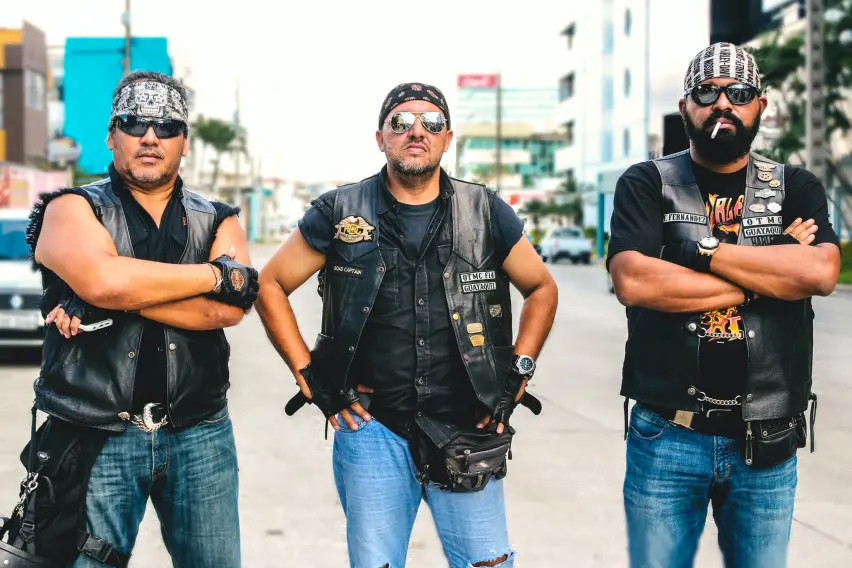
Bikers.
The next morning I rose early and collected some favorite books for my backpack. I went to the bunker and knew exactly where they were. Almost as an afterthought I threw in some bottles and bags of coffee, until it was stuffed. Sheila was just dressing as I returned. Then I heard the jeep pull in. I said no ‘goodbyes,’ the house and sky were still dark. I asked Myra to sit by Sheila in the front and sat by Tom, glancing at some pages of Seneca but most of the time eyes closed, deep in thought. We passed the whole three-hour trip wordlessly. Tom didn’t interrupt. I’m sure his head was equally full of concerns, all the trials to come, the dangers facing us.
At the base we didn’t meet in Steele’s office, which had once been the General’s, so familiar to me. We drove into the courtyard and a flurry of activity. Everything was being moved to nearby buildings and underground. We were led to a conference room in a bunker with ten other captains and lieutenants present, with maps spread across the table while they frantically discussed plans. I stood and listened while the women and Tom took the last three seats. They had good intelligence that the Russians had divided their fleets and planned to establish two beachheads, one near Boston and another on Long Island, which were likely to happen in two days. The largest part of their fleet was at the mouth of the Saint Lawrence, headed for Montreal where a defining battle would take place. But general Wilde had brought up all his forces from the West, hundreds of tanks, armored vehicles and artillery and joined with the entire expeditionary army from Europe, totalling over eight thousand men, hardened forces well supplied with weapons, organizing and digging in deeper every hour.
The Russian plan was simple. If they conquered Montreal they would have all the fuel they needed and roll south down the coast, rolling up our flank and ultimately win the entire Eastern seaboard and after that, the continent.
These other two beach heads were in part diversionary, making us divide our forces and be spread thin in an attempt to protect our cities, and ultimately be beaten on all fronts.
The Russians had a vast superiority over us in battleships and squadrons of planes and bombs, while we had less than a dozen. We knew they had submarines so we protected our smaller fleet by sending it south, as far as Houston, with a few destroyers kept behind, sailing up defensible rivers like the Hudson and Delaware for any aid their guns might offer. We knew that any battle in the Atlantic would be lost and a demoralizing start to the war. They’d already taken landing strips in Nova Scotia and were flying high reconnaissance missions, probing our lines.
But general Wilde and Steele and Johnson were no easy pushovers. They were all seasoned and excellent leaders and knew their men and territories well. Johnson was still moving up the coast towards New York with a large column of tanks and men, all the collected forces of the south, five thousand men, well-armed and ready, due to arrive in several days. Steele was to hold the middle and Wilde, with the expeditionary force and troops still flowing in from the west, preserve Montreal.
The question was the size and the caliber of the land forces we’d be encountering. In any battle on open plains we’d be an easy prey to their planes and bombs. We had to remain in cities and forests for cover. So it had to be a defensive war, with sorties against their advances. Many at the table thought we might be overwhelmed. This was the big worry being debated when we stepped in, and this is where I spoke up.
“I know you’re all fine military men and in this short time have done wonders in regrouping and deploying your forces and tanks. The Russians are going to get quite a surprise when they see hundreds of them rolling against them on three fronts. My hope is they won’t have that many bombs to drop on us.
“But I believe, to win this war swiftly, we have to use all our assets, some of which you’re not considering, but which I’ve been thinking about, with my historical background.”
“What’s your drift?” general Steele asked.
“This woman, Myra, saved us before. I’m sure you remember her.”
I put my hand on her shoulder and had her stand up.
“I think she might be of great help again. We know full well that with their battleships and guns they’ll establish sizable beach heads. They can cruise up and down our coast unopposed and land before we can pull up any artillery against them. We don’t have near the forces to cover the coastline. What we need is a citizen militia, the same one that won the Revolutionary War. All our citizens are able-bodied, plowing the land by hand the last seven years. And all have plenty of guns and ammo of every sort. America is the richest nation on earth in that department. We need to mobilize every one of them. They will make a tidal wave of difference. You were talking about our armies and how we might be numerically beaten. Throw this into the equation and the Russians don’t stand a chance.
“But we have an even greater asset since the pandemic. War is all about killing and we have a large, untapped reserve of hardened and practiced killers. I propose, with Myra’s help, we round up squads of former outlaws and bikers, Hell’s Angels and other gangs. Myra knows some of them and where they are, and they know the others. They’ve been playing farmers these last three years, lying low. But they still have all their skills in night raids, slitting throats, creating havoc and riding in and out through woods on their motorcycles where no conventional military vehicle can follow. They’ve had their Harleys hidden in the woods, ever since the gas ran out. Let them retrieve the bikes, their leathers and insignias and ride again. Give them Uzis and grenades and I guarantee you the Russians will rue the day they landed here. They won’t expect anything like it, won’t know how to fight it and be terrorized by it. I think a few scalpings might even be in order. Our ancestors lived this past and it built our stamina as a nation, frontiersmen and fighters. This is how we’re going to win this war the American way if we’re outnumbered on the battlefield. Remember the Alamo.”
To my surprise everyone stood up and applauded. In all their conventional military planning they’d overlooked it. But now, presented before their eyes, it was a whole new army at hand, a coastal defense force already in place, with guns and communications. It was as if I’d just presented them that magic bag of Jason’s mythical dragon teeth, which when thrown in the ground sprang up into fully armed, formidable soldiers, impossible to defeat.
Steele was especially excited and said he’d give me a commission as captain of this militia right away, to begin collecting it right away. I asked him to include a full amnesty for all past crimes, for anyone who joined.
He agreed to that but then added, reluctantly: “I don’t know about the scalpings. Are they really that vicious?”
Myra answered for me. “I rode with these men for several years and knew many personally, and yes, that wouldn’t be a problem. I know the Russians have a reputation for brutality and rape, but if they meet Pirate Jack, when I find him, they’ll all be fleeing like ten-year old boys back to their boats.”
The general turned to the man beside him, a Major Hyde, and told him to handle this colonial militia immediately. He hurried off to draw up my papers. Tom spoke up and was promised a similar commission as captain of a special forces group for similar guerilla raids, both of us to communicate with this Major for assignments. We had warrants to commandeer the soldiers and buses needed to round up our men and all the supplies and weapons we might need.
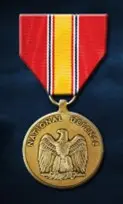
I asked for some kind of insignia for the men I’d collect, so they could be recognized as part of our troops. He thought about it for a second, then had one of his men run down the hall. He returned with a knapsack of ribbons attached to tiny round medals, gold in color. They were stamped, ‘National Defence’ with a bald eagle underneath. This was exactly what I needed. Then Steele came in to sign our papers. Sheila was beside him. She had whispered something in his ear in the conference room and the meeting was abruptly adjourned. It must have been important.
I remembered what I said to Nancy the day before, that Sheila and I would probably be a hundred miles apart by nightfall. Now it seemed I might be right, as they rushed away.
Tom was a bit concerned for Myra’s safety, meeting old bikers, but we made inquiries and found this ‘Pirate Jack’ just ten miles outside Manchester. He was lying on his back and fixing a tractor outside his barn. Myra yelled his name and they ran toward each other with bear hugs. He was huge, long-haired and wearing overalls without a tee-shirt, covered in dust and sweat. She introduced us and he shook our hands, his covered in grease, ours too now, inviting us into his kitchen. He didn’t even clean up, grease smeared across his chin. We’d brought along beers and cigarettes which immediately raised our status to ‘friends.’ I explained the war about to happen and my mission. When I presented Jack the document his eyes lit up.
“Is this amnesty for real? I can’t believe it. I can round up twenty of my old gang in a few days and they can find another fifty. They’ll do anything to ride again. We’re sick of planting potatoes. And you want us to kill, with guns and grenades and our Harleys back! This is a dream come true. And to tell you the truth, I never met a Ruskie I didn’t hate. And on our turf, they’re dust.”
Then he added, squinting straight at me: “So you’re our boss. You look a bit scrawny but I’m gonna teach you how to ride. I know who you are. You’re famous. I bet this was your idea, wasn’t it? You always did have good ideas. I got just the right bike for you, and a jacket. You don’t mind a Reb flag on your back, do you?”
“No, not these days. It’s the ‘hammer and sickle’ I’m worried about.”
Tom and Myra excused themselves and left. There were still a few hours of daylight and he wanted to reach the camp at Portsmouth where he had a few friends with SEAL training. He’d operate from there and told me he’d put out a bulletin through all the camps next morning, asking any soldiers with special training, any sharpshooters, to join his platoon. Then he’d drive Myra home.
There wasn’t any currency yet. We still just bartered and shared, or more often than not, pilfered from the dead. But I told Jack there would be rewards for their service in the end, when the war was won, probably titles to large tracts of land. Later that night, after dinner with his shy wife and two-year-old boy, we sat on the porch with the last two beers and the matter of these ‘rewards’ was mentioned.
I told him the Harleys and the gear would be theirs forever, the amnesty and probably some new, non-farming position in society, perhaps police. But it had to be civil and constructive. He mused upon this considering that possibility, then said: “I don’t think we’d make good police. We usually break the law.”
“We can figure all that out later. For now it’s a war we have to win, and it’s brutality that counts.” Then I foolishly mentioned a bounty for scalps.
“Scalps” he exclaimed in his gravelly voice. His eyes lit up once again, as if I’d ignited a powder keg in his imagination.
“That’s the best idea ever. You won’t have to pay me for those. I’ll string them up over the fireplace as a trophy. It’ll make great stories for the grandkids. I can’t wait to tell my buddies. You sure are smart.”
I was now realizing the depth of the company I was descending into and had no idea where it would lead. For a second I wished Sheila was with me. In another, I was glad she wasn’t. We finished one last smoke, both silent and musing. I told him a bus would be here first thing in the morning to begin rounding up men. He swore he could collect a dozen in an hour. He knew right where they lived. But he insisted we then drive straight to a park past Plymouth, where their cycles and gear were hidden. He said when the others saw the Harleys roaring down the road, like old times, they wouldn’t hesitate a minute to join us. He sounded as excited as a kid on Christmas eve, ready to go to bed early to wake up early. He showed me the couch.
The next morning we awoke to the sound of the bus pulling up to the porch. Tom had made all the arrangements, just as I ordered. There were four soldiers at our service, fully armed and two large boxes in the back containing the best submachine guns the army had, the A.P.9 and a newer, larger version the A.P.C 9K, with thirty round clips. When I showed these to Jack he picked one out, handled it and knew I meant business.
We drove to nearby farms that morning and rounded up ten of his old gang, all of them in their thirties, most of them bearded and long haired, a motley crew, but as Jack explained the mission in four brief words, “we’re going to war” they all instantly dropped what they were doing and climbed aboard. Their old comrades shouting out the bus windows also helped.
Jack was sitting beside me in the front seat directing the driver and when we collected that many he insisted we head north, to a town called ‘Rumney’ and from there up a dirt road through the forest and hills to a Stinson Lake, quite beautiful in this mountain setting where I sat down at a picnic table and had lunch with the soldiers, pleasant in its scenery and serenity. Jack and his friends ran off in every direction, each with a can of gas. Within twenty minutes I could heard the distant sounds of engines revving, and then the first motorcycles returned, Jack one of the first and all aglow, as if it was the happiest day of his life. He parked it next to the table and insisted on hugging me as I was still eating my sandwich. As the others rode in they each shook my hand and vowed allegiance. They had their leather jackets, each with the insignia of a pirate flag on the back, and helmets too, stashed away with their bikes.
I don’t know what it is between a man and his bike, but it’s something like a love affair, as most of these men didn’t hardly say goodbye to their families as they jumped on the bus. I noticed that half of them seemed to be living alone. They spent the next hour cleaning their bikes, checking the spark plugs and hoses, almost caressing them. Then Jack sent out some of his friends to collect more bikes, those of his fallen mates. We fit seven of them on the bus and headed back to Jack’s, he and his crew proudly leading the way, weaving back and forth across the empty highway lanes in front of us, some speeding ahead and then falling back, all of them reviving their skills and indulging in the pure pleasure of cruising on a Harley.
That evening we unloaded the bikes and sent the soldiers home, but not before each man picked out his weapon and a dozen clips. We built a campfire in the middle of Jack’s dirt front yard, as if we were camped in the mountains. The bikes were parked in a wide circle around it. Jack’s wife brought us a fine dinner, which we ate sitting on the ground, as these men must have done so many times before. It was memories they wanted and memories they got. Even the roughest man has tender sentiments, hidden in his heart. And this was it for these boys, a rebirth of the best days of their lives. They ate in silence.
After dinner we began to talk and plan, while Jack excused himself and took his wife and child by the hand and showed them his bike and was soon driving them around the yard in circles. It was the first sign of affection I’d seen him show them. But I knew, and all the others understood, he was a good man.
I told these men that the war was coming soon, in a matter of days, that one of them would have to teach me how to ride, while the others were to spread out and gather more bikers, anyone they knew from any group or clan. That didn’t matter now because we had a common enemy, a foreign one and we were all in this together, Americans.
One by the name of Joe spoke up. “If we can find Stalker, he’ll have what’s left of the whole Saratoga crew behind him and that stretched all the way to Syracuse. I know his real name, it’s Glen, Glen Stalk and I heard he’s got a farm near Milford.”
“Great, that’s your mission Joe, first thing. I got each of you these medals to sew on your jackets and you show them to any soldier in any camp, and they’ll give you whatever you need, gas, food, ammo, a bed. The word’s been spread. It’s official. You boys are ‘special forces’ now. I handed them out and they could hardly believe their eyes, gawking as if they’d just been awarded the medal of honor. They gave me the warmest ‘thanks’, and handshakes in return. They spent the next hours with the two needles and thread Jack’s wife found, sitting close to the campfire bent forward, sewing them on their jackets, talking excitedly and like little boys, those waiting telling the others to hurry up and pass the thread, a group of bikers.
“For now, we report here each night if we can. If not try to make it back the next. Like I said, this war is gonna start real soon, any day, but if it takes you guys a week to recruit more men, so be it. The more the merrier. But one of you stays behind and teaches me how to ride these beasts. Who’s the volunteer? Who can explain things?”
One of them raised his hand, the youngest and most clean-shaven of the group. “I went to the community college here and took courses in security systems. I can read prints.”
“Why’d you do that”? I had to ask.
“I wanted to rob banks” was his honest reply.
“You’ll do, I suppose. You all know who I am?”
“The prophet” two of them chimed in, “and thanks for getting our bikes back. We won’t let you down.” The others all enthusiastically agreed.
I began telling them what this war might look like, what they might be facing. We’d be raiding outposts by night, after scoping out their defences through binoculars by day and spend most of our time living in the woods. “We’ll be using lots of grenades to do to most damage, in and out in five minutes.”
As I said this, I could see by the firelight their attentions sharpen.
“Do we scalp the enemy, like Jack said?” One of them asked.
I’d noticed before that almost every one of them had what looked like a Bowie knife strapped to his belt.
“Well, that depends on what type of mission we’re on,” I explained. “We’re here to win a war. The Russians are going to land on the coast; we don’t know where. But they’ll try to take our cities and control territories, just like you used to have your own territories, your own turf. Our job is to raid them, shrink them, so our regular military can finally move in and push them back to the coast and back to their boats, so they never come here again. We’re just prepping these Russians for defeat.”
As I unfolded this plan all these men nodded in unison, as if I’d explained our mission with perfect clarity. And I surprised myself with this clear communication, to a group I never imagined I’d have to address. We were already forming a bond of mutual respect, and I could feel that brotherhood as warm as the glow of the fire. I liked it and imagined I could become one of them. They spread out the blankets each of them kept in his side-pack and used whatever for a pillow. I did the same from the Harley they’d given me. I never thought I’d be a biker before. But any new, totally different venue in life is a rare gift, an opportunity not to be disdained, as it’s life itself in some new manifestation, in full bloom.
The next morning my man, Jim, began teaching me how to ride. For a half-hour he had me sit behind him showing me all the controls. Then he set me up on my own Harley, had me rev the engine, then he kicked the stand and pushed me off. In a few hours, after several falls, I was riding all over the lot. The machine was easy, felt more a part of me than any car and I liked it. The rest had all driven off with sunrise in every direction, their machine guns proudly strapped on their backs. They were just as eager to ride their bikes again as to gain recruits. But that they did, thirty more pulling in, one by one before midnight to another large campfire like the night before, and each of them coming up to me and humbly asking for the medal of service, which turned into a broad grin and a slap on the back and the repeated refrain: “We won’t let you down.”
Jack’s wife had come out and tried to feed this larger group with everything she had and kindly offered me the couch in her house. But I slept in the dirt with the men, asking only for a pillow, which the knap-sack the night before didn’t quite match. The rumbling of the arriving bikers kept me up late, but I talked to them in a circle and found them just as eager to serve as the others.
Jack and his man had found this ‘Stalker,’ brought him here for a bike and set out, the three of them, far west, telling us they might not be back for a couple of days. Late that afternoon we had an ominous sign. It was a jet flying high which circled our area twice before heading away, obviously a Russian surveillance plane. I determined then and there we wouldn’t be sleeping in the open from tomorrow on.
The next morning, I rode with Jim to Burlington. I told our men to set up a camp in the nearest state park, Pawtuckaway, deep in the forest and send two men back who’d know the way. I’d return with supplies and instructions.
We did, a whole convoy of ten trucks, with food, tents and guns, ammo, RPG’s and Com. equipment to coordinate attacks. The boys were delighted. Some of them wanted to shoot off a few grenade launchers to see how they worked. But I told them stealth was our mission and this forest was our hide-out, which couldn’t be compromised for fun. I told them they'd have enough of that in the following days. They soberly agreed.
The Russians had landed at Plymouth Rock, of all places, with a third of their fleet and forces, and established a beachhead which soon extended a mile inland. They were moving slowly, tactfully, and building an airstrip in that unpopulated region, debarking tanks and men and equipment, thousands of tons every hour, without a single shot being fired, because general Steele was playing a game just as cagey, waiting to see their next move. He had something up his sleeve and the airfield didn’t matter, as we had nothing to oppose it.
We thought their slow deployment favored us. They had no idea what they’d be facing and took every precaution, setting up posts and fences, all within the range of their battleship guns, as if we might launch a full-out assault any minute.
In that weeks’ time my forces swelled to three hundred men. We were Steele’s eyes, in the hills each day reporting back exactly what the Russians were unloading. It looked like the formation for another Blitzkrieg, so many tanks and men and sandbags. But my men were itching for action, not intelligence reports and on the fourth day I let some loose, to crawl up with wire-cutters and their knives to nibble away at the furthest outpost after midnight and slit a few throats in the dark.
Jack was the leader of this small team, with Stalker his second. They did well, killing over ten sentries with not a single loss. But the two of them confronted me the next morning in my tent.
“Look” Jack began, “that was fun last night but these dumb Russian soldiers, they have no hair.” He threw down a flap of skin right on my table. Sure enough, it was a buzz cut.
“This isn’t a trophy. What are we going to do? I could skin a baby’s ass, and it would look the same. And it would be just as easy. These guys aren’t soldiers, they’re dumbasses.”
I took up the skin and leaned back in my chair, examining it with a serious air.
“You’re right” I said, “We’re going to have to change our tactics. The Russian commanders will hardly notice their men have been scalped. It could be a case of Eczema. From now on I want you to cut off noses and ears. That’ll show them, besides the fact that their throats are slit.”
Both Jack and Stalker laughed. “No problem” Stalker said. “We looked for other trophies, but these Russian grunts don’t have much. Their knives and uniforms are cheap and they’re still using old AK’s. We found one half-bottle of vodka, which we drank.”
“We’ll that’s good to know, their shabby outfits. I’ll report it back to headquarters. It means they must be poor. No wonder they invaded us.”
They laughed again and I thanked them both again. But it was the last time we laughed together for many weeks, as things took a serious turn for the worse from then on.
The first chapter of this novel is at:
Chapter One ...
Next Chapter ...






