
This is the second part of the series on structured products on DeFi.
The first part:
https://www.publish0x.com/real-world-assets/structured-products-xvzeljm
Struct Finance
Now that we have a basic understanding of structured assets / products / securities, let’s look at Struct Finance, the protocol aiming to bring structured assets to DeFi. What problem does the protocol solve? And how it works?
Though various protocols worked hard and succeeded at building financial primitives in DeFi, one element of traditional finance lacks; it is fixed yield. That yields of many protocols and projects are mostly variable deters large financial institutions and risk-averse investors from entering DeFi. Offering fixed-yield returns in crypto by building structured assets is the main reason behind Struct Finance. That’s why the first suite of structured financial products the protocol provides are Interest Rate Products.
Interest Rate Products
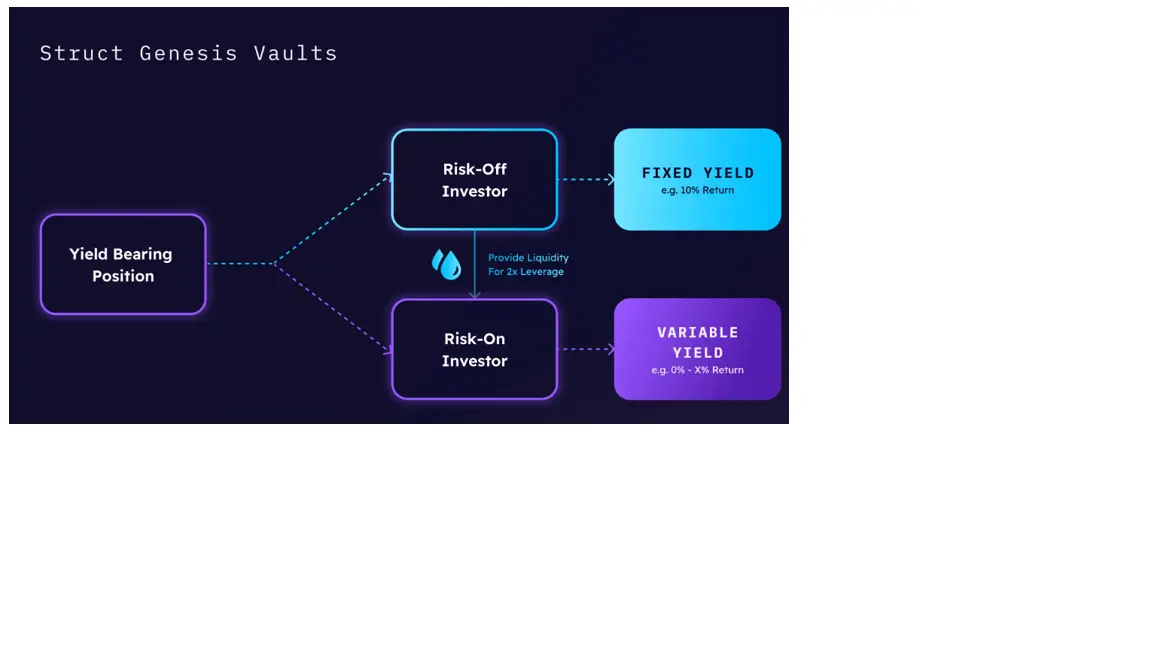
Interest Rate Products, which are also referred to as Struct Genesis Vaults, will make it possible for risk-averse investors looking for fixed yield to provide liquidity for risk-seeking investors who pursue higher variable yields. The interesting part of Struct Finance is that it not only allows investors to use, but also to build their own Interest Rate Products upon yield-bearing positions. At the moment of writing, there are two kinds of yield-bearing assets on top of which users can build their Products. These are:
- yield-bearing tokens, e.g., GLP.
- liquidity pools on TraderJoe, the largest decentralized exchange on Avalanche. By the way, Struct Finance is also built on the Avalanche blockchain.
Though users can choose on top of which assets they can offer Interest Rate Products, there are some criteria to screen the best underlying assets:
- Sustainable yield. Yield of assets should come from protocol revenue rather than token emissions.
- Security and ease of integration. In order to be included in Struct Finance, the assets should be easily integrated into the protocol and be fully audited.
- Multi-chain. The protocol will be more convenient to use if it is already present on multiple chains.
How does tranching work in Struct Finance?
Each Interest Rate Product on the protocol consists of two tranches designed for investors with different levels of risk appetite. Users looking for the stable yield with low risk can choose a fixed tranche. A variable tranche is for investors seeking higher yields.
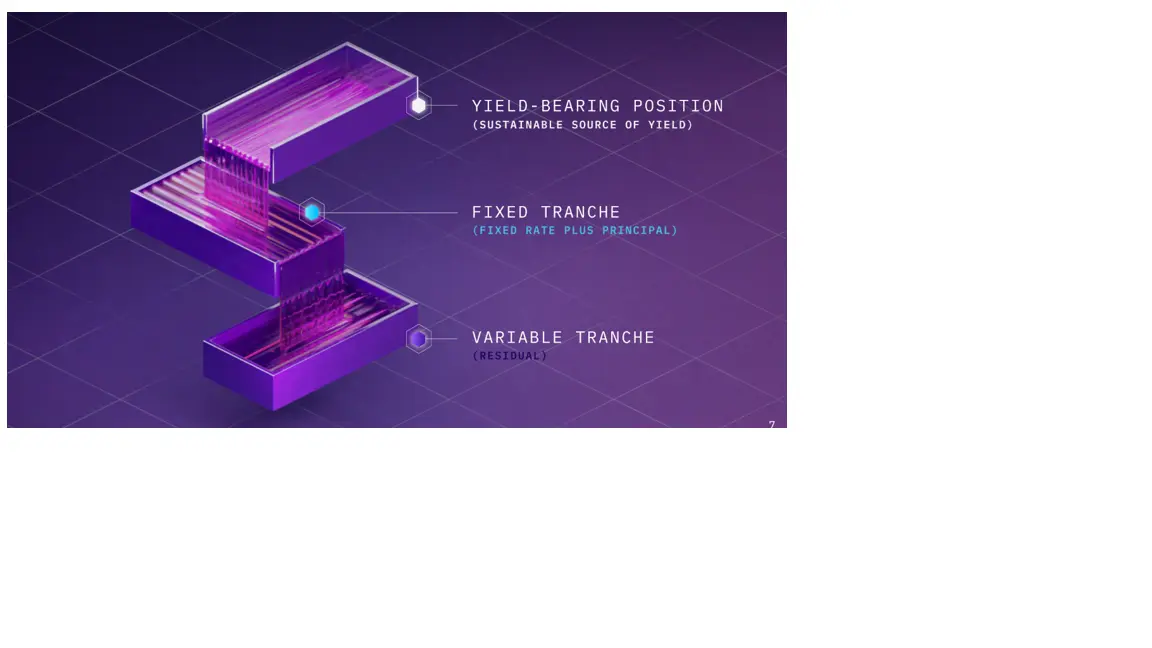
As the image from the whitepaper makes it clear, returns from the underlying asset are distributed to the fixed tranches first. Fixed tranches are like senior tranches in structured assets in traditional finance. Recall from the discussion above that the cash flow from the underlying asset goes to senior tranches first to ensure consistent returns. If there is residual return left, it will be distributed to the variable tranche where the leverage will be applied to enhance returns. As its name suggests, the yield of the variable tranche is not stable – it may of more, less or no yield in contrast to the fixed tranche.
When a user provides liquidity into a vault, he gets Deposit tokens which are called SPf and SPv tokens for fixed and variable tranches respectively. A user depositing to the fixed tranche of an Interest Rate Product is rewarded with SPf tokens. The tokens are burnt then the investment is redeemed from the vault. For example, if you choose to invest into a fixed tranche of a Struct vault accruing yield from USDC swap fees in a TraderJoe V2 Liquidity Pool, spfUSDC will be minted and distributed to your account. Tokens received for depositing into a variable tranche are referred to as SPv tokens. For example, if you deposit into a variable tranche of a Struct vault accruing yield from the GLP token, you’ll be rewarded with spvGLP tokens which represent your share in that tranche.
Note that the tokens that can be accepted as collateral can differ from vault to vault. It is required that the deposit collateral be related to the underlying asset. Users can only deposit one token as collateral per tranche.






