
It's been two years since I started learning sign language and volunteered to teach deaf and mute people. I've learned so much since then. Communicating with deaf people taught me not only how to speak using my hands, I learned how they think, how they convey ideas and basically I had an in-depth understanding of their 'culture' as well.
Normal people learns a language through listening to people around them, along with this listening and speaking enables us to communicate and convey our ideas clearly. But this is impossible for the deaf and mute. So they developed a unique way of communicating by using their hands to 'talk'.
Learning sign language has been a challenge for me at first because as people who can perfectly hear, we we're taught with correct grammar and the other language rules. A sentence that seems to have the right grammar for us may not be understandable for them. I struggled a lot with changing the order of words and verbs so that I can convey my thoughts clearly. Complex sentences doesn't work for them. The simpler the sentence, the clearer it is.
Example instead of saying "Hello. How are you feeling today?" It is easier to understand if you say "Hello" "You now how". With that they'll probably answer "Fine" or "Good".
Deaf people are very frank or direct to the point. They usually uses the 'Love Sign' which is like this 🤟 to say that they like someone as a person. If you say something offending they'll instantly tell you you're 'bad'. Most of them are also very sensitive. They easily get hurt so constant socializing with them helped me to be more vigilant with what I'm saying or signing, rather. Another way to clearly express our thoughts for them to understand is through our facial expression. I remember that two years ago, I'm always wearing a poker face. But a student taught me to make the most out of my facial expressions and emotions. The uglier your face gets, the more they can understand you easily.
Most people have the wrong perception that deaf are dummies and they don't know anything where in fact the only disability they have is being unable to hear. Most of the deaf people I've met are very talented when it comes to arts and their ability to focus in doing a task is just amazing and they are very industrious too.
Not all of us gets in contact with a deaf and mute person everyday. You may want to learn the basic so you can talk to them using your hands if ever you meet one - learn the alphabets. If you don't know how to sign a specific word just spell it to them.
If ever you meet a deaf and mute in the future you may want to initiate a conversation. A deaf person appreciates it a lot when we try our best to communicate with them.
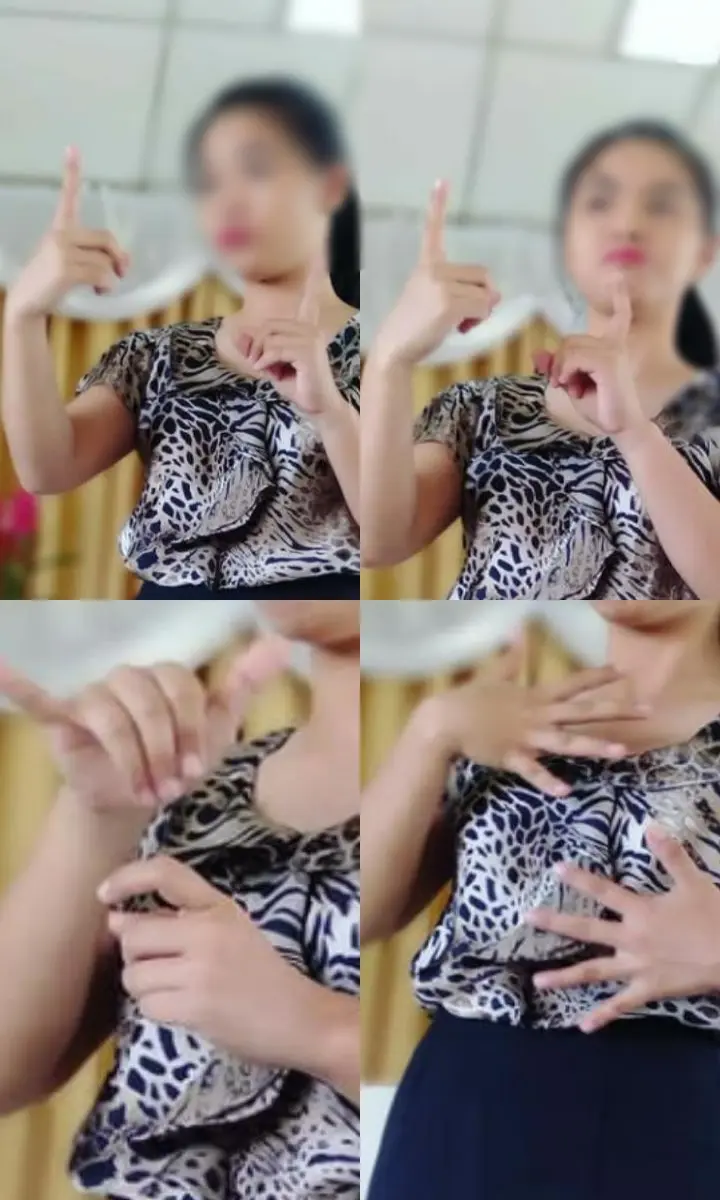
Me interpreting in Sign Language back in 2019.
The Art of Teaching Deaf and Mute
I'm sure some people will never consider this as an art because we're used to seeing awesome drawings made by talented artist. And I must say there are a handful of skilled and talented artist here in read cash that this art I'm going to share with you today is nothing compared to theirs.
Nevertheless, I still want to share with you the art of teaching deaf and mute.
Teaching deaf and mute is never easy as it requires tons of patience and creativity. In this article, I'm going to show you some of the drawings and other learning materials I made to teach my deaf students.
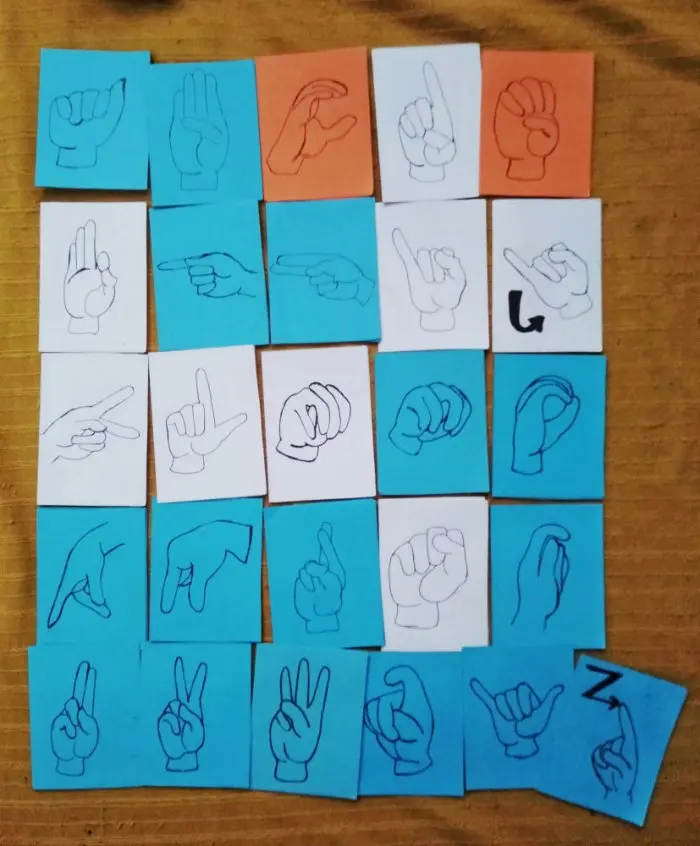
Mini flash cards I've made to help a 6 year old kid learn the alphabets

Manually made and drew these flashcards and finished them after a few days.
Most of the deaf and mute people I've encountered are not 'skilled' when it comes to sign language which is ironic because signing is their 'mother tongue'. Actually being 'skilled' means using the signs taught in schools for the deaf while being 'unskilled' means they are using natural signs that they came up with so that they can communicate with other people. So when teaching an unskilled deaf, the first thing to teach them is the alphabets. That's why I made these small flashcards to teach them the ABC's and when you flip this flashcards you'll see how an alphabet is written. My goal in making these is to test whether they have memorized the alphabet signs.

This is the name of one of my deaf students. After memorizing the Alphabets, we teach them how to write their names and how to spell it. Aside from writing their names, I also draw the corresponding sign language alphabet above each letter for my student to easily get familiar with it. Other teachers don't do it because it's so hard to draw those letters, but I do an extra mile for them.
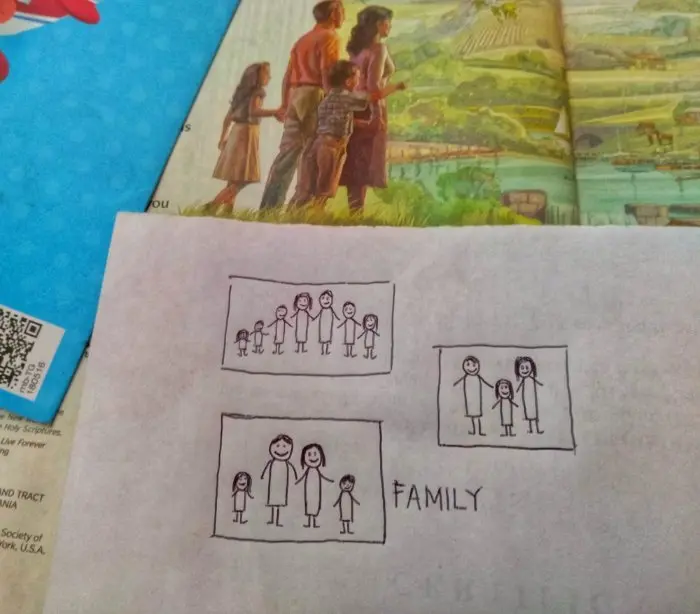
I drew different sets of families with different numbers of children to teach them the concept of a family.
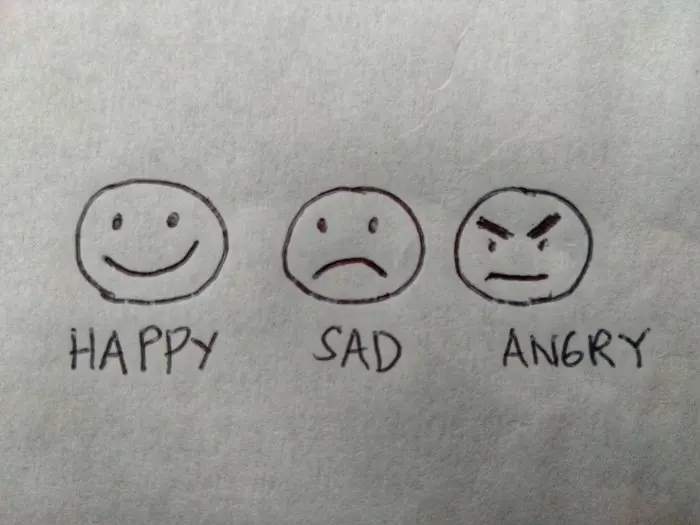
Teaching them how to sign the basic emotions.
Actually, we can also use more complex drawings or arts but it's not very effective to teach them. One time I'm with an animator friend who is very talented in drawing and I told him to draw the concepts for me, he drew it beautifully but the deaf student only laughed at his drawing 😅 So we decided to stick with the basic drawings instead.
I hope this article gave you an overview of how we teach the deaf and mute. And also gained a new perspective of arts.






