
I have long thought that there has to be an intrinsic relationship between a crypto token and its real world usage. Call me simple if you like but as far as I am concerned how useful something is determines its value. A car that cannot be repaired can only be considered to be worth scrap value, but a car that has a broken mirror is a different matter, because it is still intrinsically usable and especially after a small repair. Not a perfect analogy but you get my point.
For this discussion I am going to pretty much ignore MemeCoins, because as far as I am concerned with that lack of real world usage they are ultimately flawed projects only valuable if a whale decides to pump and dump, most famously exemplified by Elon Musk and his relationship with Doge.
Other than that there is clearly is a relationship between a crypto token’s real‑world usage and its long‑term success — but it’s not a simple, direct correlation, and it varies by category of token. Price movements often correlate more strongly with overall market sentiment than with actual utility, yet real usage becomes increasingly important as a project matures.
So, how does this work in reality?
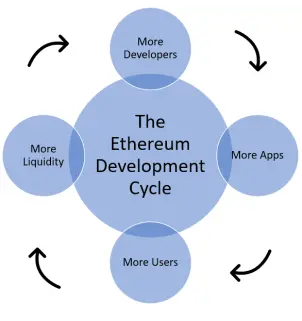
Real utility tends to influence a token through three main channels. Firstly and most importantly there actually has to be a demand from actual usage for example when a token is required to pay for transactions, staking, governance, or services, real economic activity this creates a baseline demand. This is why networks like Ethereum and Solana maintain strong market positions. Tokens with real usage are less dependent on hype cycles and tend to recover better after market downturns and this naturally means they are more robust. Furthermore, as I demonstrated with a graphic I recently produced concerning Ethereum (forgive my laziness in not producing a new image a key factor that lends itself), when there is real usage an ever strengthening feedback loop is produced which adds to the token’s value over time.
However, these fundamentals often take a back seat in the short term, where speculation dominates and let's be honest that is what most of us are banking on (sorry for poor choice of phrase). We want volatility because it creates great profitability. This all too often means that price is driven more by market cycles, narratives, and investor sentiment rather than real adoption. Investors in MemeCoins are particularly adept at spotting opportunity when speculation outweighs fundamentals and is the key reason why meme coins can outperform utility tokens in the short term despite having no real-world function.
I know I said I wouldn't mention them, but within context I needed to briefly refer to them.
Even though usage matters, crypto markets often behave irrationally and gaps are difficult to exploit because many cryptocurrencies move together regardless of their individual fundamentals. Correlation matrices show strong positive relationships between major coins such as BitCoin, Ethereum and XRP, among others, meaning they often rise and fall as a group rather than based on utility.
Where there is a correlation between value and real world usage it usually affects Layer‑1 blockchains such as Ethereum and Solana. Put simply, the more transactions and applications adopted the more this generally supports long-term price strength. We must also take into consideration the role of protocol revenue, total value locked (TVL), and user activity, all of which can directly influence token demand. Finally, and probably most obviously, when a real world asset's value is tied to off‑chain assets (in other words they represent real things), usage and adoption matter more. These key factors help to creates measurable economic pressure that supports the token’s valuation.
So to summarise while in the short-term speculation dominates what determines the lasting long-term value of an asset is its real usage which effectively becomes the anchor that will become the decisive factor as to whether a token survives or fades. And to drive my point home I remind you that while a token with no real-world use can pump, it very rarely sustains any lasting value, but a token with strong usage may lag during hype cycles but tends to outperform over multi‑year periods.
And so I will finish where I started.
how useful something is determines its value
As always stay safe and well my friends.






