
Wikipedia is now the go to encyclopedia for the 21st century and it is far more convenient and space saving than all of those volumes, such as the old Encyclopedia Britannica used to be (I think it might still be going). I became a contributor about two years ago and one one hand it is the easiest thing in the world and on the other not so much.
The easy part is signing up to become an editor / contributor. There are no checks nor failsafes. In fact Publish0x requires a higher standard than Wikipedia to become a writer (compliments to P0x) and this is one of its weaknesses. Anybody can sign up and anybody can contribute. This creates a strong impression that it is more populist than it is factual.
The British comedian Russell Howard, during an interview, once shared an untruth about his page on Wikipedia and despite several attempts to correct it, the page kept reverting back to the original inaccurate content. This is the sign of a tenacious editor who just wouldn't let go of his supposed "fact" despite the fact that Russell Howard himself had brought it up.
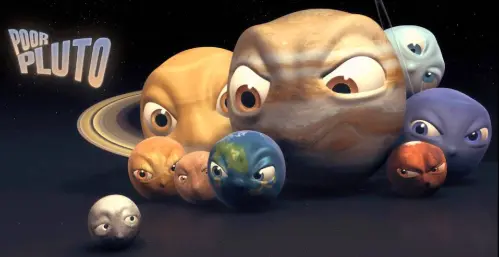
So it does beg the question as to how accurate Wikipedia is and the answer is surprisingly so. I can certainly cite examples of historical encyclopedias being inaccurate. For example an earlier edition of Encyclopedia Britannica was just simply racist as it talked about the "negro mind dulling with puberty" or less controversially, but equally wrongly, when I was a kid and had a traditional encyclopedia Pluto was still very much a regular planet, which has since after a few redefinitions has now become a dwarf planet.
And this is the reason why it is difficult, because there is actually a robust monitoring mechanism in place. I am not sure but I think this remains in place until you are a proven contributor with a track record of accuracy alongside good academic practices which usually comes down to the correct use of citations. The "supervisors" (I don't think they have a formal title) are trusted long term Wikipedia editors and my experience has shown them to be polite, diligent and approachable. They are however the final arbiters of power when it comes to what can or cannot appear on Wikipedia. So getting in the door to become a contributor is actually quite easy, but after that there are safeguards in place.
Through my experience, I have found it very easy to contribute towards existing content, but to create an original and new page is another matter.
Let me illustrate.
One of my favourite authors since I was an early teen is the fantasy author David Eddings, most famous for the Belgariad / Mallorean series of books as well as The Elenium and Tamuli series. He wrote other stuff, but his last epic, The Dreamers, is best forgotten. The Belgariad follows the usual fantasy trope of a quest against a backdrop of good against evil. One thread of the story culminates in the Battle of Thull Mardu, which I thought deserved a page of its own and thus I started writing it. However, it was soon shut down by an editor because it needed to belong on a page that already existed but then it was further rejected for a reason I cannot remember. On the other hand, concerning existing content, I was able to add significantly to the Belgariad sub-sections (each book in turn) by adding more to the story and correcting other details as well as further embellishing the section on criticisms of Eddings' style.
I also tried to create a page based on the shark attack off Hurghada a couple of years ago in which a Russian man was devoured by a tiger shark. The significance of this attack is that it was almost entirely caught on film and went viral. Some of you might have seen it. The attack also raised questions about over-fishing and so therefore it overlapped with environmental concerns. An editor latched on to my content and rejected that it was deserving of a full page, rather a heavily truncated version (two or three sentences) were added to an existing page about sharks predating on humans.
So all in all my experience has shown me that creating new content proves to be quite difficult, but to edit and add to existing content is generally quite straightforward.
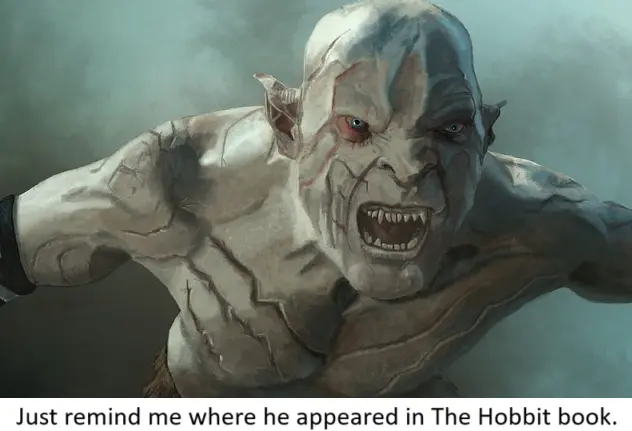
In terms of trusting Wikipedia as we always like to say in Crypto DYOR, but I think we can fairly say that it is good in providing a general overview, but be sure to check the minute of what exactly it is saying. Watch Lord of the Rings or the Hobbit, to grasp the story if you haven't read the books but always go back to the original source and especially concerning the White Orc and the Battle of the Five Armies. Likewise, unless blatantly wrong - like U671 - historical novels can often provide a baseline into understanding a historical event, but don't take it as complete fact. These films exist ultimately to entertain and often feature a lot of artistic licence.
Finally one bugbear I have with Wikipedia, but it is not their fault, is how academia frowns upon its usage, but then the same academics often cite it as a source themselves.
Remember to always look at things with a questioning mind and you shouldn't go too far wrong.
As always stay safe and well my friends.






