The potential of blockchain to help stop hunger and death around the world is huge. It will not only help with food security but also make it possible for every person on earth to have a bank account and access to a bank.
Here are some statistics on how blockchain can reduce global hunger and death.
1. Blockchain can help reduce food waste by tracking food supply chains and cutting back on overproduction. By tracking food supply chains, blockchain can help identify areas where food is being wasted and help to cut back on overproduction. This can help to reduce the amount of food that is wasted each year and help to ensure that food is being produced more efficiently.
2. Tracking medical products during their production process and distribution blockchain can provide a secure and tamper-proof record of when and where each product was made, and by whom. This information can be used to track products throughout the supply chain, ensuring that they are not counterfeit or otherwise tampered with. Additionally, blockchain can be used to track patient data, such as which medical products they have used and when. This information can be used to improve patient care and safety by ensuring that patients are only using products that are safe and effective for them.
3. Blockchain can help provide transparency in food delivery by recording all transactions on the ledger, which will make it easier to track where any problems may arise and solve them before they happen. However, some experts have raised concerns about the potential for blockchain to be used to manipulate data or launder money.
4. Tracking pharmaceuticals during their production process and distribution tracking each step of the process on the blockchain, it would be possible to ensure that each drug is properly tracked and accounted for. This would help to prevent counterfeit drugs from entering the supply chain, and would also help to ensure that patients receive the proper medication.
5. By creating a digital ID on the blockchain, refugees and displaced persons would be able to prove their identity and access the services that they need. This would help them to rebuild their lives and integrate into their new communities. This is because each transaction is recorded on a block, and each block is chained to the previous block. This means that it would be very difficult for anyone to go back and change the record of any particular transaction.
6. Blockchain could reduce the risk of fraud by allowing companies like Walmart or Amazon By using a distributed ledger, companies can ensure that all data is accurate and up to date, which can help prevent fraudsters from taking advantage of gaps in the system. Additionally, smart contracts can automate many processes and help to enforce rules and regulations, further reducing the opportunity for fraud.
7. Tracking humanitarian aid during its journey from donor to recipient blockchain can provide a transparent and immutable record of all transactions related to the aid, which can help ensure that the aid reaches its intended destination. Additionally, blockchain can help track the location of the aid in real time, which can be helpful in coordinating its delivery. Finally, blockchain can also help verify the identity of both the donor and the recipient, which can help prevent fraud and ensure that the aid goes to those who need it the most.
8. Blockchain could also be used to create a global ID system that would allow people without legal status to own property and have access to basic services such as banking. This would provide a way for people to prove their identity and access essential services, without needing to go through traditional legal channels. This could have a huge impact on people who are living in poverty or who are refugees, as it would give them a way to start rebuilding their lives.
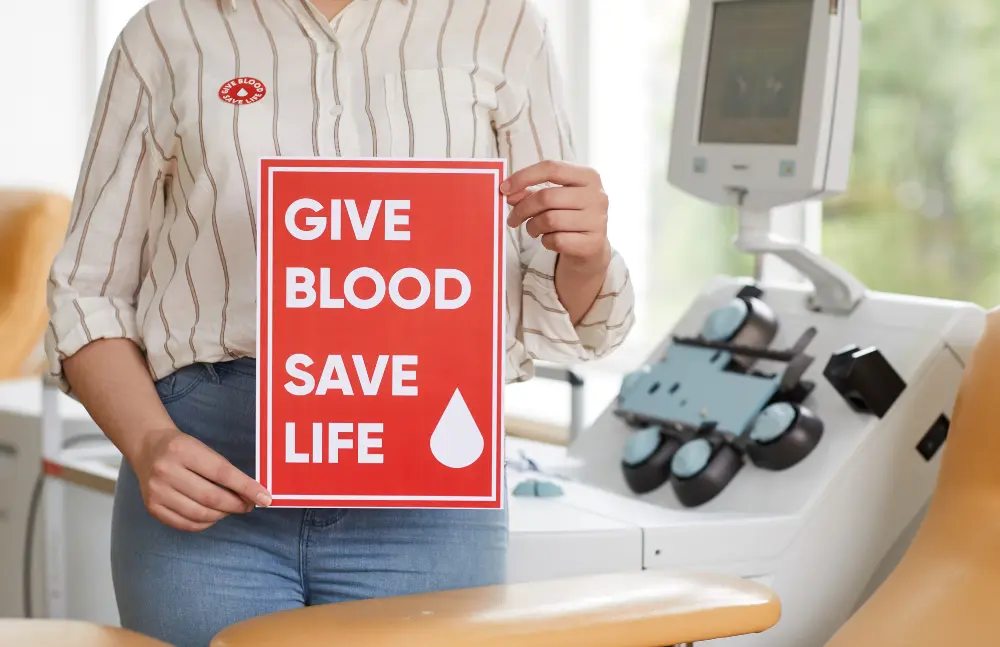
9. Tracking blood donations during their production process and distribution blockchain can provide a secure and transparent way to track blood donations as they move through the production and distribution process. This would allow all stakeholders to see where each donation is at any given time and would help to ensure that donations are not lost or stolen. Additionally, blockchain can help to verify the identity of donors and recipients and to track the medical history of both. This would help to ensure that blood donations are safe and that they are going to the intended recipients. Finally, blockchain can help to streamline the process of blood donation and distribution, and to make it more efficient. This would ultimately help to save lives by ensuring that blood is available when and where it is needed.
I strongly believe that blockchain can play a role in helping to stop hunger and death around the world. The transparency and immutability of blockchain can help to ensure that food and other resources are distributed fairly and efficiently and that corruption is less likely to occur. Additionally, the use of smart contracts can help to automate the distribution of resources, which can further help to ensure that everyone has access to the resources they need
Do you have any ideas about how blockchain technology can prevent hunger and death? If so, let's discuss it





