
A faster Internet is coming - HTTP/3
Brief recap, the Internet was formed by DARPA not the former '90's VP (yep shocked right?). Digging deeper the TCIP/IP stack was built in 1972 for the US Department of Defense’s ARPAnet, a precursor to the Internet. It breaks down information into small packets and sends it across the Internet. Over the years the TCP/IP stacks has been improved upon for stability, speed and security.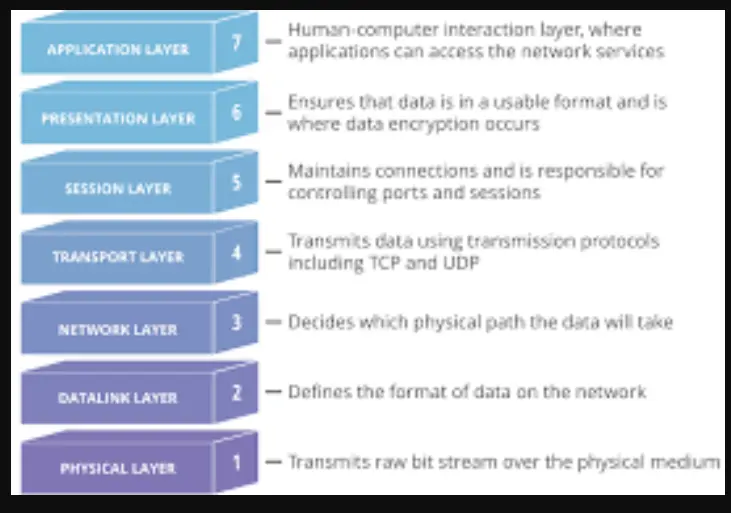
This blog will dig more into speed improvements to web components that are coming quickly.
HTTP/1.1 - is a header field upgrade and is used w/ TLS security, made the web faster. To net it out still used for general purpose web activities
HTTP/2.0 - is faster than 1.0 & 1.1. a client starts w/ HTTP1.1 connection then requests HTTP2 (aka h2c) connection, - net it out still used for general purpose web activities. Was built with design limitations that HTTP/3 addresses
Which brings us to HTTP/3 which was built with speed in mind
Here is a list of five things that we think everyone who utilizes the web needs to know about HTTP/3.
- HTTP/3 is driven by the need for speed
- HTTP/3 evolved from QUIC
- HTTP/3 uses UDP
- HTTP/3 addresses the head-of-line blocking problem
- HTTP/3 injects QUIC into the OSI and TCP/IP Models (at the networking layer)
HTTP/3 evolved from QUIC
QUIC is an acronym for Quick UDP Internet Connections. QUIC was created at Google by Jim Roskind, who released the first version of the design specification in 2012. In 2018 QUIC was combined with the HTTP working group of the Internet Engineering Task Force (IETF) to create the HTTP/3 specification. The goal is to have HTTP/3 become a standard for the Internet on the order of HTTP/1.1 or HTTP/2.
Whereas HTTP/1.1 and HTTP/2 use the Transmission Control Protocol (TCP) as their data transport protocol, QUIC was designed from the beginning to work with User Datagram Protocol (UDP). Using UDP incurs some tradeoffs, which you'll read about below, but one of the main benefits that UDP offers is that it's a faster, more efficient way to exchange data than its TCP counterpart. Below tables shows the OSI layers interactions w/ HTTP/3

Internet adoption of HTTP/3? - using this site you can see that HTTP/3 adoption is only at 19% https://w3techs.com/technologies/details/ce-http3
Open questions - not sure how Peer-to-peer (P2P) will be impacted by HTTP/3. More info as I uncover it.
Summary - The Internet has an insatiable appetite for speed, particularly as the demand for video, continuous event messaging, and other types of streaming data proliferate to a broader set of applications. Are you inspired to learn more about the future technology coming to the Internet?






