Humans don't have fur like many of other animals , but our bodies still have the ability to adapt to cold weather. However, when pushed, this mechanism can fail leading to an extreme breakdown.
So, what actually happens to your body and brain when you freeze to death?...
Hypothermia occurs when the core body temperature drops below 37°C. So, in the event that the body exposed to extreme cold,,within minutes, signals are sent from the skin to the hypothalamus producing what is known as the Thermoeffector response.
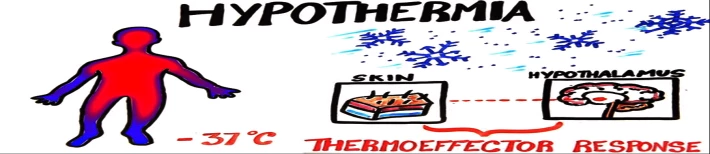
First, the blood vessels in our skin narrow allowing the body to maintain its core temperature by reducing the blood flow on its surface, known as "Vasoconstriction". Additionaly, brown adipose tissue, located throughout the body, also activates, using high levels of "Glucose" and "Lipids" to produce heat via a process called "Nonshivering Thermogenesis".
But if all those fails, our body undergoes Shivering Thermogenesis as a last ditch effort. By constantly contracting our skeletal muscles,our body induces shivering in an attempt to produce enough heat to prevent hypothermia. However, if you remain exposed to the cold, within 30 minutes you could get Frostbite, which is when your skin and other tissues literally begin to freeze.


Developing ice crystals endanger your cells by damaging their cell membranes causing intracellular dehydration due the water leaking out from them.
The cells then begin to die and the ice crystals continue to expand, damaging neighboring cells. In response, the body tries to prevent frostbite in our skin through Vasodilation, which allows increased bloodflow to warm the skin cells.
However, this one's counter to the thermoeffector response which again, works to maintain our core temperature through vasoconstriction. As result, our body goes through cycles of vasodilation and vasoconstriction, thawing and freezing our skin over and over again and causing even more damage.

But our skin isn't the only spot that will freeze under extreme cold temperatures. If you're in extreme cold, windy weather, your corneas can freeze, too. The protective layer of tears covering the cornea can dry making your eyes sensitive to light and causing eyelid spasms. Luckily, your corneas can thaw if you get yourself out of the cold quickly But if frozen long enough, you can cause permanent damage.

Several factors including body composition, clothing, temperature, and the environment determine how quickly your core body temperature drops. For example, heat is lost much more quickly in water than in air.
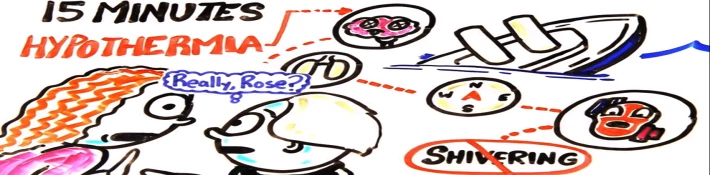
Those who were submerged in the icy waters after the sinking of the " Titanic "may have lasted only fifteen minutes. This is because during
the advance state of hypothermia your organs begin to fail.
your breathing rate slows, you lose coordination, your heart rate begins to slow down, and your body even stop shivering.
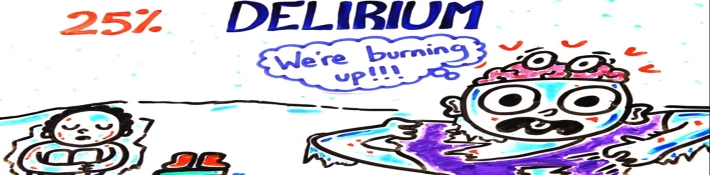
One of the last symptoms of advance state hypothermia is Delirium. A survey of cases in which death was caused by hypothermia found that in 25% of the cases the victims had undressed before they died. In one case, victims had neatly folded their clothes beside them and froze to death in the snow. Why would this happeened? One theory is that the brain damage that result from the extreme cold causes people to think that they're burning up, so they strip naked and cool down.
Another theory suggest that the muscle that caused cutaneous vasoconstriction in our blood vessels get exhausted and cause blood from our core to rush to the surface of our body resulting in a hot flash.
This is all pretty bleak, but if you find someone who appears to be frozen to death, you may want to warm him up. An actly-named paper "No One is Dead Until Warm & Dead" chronicles a patient with hypothermia caused by drowning with no sign of life. This patient was successfully resuscitated with a three hour bypass surgery used to warm his body.
Though part of his body require amputation, in eleven weeks he succesfully recovered with normal neurological function. Just remember, when the temperature starts to drop, do everything you can to stay warm because your body can only do so much to fight the extreme cold...

follow me on steemit
Thank you for stopping by my post...
REFERENCES/FURTHER READING:
4/5/2019
regards..