Hey friends! In the crypto world, wallet security isn't just a recommendation — it's a matter of survival for your funds. Every year, thousands of people lose their bitcoins to phishing, malware, or their own carelessness. Today, we'll look at an interesting piece of Bitcoin history — the Satoshi puzzles (also known as Bitcoin Puzzles) — and use it to explain how to properly protect your wallet.
What are the Satoshi Puzzles?
This is a legendary crypto brain-teaser created back in 2015 by an anonymous user. In a single transaction, nearly 1000 BTC were distributed across 160 addresses. Each “puzzle” #N is an address whose private key lies within a specific bit range (from 2^(N-1) to 2^N − 1).
The idea is simple: whoever first brute-forces the private key gets to take the coins. The difficulty grows exponentially. Puzzles #1–65 were solved years ago. As of today (2026), more than 80 puzzles have been solved, but the rest (especially #71 and higher) are still waiting. The remaining prize pool is hundreds of BTC!
This isn't a puzzle created by Satoshi Nakamoto himself, but the name “Satoshi puzzles” stuck in the community. The main point is that it's living proof of Bitcoin's cryptographic strength. Even a 66-bit key (puzzle #66) required years of computation on powerful GPU farms. A 160-bit one is pure science fiction for current hardware.
Why does this matter for protecting your wallet?
The puzzles demonstrate two things at once:
- A strong, truly random 256-bit private key is impossible to crack even in billions of years.
- Weak keys (low entropy, brainwallets, short passwords, patterns like “123456”) get cracked in days or even hours — that's exactly how the early puzzles were solved.
Many people still use weak protection and become victims of “puzzle hackers” who scan for vulnerable addresses.
How to actually protect yourself from hacks: practical advice
Here's what really works (no fluff):
- Hardware wallet (Ledger, Trezor, Coldcard) — the best option. Private keys never touch the internet.
- Seed phrase — 12–24 words. Write it down only on paper or a metal plate (no photos on your phone, no cloud storage!). Keep copies in several secure locations.
- Never enter your seed anywhere — not on websites, not in Telegram bots, not “to verify”.
- Avoid phishing: always double-check the URL, use bookmarks, enable 2FA (preferably with a hardware key).
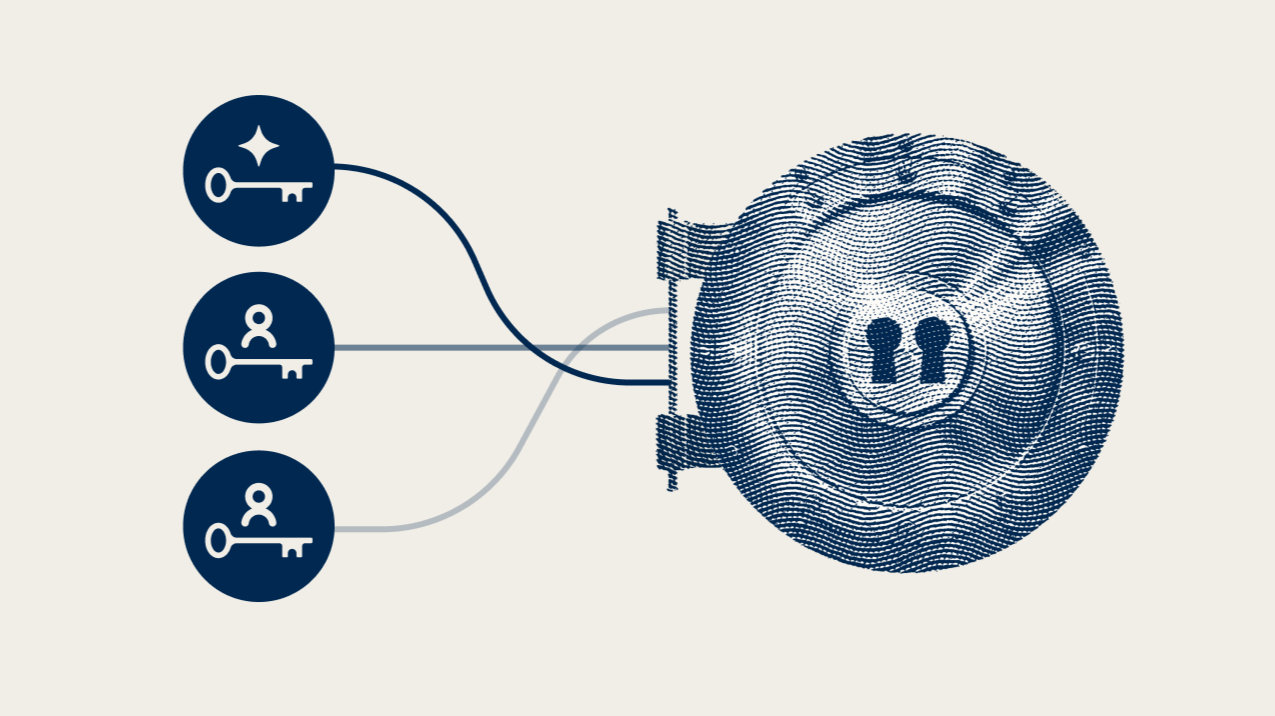
- Multisig wallet (2-of-3 or 3-of-5) — even if one key is compromised, your funds stay safe.
- Do not use brainwallets or weak passwords. The Satoshi puzzles are a clear lesson why you shouldn't.
- Keep your software updated, use antivirus, and don't click suspicious links.
- Always verify addresses before sending (check the first and last characters + the amount).
- Keep small amounts on hot wallets (e.g. Exodus or Trust Wallet), large amounts only in cold storage.
If you're a beginner — start with a hardware wallet + multisig. It takes about 30 minutes but can save years of stress.
Important: this is not financial advice. Everyone is responsible for their own funds. The Satoshi puzzles are a perfect example of how Bitcoin protects the careful and “punishes” the negligent.
Protect your wallets properly — and no hacker will ever reach you. If you have questions — drop them in the comments. Stay safe and HODL your BTC! 🚀.
I'll be grateful for a discussion of this topic.
As of March 2026 (based on the latest available trackers like privatekeyfinder.io, btcpuzzle.info, secretscan.org, and privatekeys.pw):
- Out of the original 160 puzzles (~1000 BTC total distributed in 2015),
- ~82 puzzles have been solved so far,
- The highest solved ones are in the range up to #69 (solved in April 2025 with ~6.9 BTC) or possibly a couple more by early 2026,
- Puzzles #70+ (especially #71 and higher) remain unsolved,
- Remaining unclaimed prize: still around 916–917 BTC (with each unsolved puzzle #N now holding roughly N/10 BTC, e.g., #71 ≈ 7.1 BTC).
The exponential difficulty is still the key takeaway — even #66 (solved in 2024 after massive GPU/ASIC effort) took years and was vulnerable to theft via mempool sniping (someone else front-ran the transaction). Higher ones (#80+) are computationally infeasible today.
This reinforces the article's main point perfectly: use strong randomness + hardware wallets + multisig, never reuse weak patterns or expose seeds/keys.
What specifically would you like to discuss?
- Current status of a particular puzzle (#71, #80, etc.)?
- How people are brute-forcing them in 2026 (tools, pools, risks)?
- Best multisig setups right now?
- Comparison to real-world hacks (e.g., phishing vs. weak entropy)?
- Or anything else crypto-security related?
Looking forward to your thoughts! 🚀