Publication in Russian on the Zen blog
https://dzen.ru/a/aZBg9RhzcDeFtXMP
England and British culture: not just tea drinking.
An attempt to understand England better and delve deeper into history and culture.
I was inspired to share my observations of the British and what traits in character and behavior are noticeably different between people from the post-Soviet space and the British, to tell something interesting about English history and culture.
Of course, it should be noted that everyone is different, but as Montesquieu bequeathed: geography and socio-political structure significantly influence our thinking and behavior.
We will proceed from this.
1. Russians are more direct.
Perhaps one of the most distinctive qualities of Russians.
The British rarely express their point of view openly.
Vague formulations, hints and semitones are more accepted in communication here than direct expression of one's opinion.
2. People in England have a class mentality.
This approach has both advantages and limitations.
Based on the level of their family, the British follow values in accordance with their socio-economic class.
On the plus side, a person knows who he is, what standard of living he needs, he is "grounded" and he does not need to try to jump over his head and prove something to someone.
On the downside, such people are less risk—averse and may miss opportunities to improve their lives.
So, the average Englishman is afraid of Oxford and Cambridge and does not even look towards these universities, because he is convinced that admission here is available only to privileged children from private schools. Of course, this is not entirely true.
One gets the impression that admission to Oxbridge is a much more grandiose event for a Briton than it is for a foreigner.
3. The British calmly criticize the government — and they love to do it.
It was an unexpected discovery for me.
When I first moved to England 7 years ago, I sincerely thought that the media and politics here were a kind of looking glass of what I observed in Russia.
I expected the local news to create an image of an external enemy, where other countries would be blamed for all England's troubles and show how Russia was "rotting".
But it turned out to be far from reality.
There is a completely different political culture here.
Therefore, after discussing the weather, complaining about one's own government and politicians is the number two topic for small talk.
Criticism of their country and its political course is not considered by the British to be a sign of a lack of patriotism.
On the contrary, it is a sign of love and concern for the place where you live: you care whether life in your country is getting worse or better; you are concerned about its future, the future of your children, your quality of life, etc.
After all, who better than a citizen to know the life of his country "from the inside" and wish it prosperity and improvement.
The critical analysis also extends to British culture and history, as well as historical figures.
So, one of the interview questions for admission to the Master's degree in English literature sounded like this:
"Was Shakespeare a Tudor propagandist?"
4. English-speaking countries are a large family of former colonies of the British Empire, where everyone has stereotypes and jokes about each other, but at the same time mutual sympathy and interest.
Therefore, British family ties are very intertwined, and almost every local has relatives living in the commonwealth.
It's so unusual to have family members living in Africa, Australia, or Canada, but still maintaining a British mentality and a sense of "family."
Here are some jokes about this:
"The Australians are the British, left in the sun for a hundred years"
"Britain doesn't have Independence Day because it was the reason why other countries celebrate independence days."
5. Oxford and Cambridge are the "showcases" of liberalism
For example, Oxford has been ranked first in the world in the Times Higher Education World University Rankings for 10 years, including 2026.
Oxford and Cambridge are not at enmity with each other, although they pretend that they are rivals.
Universities compete for paying students from all over the world with universities in the United States.
Almost every second teacher at Oxbridge has a bachelor's degree from Oxford and a postgraduate degree from Cambridge, or vice versa.
Why choose only one cool university when you can collect the whole collection?
6. England is a very secular country, which makes it similar to the Nordic countries: the Scandinavians and the Netherlands.
There is mutual sympathy and love between England and the Scandinavian countries.
England is similar in values to Sweden, but it has a large socio-economic stratification and great political influence in the world.
The absence of religious pressure in England is felt everywhere: in upbringing, education, science, culture, literature, politics, gender socialization.
Such a cold attitude towards religious dogmas and traditions is connected with the separation of the Anglican Church from the Pope.
You can call it "Brexit- 1".
The most religious people are Puritans, who left England and immigrated to the United States.
The 2015 film "The Witch" was about Puritans in New England.
My own interpretation:
A calm attitude towards Christianity has given a huge impetus to the development of science, art and all kinds of forms of creativity and freedom, as well as huge opportunities for the development of biology and a naturalistic approach to the study of human nature.
For example, Mary Shelley's Frankenstein, British Gothic literature, and Dawkins' books have something in common: dissatisfaction with the theological explanation of what man is and what his place in the world is.
7. The United Kingdom is a paradise of subcultures and creative expression.
I think this is a very interesting moment for understanding the culture of the country.
To understand England, you need to understand its subcultures.
Since the pressure of religion, with the exception of Ireland, was not so great here, it was Great Britain that became the birthplace of all kinds of subcultures: punks, goths, steampunk, dark academy and many others.
Subculture in England is not just a beautiful wrapper that manifests itself in appearance and behavior, it is necessarily preceded by a massive layer of philosophical, cultural, and scientific ideas.
The founders of fashion trends drew inspiration from Gothic literature, philosophy, mythology, and paganism.
8. If there is an "American dream", then the "British dream" is a person's desire to express himself as vividly as possible in creativity and self-expression.
It is considered respectable in England to devote oneself to art, science, literature, fashion,
read a lot of books, understand music, and be able to joke.
Many students form musical groups, join political parties, and even start their own during their studies.
Children are treated here as little adults and try to develop in them a serious attitude to life and responsibility.
So, I once watched a young gentleman returning from boarding school by train home.
The child was still very young (10-12 years old), but he already looked very independent and solid, behaved as if he were a boss solving complex problems and conducting serious negotiations.
The appearance was appropriate:
suit, laptop, phone, manners.
9. It seems that Russia and England are not alike in any way.
I thought for a long time about finding intersections between the two countries, but I could not find anything in common except the fact that Nicholas II was a cousin of the British King George V: they had common ancestors through the Danish kings.
Yes, there were political alliances between Britain and Russia based on the logic of "the enemy of my enemy is my friend," but otherwise the countries contradict each other in everything.
Aristocracy and Old Money vs. Communism and Socialism, religiosity vs. secularism, self-expression vs. tradition, rationalism vs. irrationalism, etc.
It never ceases to amaze me.

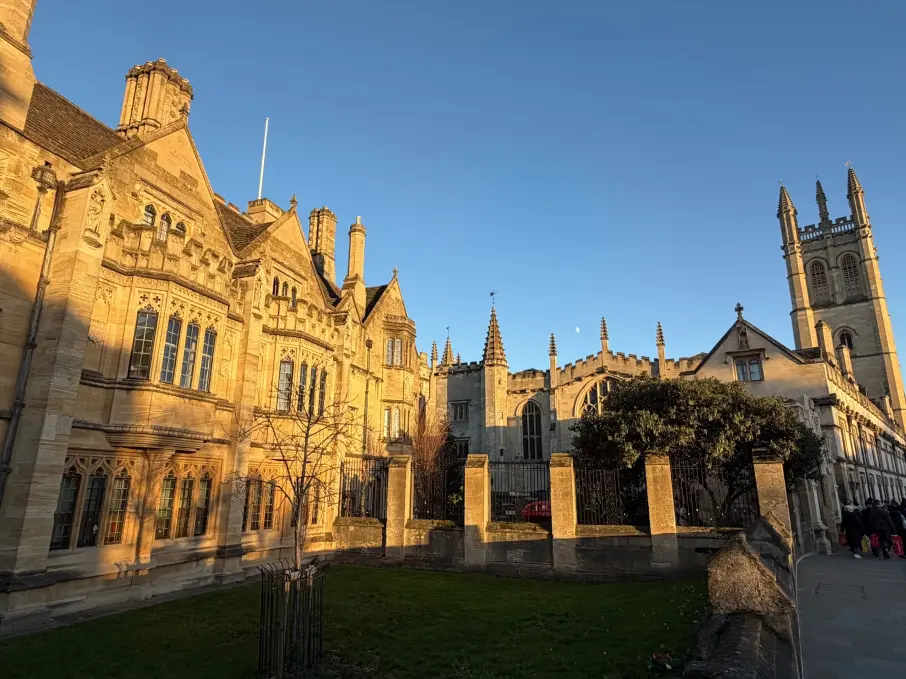
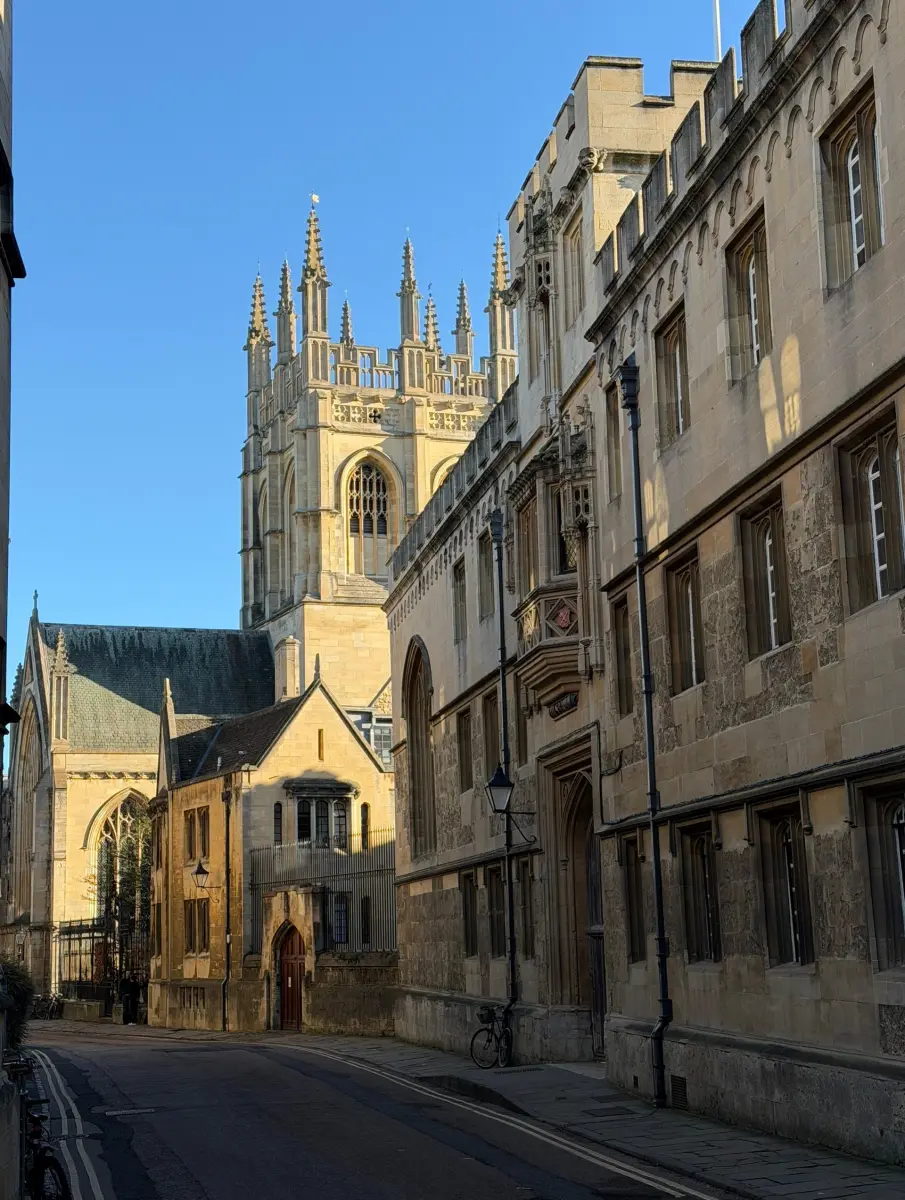
I recommend a selection of Oxford Notes in the blog for those who are interested in England.
Ekaterina Sveshnikova, England, London, Oxford University