
Publication in Russian on the Zen blog
https://dzen.ru/a/ZvAR4bRXXAz4iWJx
In recent years, the BRICS group of countries, which includes Brazil, Russia, India, China, and South Africa, has sought to expand its influence on the global economic stage, with several countries expressing interest in joining the bloc. This expansion is often seen as a strategic attempt to challenge the hegemony of the US dollar (USD) and the euro in international trade and finance. However, despite the growing number of countries joining BRICS, the bloc’s viability as a serious contender for global monetary leadership remains in question. One of the most important factors limiting the BRICS’s ability to replace the US dollar or the euro is the nature of the political and economic systems of the bloc’s key members. The US and the eurozone operate within transparent, democratic frameworks that enhance trust in their monetary systems. Transparency and institutional stability play a central role in the confidence that global markets have in the US dollar and the euro, making these currencies attractive as safe havens for investors, especially in times of crisis. In contrast, key BRICS members such as Russia and China face significant economic and political challenges that undermine their ability to offer a viable alternative. Russia, plagued by international sanctions and a stagnating economy, is experiencing financial and demographic decline, limiting its financial clout. China’s economy, despite its size, is saddled with increasingly unsustainable levels of debt, raising concerns about long-term economic stability. Other potential BRICS members such as Argentina and Iran face financial crises and international isolation, further reducing the bloc’s collective credibility on monetary matters. In addition, the BRICS countries’ diverse political systems pose challenges to economic coordination and policy implementation. Unlike the US Federal Reserve or the European Central Bank, which operate within relatively cohesive political entities, the BRICS lack a single monetary authority capable of managing such a wide range of economies. Without a central monetary institution and vast differences in economic development, governance, and policy objectives among its members, the BRICS remains fragmented in its approach to global financial matters. Thus, while BRICS expansion may reflect its geopolitical ambitions, structural weaknesses within the bloc and the comparative stability of the US and eurozone economies suggest that the BRICS will find it difficult to replace the US dollar or the euro in the foreseeable future. Global markets continue to prioritize transparency, economic stability, and institutional trust—qualities that are well-established in the US and European monetary systems but lacking in the core BRICS members. As a result, BRICS may grow in numbers, but it will be unable to challenge the dominance of the US dollar and the euro in global finance.
I INVITE YOU TO THE TELEGRAM CHANNEL
UNCENSORED
https://t.me/shipshard
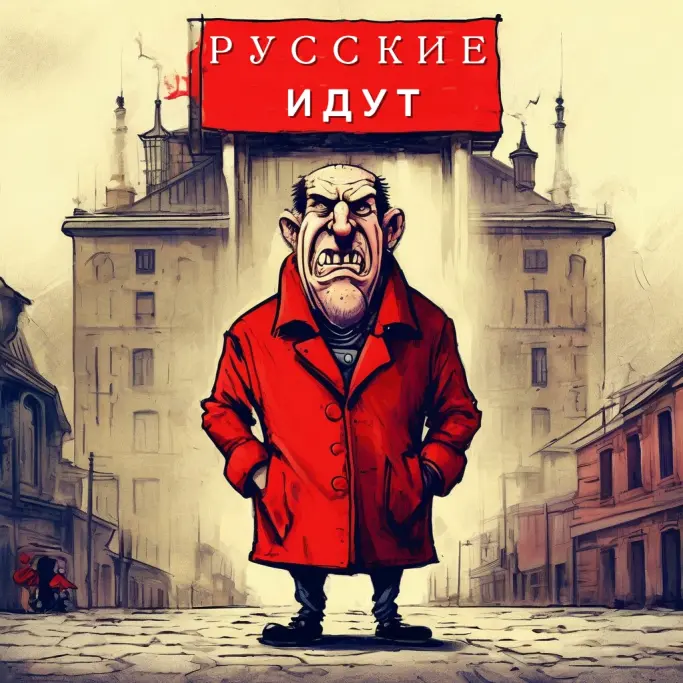
In this post I want to talk about BRICS and the hypothetical non-existent currency, its rise and potential decline, the meaninglessness of BRICS. Brazil, Russia, India, China, South Africa, and other countries like Ethiopia, Turkey and many others are in BRICS. So what does this mean for the US, Europe and other oil dependent countries? Let's put this in perspective, right now the US dollar accounts for 89% of all currency transactions, the euro accounts for about 35%. You might think that's 124%. But it's calculated that when you do a currency transaction, there are two sides that have to equal 200%. And the rest is the British crown, the Swiss franc, the Australian dollar, the Canadian dollar. Out of all of that, the Chinese currency accounts for 2%, which is not very significant, and it's a little shocking because a lot of people hear on YouTube and in the news that China is rising. But the reality is that the US dollar is 89% and the Euro is 35%, and that is where most of the world's currency transactions take place. There are many other world currencies with great power, which I have already listed and which I have not, and each of them is worth more than the Russian currency. The US and Europe have a high standard of living. European countries have a comfortable and pleasant life, they are free, transparent, democratic countries, where the quality of life is very high, comparable to the quality of life in the US. If you live in Sweden, Denmark or Germany, you spend your holidays in Italy, you relax in Spain in the winter, you buy imported goods from all over the world. This is a very high quality of life for Europe and a very high quality of life for America. The countries that are part of BRICS are, in fact, countries a la "Declining Europe" or "Rising America". Russia is in decline. Russia seems big and therefore strong, but it has very serious geopolitical problems and is one of the weakest countries in the world economically that has ever existed. As for China, it has real estate problems, debt problems and, you could say, demographic problems. And I absolutely do not believe in structures with command-and-control economies, which will never work effectively. India has huge problems, they do not even want to get into it. Turkey, Argentina - countries with 100% inflation - every time you go to a restaurant, the prices double, because these are the countries that are collapsing. Ethiopia also joins all these "great" countries in decline, although it would like to join the countries with free and transparent democracy. And nothing will happen if the euro and the dollar swap places. Economist Knut Wicksell calls money some abstract concept that is a medium of exchange, but does not affect the stability of the real economy. So it makes no difference whether it's dollars or euros, but now we're talking about BRICS, and I'll tell you a story. This is a story from the 1966 movie "The Russians Are Coming!" The movie tells the story of a Russian submarine that wants to see Great America and runs aground near a mythical island because there is a problem with the engine and the crew doesn't want to tell Moscow, but goes ashore with a specific plan to fix it and tow it away. And the crew's line of behavior is that they create emergency conditions on the island where everyone has to leave the streets. Some of the islanders look at them strangely, some children run away, dogs bark. Because the Russians are coming! This movie was from 1966 and today this is the Russian mentality - to command and control. And to this day, those with this mentality think that everyone will obey. Russia gives orders, signs decrees, and this is the Russian mentality when it seems that BRICS should become great. If I'm just going to tell you what to do, it should become a reality, like in the movie "The Russians Are Coming", where they just tell people about an emergency, and everyone must obey, signing decrees, shaking hands. This is the Russian mentality of Russian culture in a despotic community. And the fact that this exists today is funny and meaningless, like in the satirical comedy "The Russians Are Coming" because of its absurdity. If you understand what money is, then you understand that you can't just declare that BRICS is money, currency. That is, by uniting in BRICS, these countries cannot form some kind of currency, the whole BRICS is essentially an abstract idea. What money is, you can read in Carl Menger's book on the essence and origin of money from 1871, you can read the most subtle nuances and understand what money is. The abstract idea of BRICS is that when you work internationally, when you pursue international goals, you need to coordinate monetary and fiscal policies, which works very well in countries like America, England, France, and these countries also coordinated policies under an international standard, which worked quite well, but even these honest and democratic transparent countries failed to do so for various reasons. So what can you expect from opaque countries like China and Russia, Ethiopia, and also Argentina, Brazil, how can you expect these countries to coordinate monetary policies? If you are talking about a fixed exchange rate, then all the central banks of these countries have to coordinate policies. If under the gold standard there was a fixed exchange, then in the countries that are in decline, in the despotic countries, in the opaque countries, you will not find fixed exchanges, now you only have floating exchange rates. If a fixed exchange rate were used, the dollar and the euro would grow together, or if the rate were tied to some currency, for example, the Canadian dollar, then everything would be much simpler. But those who cannot coordinate even their own countries, like Russia, where they simply print money, creating inflation, and raising interest rates by 19-20% in the Russian Central Bank, each of these countries is already working against each other internally. How is Moscow going to coordinate BRICS with its monetary policy? This is nothing more than a movie where the commander of a Russian submarine says, "The Russians are coming!" "The Russians are coming," signaling that everyone needs to get out of here immediately. Expecting others to respond to this edict is like achieving a drain pipe effect with the corresponding consequences. Well, what about the petrodollar? If you take the price of oil in 2008, it was about a hundred, and you can say, wow, okay, then today it could be $73 a barrel. But if you put in the deflator of the Consumer Price Index in the United States, oil is $43 a barrel, and it is constantly declining in price in real dollars, and you always have to look at real dollars, because we are not talking about nominal numbers. The real price of oil is going down all the time, and that's because of renewables, the fracking revolution, the supply increases, which is tantamount to lower prices even though the quantity is going up. So how much oil does the US get? The US gets 3% from Iraq, maybe 5% from Saudi Arabia, and maybe all of that goes to the domestic market. So when people talk about BRICS and say that the petrodollar is going to replace the dollar, they're just talking nonsense, they're not economists, they're just bloggers. The truth is that right now Europe is booming, America is booming, technology is eclipsing any Malthusian predictions, and a lot of people can't even comprehend that yet. If you go to Europe, you see how people are provided with wages, pension benefits, so a lot of people can't imagine how rich people are and how rich Europe is getting, and America is on its way to greatness. And when we compare Europe and the US to the BRICS countries, put it in perspective, because according to Adam Smith's Wealth of Nations, wealth is measured by how productive and efficient countries are, and that has to do with transparency, free markets, division of labor, all the things I've talked about in previous posts. So anyone who tells you about the BRICS, just tell them the story from the 1966 movie "The Russians are Coming!" to see what a fantasy and delusional idea it is that Russia or China will dominate. The countries that will dominate are the innovative countries, like the countries of Europe, the land of Da Vinci and Michelangelo, America, the land of Henry Ford, these are the countries that are gaining momentum and will continue to gain momentum. Not because the people there are different, but because these countries have free transparent democracies, people are trying to improve the world under conscious capitalism. And the BRICS countries are the countries that are declining. And they will continue to decline and fall into chaos. Anyone who joins the BRICS is like the kiss of death, when you can say, "This country is going to decline." Look at the inflation in Argentina or the inflation in Turkey. And look at the countries that did not join the BRICS, the great beautiful countries like Denmark, the Netherlands, Germany, France, Great Britain, America, Canada. These are the countries that will be on the rise for the next 50 years. That is the story of the BRICS.
Томас Мальтус – английский ученый, демограф и экономист. Он – автор теории, согласно которой рост народонаселения приводит к снижению благосостояния и массовому голоду. Отсюда Мальтус считал войны и эпидемии подлинным благом для человечества, поскольку они помогают сократить количество народа на Земле, чтобы оставшиеся жили лучше.
В целом, надо понимать, что по всей видимости он и его последователи были провозвестниками будущей теории "золотого миллиарда" .
Адам Смит - шотландский экономист и философ-этик, один из основоположников экономической теории как науки. Считается основателем классической политэкономии.
Главный труд "отца" классической политической экономии Адама Смита, завершенный им более 230 лет назад, "Исследование о природе и причинах богатства народов".
Теория невидимой руки рынка, государство как ночной сторож - все это "Богатство народов".
Карл Менгер фон Вольфенсгрюн - австрийский экономист, основатель австрийской школы.
Творец маржиналистской революции в экономике.
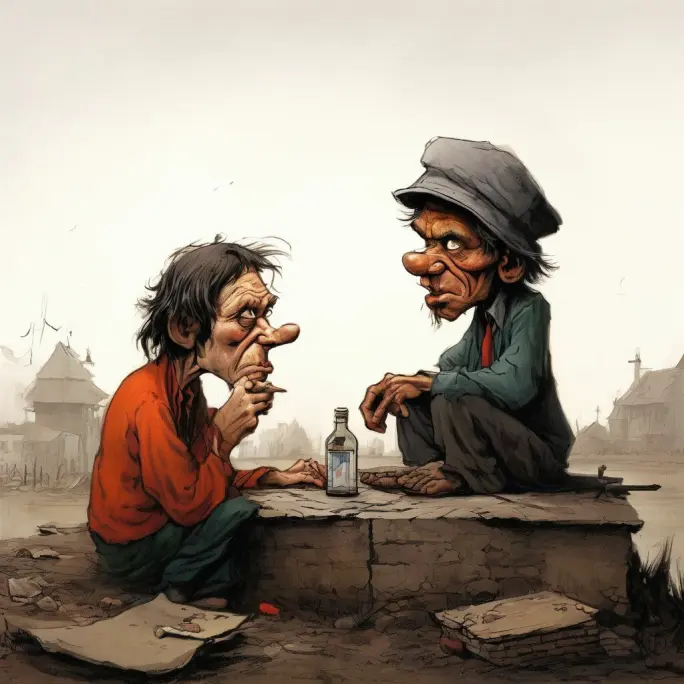
Some were confused why Turkey wanted to join BRICS... But then it becomes clear that they have 50% inflation and are just right for BRICS. Turkey has crazy inflation and big eyes.
The ruble is like an internal voucher, and the yuan is not a market currency, like the Swiss franc. A real currency requires coordination, transparency and trust.
I remember playing an online team game, and when my team lost, I would say: "Hey, this team sucks!" To which my teammates would respond: "You suck!" Then I would say: "I know, I'm trying to fit in!"
All you can hear from the Russian side is "Europe will fall!", "The US will fall!" Although Russia itself has never lived to a decent standard of living...
Life is great in Europe - High quality of life, and in Russia - dirty roads and life in the shadows.
The biggest test for any country is whether people from other countries want to live there: who would want to start a new life in India, China, Russia, South Africa or Brazil? And yet people from other countries struggle to start a new life in the "decadent" and "failed" US, Canada, Australia or Western European countries.
Many people move to Europe and the US to enjoy freedom and work.
BRICS will not win a currency competition with the US because they do not have such valuable exports, few people actually want to move from BRICS to BRICS, and at least in regards to China, they have TIGHT control over their currency. The first thing a decent Chinese citizen does when he has the chance is to go to Macau and launder his yuan into something else that the Chinese government cannot touch.
The euro or the dollar are currencies of free, transparent countries. BRICS is not a currency. BRICS means nothing. It wants to be symbolic, but it is a meaningless idea. So what is it?
BRICS is a group of countries that agree to disagree. There is no cohesion in these countries.
BRICS is a PR maneuver. "Look how important we are, we are in BRICS."
BRICS? No, thank you, no way!
Author's video content.
In collaboration with CMCproduction & SmartREC video studios
https://www.youtube.com/c/ViolettaWennman
https://ok.ru/shipshard1
https://vk.com/shipshardvk
https://www.pinterest.ca/omegagirs/
https://dzen.ru/shipshard
https://t.me/shipshard
A few words about imperial propaganda
Conversation at work about this
Blocked by Roskomnadzor publication on Zen (https://dzen.ru/a/ZrYJtmmjKiQh1lhT) "Black mark of Kursk":
https://telegra.ph/Rossijskij-Kursk-i-zashchita-Ukrainy-08-09
https://t.me/shipshard/1398
Publication in Russian on the Zen blog
https://dzen.ru/a/ZvAR4bRXXAz4iWJx






